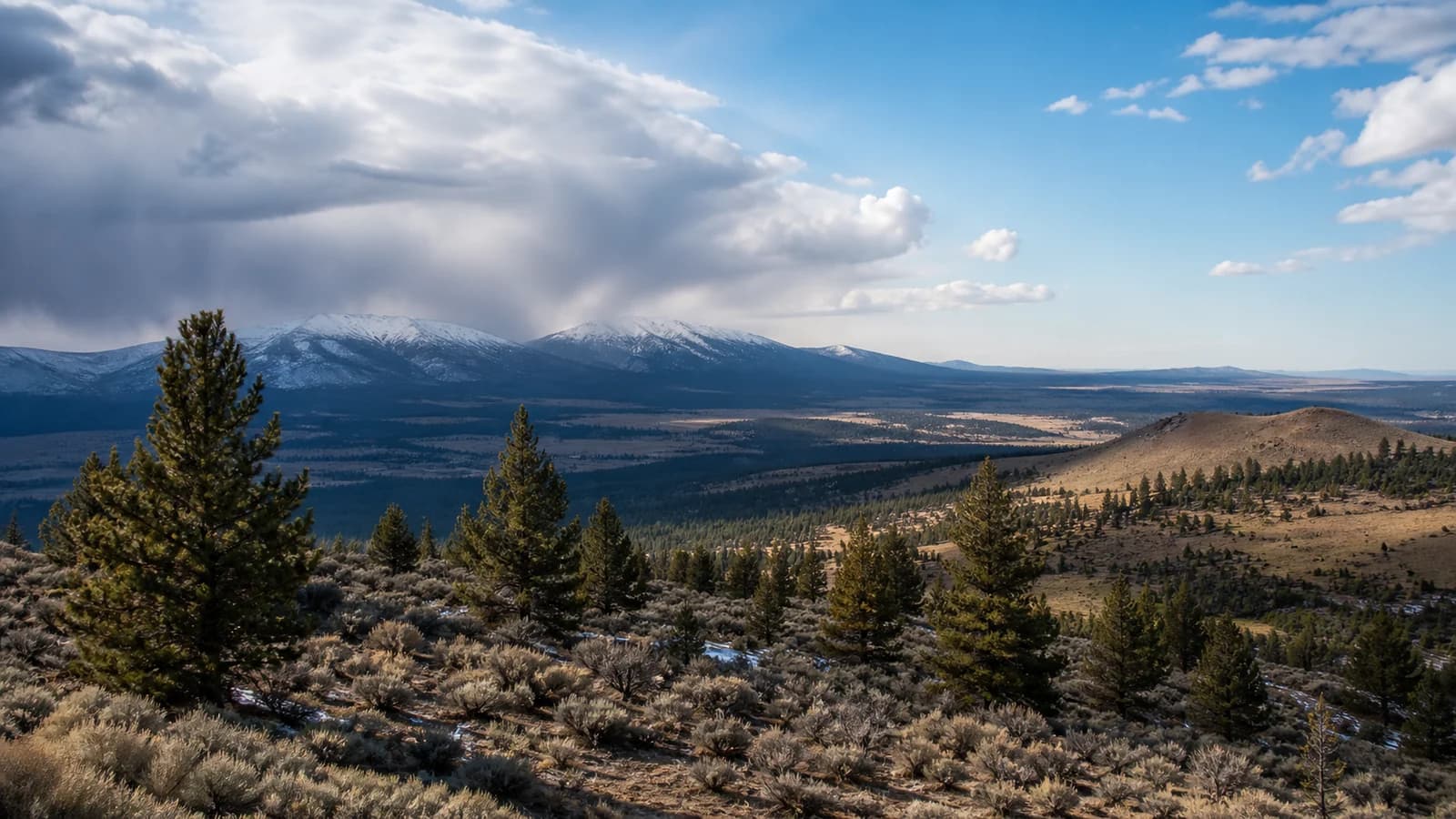
Bend is sunnier than western Oregon because it sits east of the Oregon Cascades in the Cascade rain shadow. Pacific storms and marine clouds drop much of their moisture on the west side of the mountains, while the air descending toward Bendis drier and more likely to clear. That is the central difference between the gray, wet feel of the Willamette Valley and the brighter high-desert feel of Central Oregon.
Bend Is Sunnier Because It Sits East of the Oregon Cascades
The Oregon Cascades are the dividing line. West of the crest, air from the Pacific Ocean is cool, moist, and cloud-prone. East of the crest, the same air has already lost much of its moisture. Bend, Redmond, Sisters, and Madras sit in this drier zone, so cloud cover breaks more often and rain falls less frequently than it does in Portland, Eugene, Salem, or the Oregon Coast.
This does not mean Bend is sunny every day. Winter storms still cross the mountains, smoke can dim the sky in late summer, and high clouds can cover the region for stretches. But the baseline pattern favors more clear breaks and fewer long gray periods than western Oregon.
How the Cascade Rain Shadow Strips Moisture from Pacific Storms
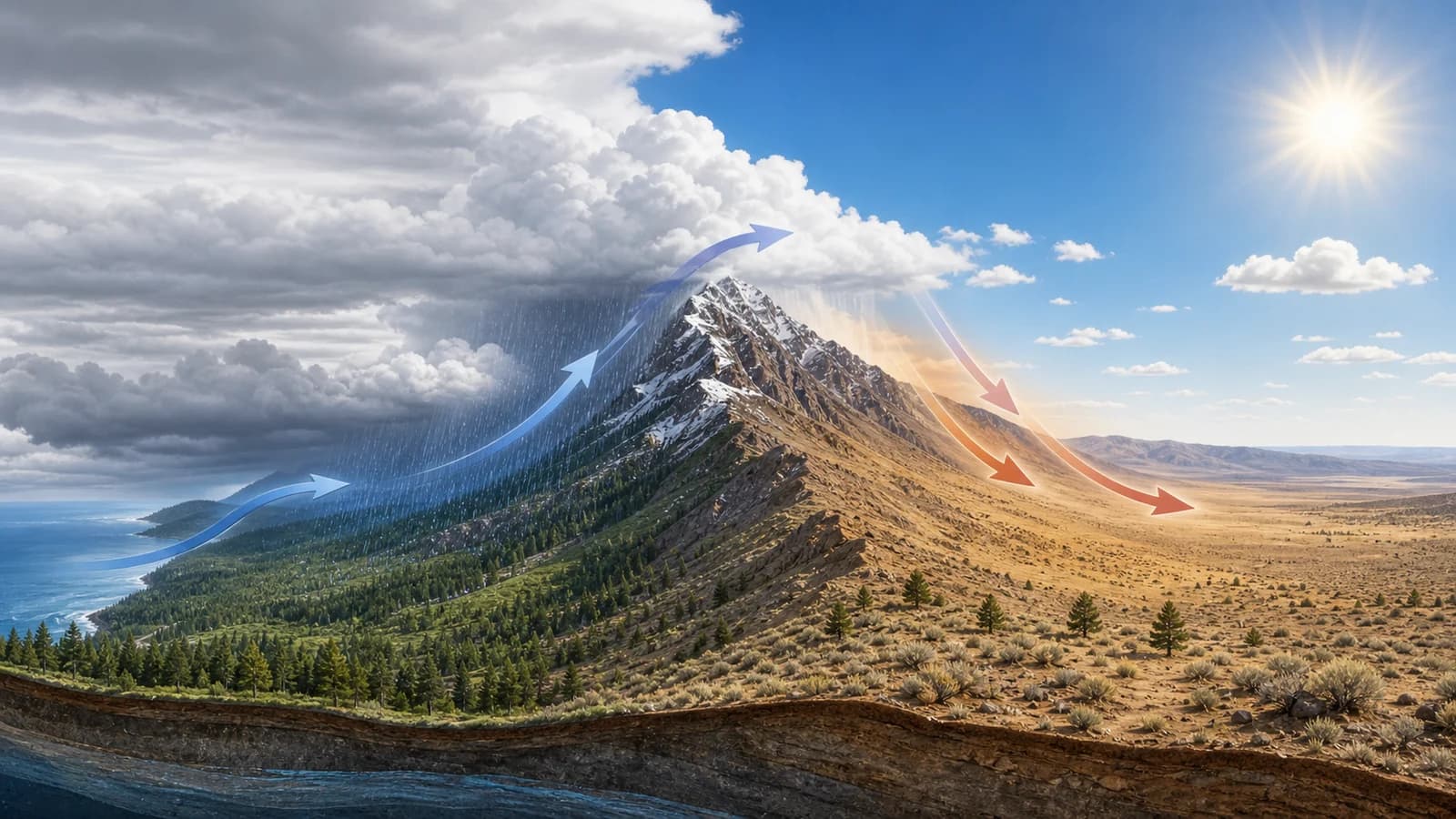
A rain shadow forms when moist air rises over a mountain range, cools, and drops precipitation on the windward side. In Oregon, that windward side is usually the west slope of the Cascades. By the time the air descends toward Central Oregon, it is drier. Drier air produces fewer low clouds, less drizzle, and more sunshine. The broader Central Oregon climate guideexplains how the same setup also drives cold nights and fast weather changes.
The same process also creates sharp local contrasts. Sisters sits closer to the mountains and can catch more cloud and precipitation than Redmond or Madras. Bend sits between those worlds: still high desert, but close enough to the Cascades that snow level, mountain clouds, and winter storms matter.
Why Western Oregon Stays Cloudy When Bend Clears
Western Oregon is closer to the Pacific moisture source and has fewer chances for air to dry out before reaching the valleys. Low clouds can bank up against the Coast Range and Cascades, and winter storm tracks often keep western valleys damp even when Central Oregon has bright breaks. The Willamette Valley also has a different winter inversion pattern that can trap gray low clouds.
Bend benefits from being on the dry side of that system. Even during active winter periods, storms often arrive in pulses: snow in the mountains, scattered showers in town, then breaks of sun. That rhythm is one reason Central Oregon feels more variable and brighter than the west side.
When Bend Is Not Sunny
Bend loses its sunny reputation during a few specific patterns. Wildfire smoke can block the sun in July, August, and September. Winter inversions can trap fog or low cloud in valleys. Pacific storms can still push thick clouds across the Cascades, especially from November through March. Spring can be windy and changeable rather than consistently blue.
The important distinction is frequency. Western Oregon gets more long-duration wet and cloudy periods. Bend gets interruptions: smoke episodes, storm days, foggy mornings, and high-cloud periods. Most of the year, the high-desert pattern gives the sun more chances to return.
What Extra Sun Means for UV, Cold Nights, and Planning
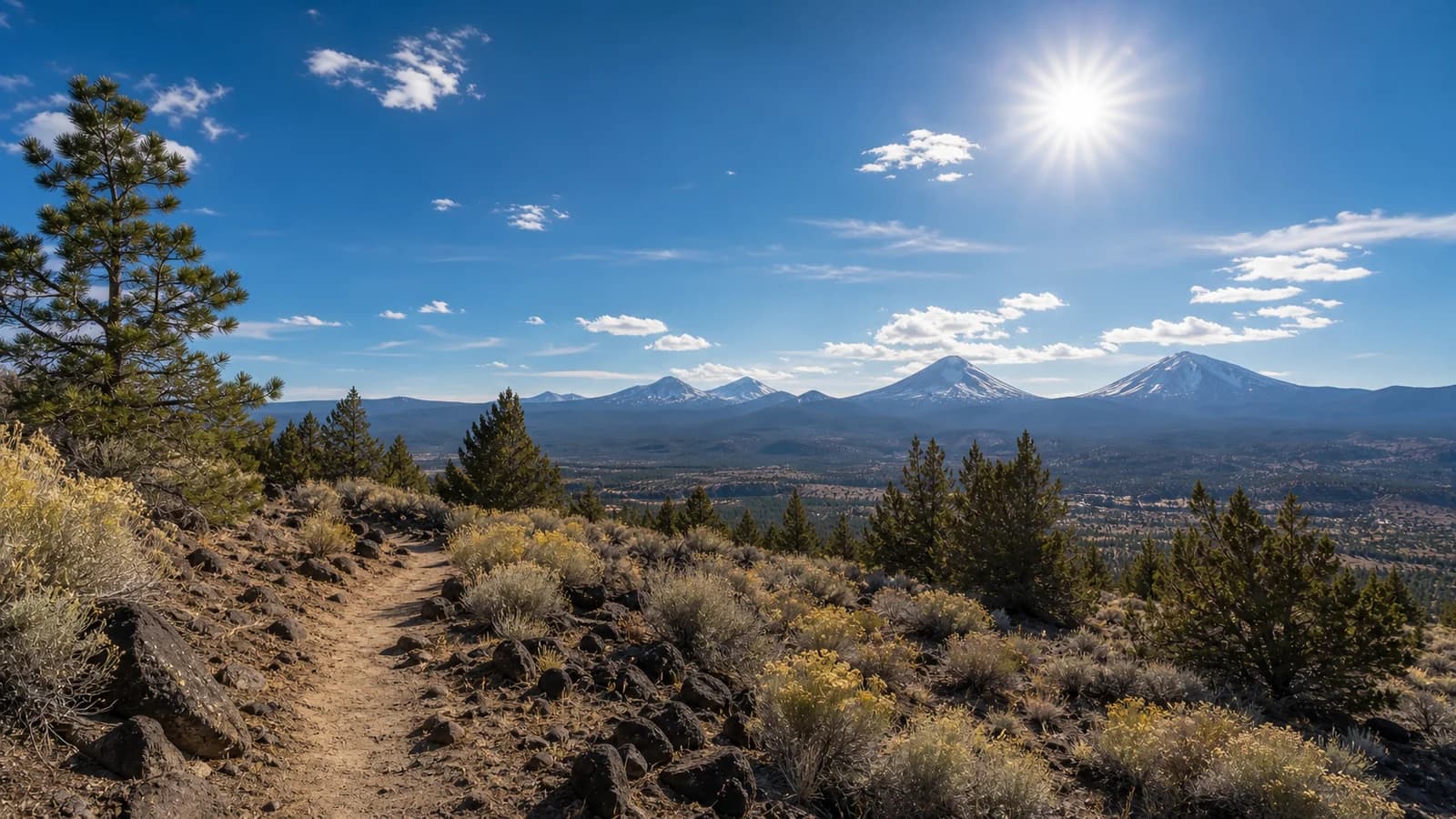
More sun does not always mean warmer weather. Bend can be sunny and cold on a January afternoon because the air mass is still wintry. It can also be sunny and freezing at sunrise because dry air loses heat quickly overnight. In summer, the same bright sky raises UV exposure, especially at higher elevations and near reflective water or snow.
For planning, sunshine is only one ingredient. Check wind, smoke, snow level, and overnight lows alongside cloud cover. On smoky or dry fire-weather days,wind direction in Central Oregoncan matter as much as cloud cover. Bend's sun is real, but Central Oregon weather is still a high-desert mountain-edge climate, not a simple warm-and-sunny climate.