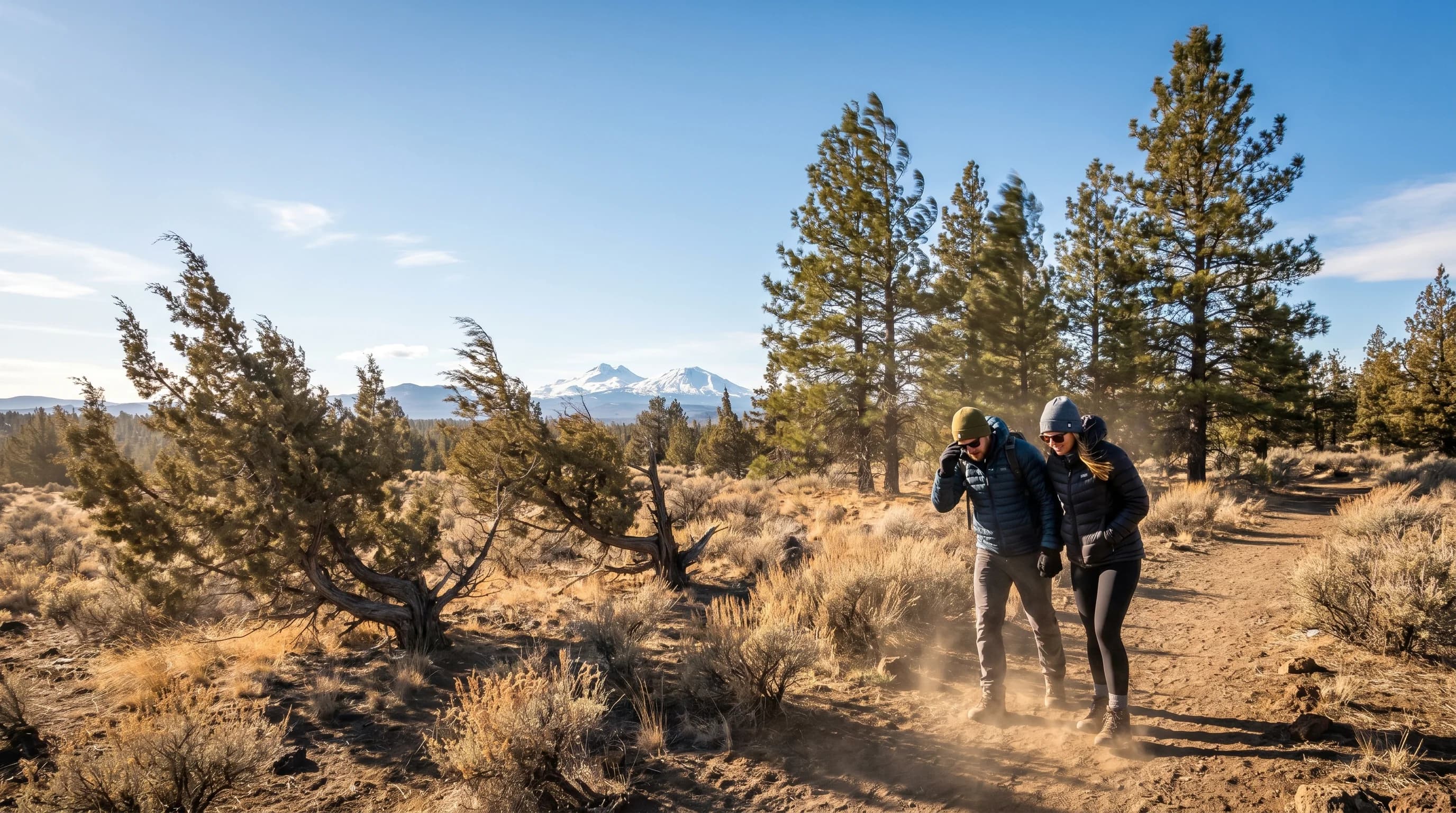
If you have spent a spring or summer afternoon in Bend, you know the pattern: calm, still mornings give way to a steady, gusty wind that builds through the day and eases after sunset. This daily afternoon wind is a defining feature of high-desert weather, and it is no accident. It is driven by daytime heating, which stirs up the atmosphere and brings stronger winds down to the surface, amplified by the region's terrain and its position east of the Cascades. The wind is strongest in spring, when the temperature contrasts that power it are at their peak, and it shapes how locals plan everything from paddling to bike rides.
Why Bend Afternoons Get Windy
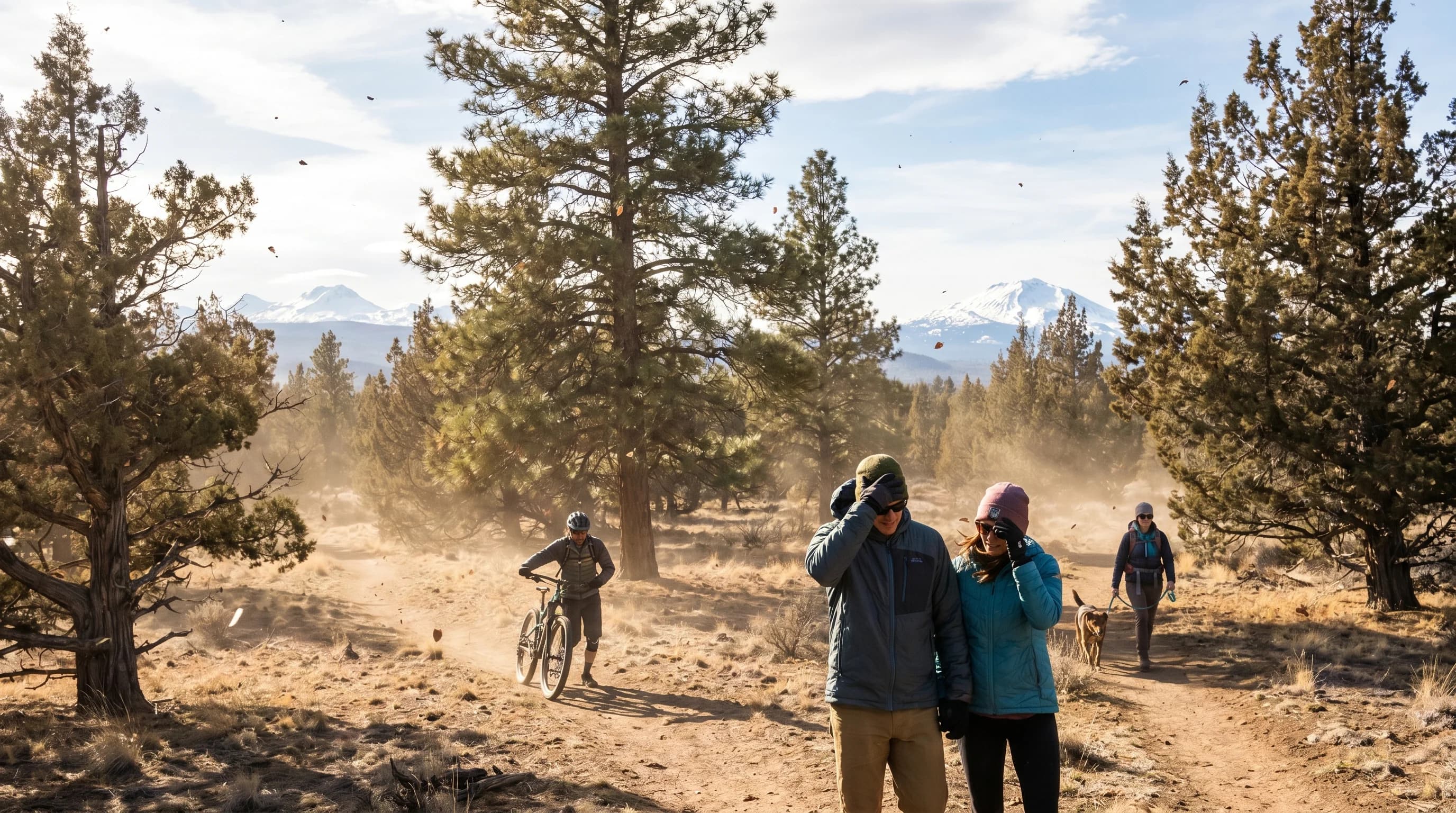
Bend afternoons get windy because daytime heating stirs the atmosphere, mixing the faster winds that exist higher up down to the surface. In the morning, the air near the ground is calm and stable, often layered, with light surface winds even when it is breezy aloft. As the sun heats the ground through the day, the warm surface air rises in thermals and overturns the lower atmosphere, a process called daytime mixing. That churning connects the calm surface to the stronger winds a few thousand feet up, and the result is gusty afternoon wind at ground level.
This is why the wind follows such a reliable daily rhythm: it builds as the heating ramps up through midday, peaks in the warm afternoon when mixing is deepest, and dies down in the evening as the surface cools and the atmosphere re-stabilizes. The same clear, sunny, high-desert conditions that drive the region's strong daytime heating also drive its afternoon wind. By night, the wind usually falls calm again, setting up the still, cold mornings and the cold-air pooling that produce fog and frost.
The Role of Terrain and the Cascades
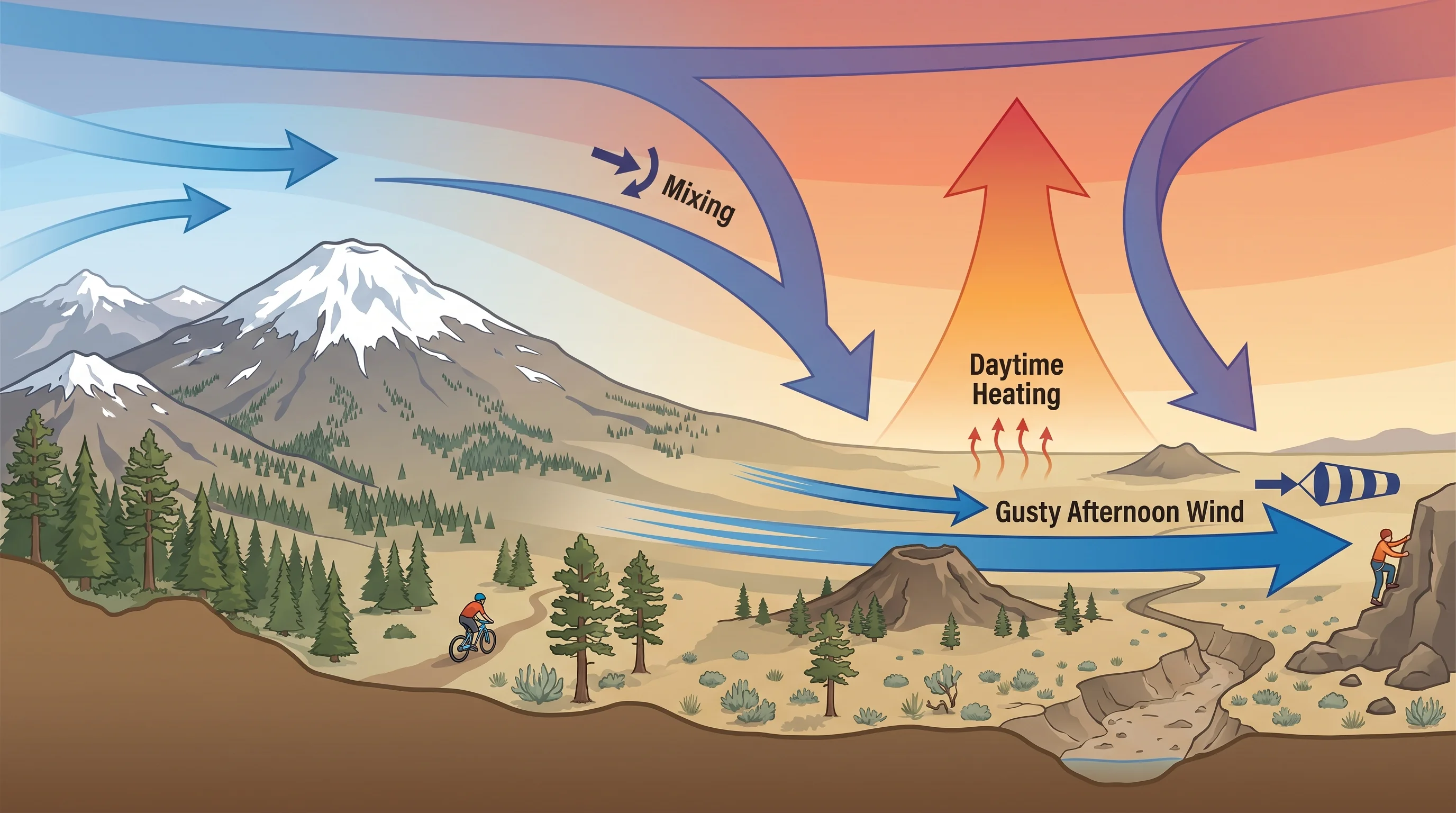
Bend's wind is amplified by terrain, as the open high-desert plateau and the gaps and slopes around the Cascades channel and accelerate the flow. With little dense forest or rough terrain to slow it near the surface, wind moves freely across the open sagebrush and juniper country, so afternoon gusts build with less friction than they would in a sheltered valley. The landscape simply offers less resistance to the wind.
The Cascades add their own influence. Air flowing across and around the mountains gets squeezed through gaps and funneled along the slopes, locally speeding up the wind in some areas. The broad temperature contrast between the cooler air near the mountains and the warmer air over the open desert also helps drive a flow, much like a sea breeze, that strengthens through the afternoon. These terrain effects layer on top of the daytime mixing to make Bend's afternoons reliably breezier than its mornings.
Why Spring Is the Windiest Season
Spring is Bend's windiest season because the temperature contrasts that drive wind are at their strongest, with warming valleys and a still-cold upper atmosphere and high country. In spring the sun rapidly heats the surface while the air aloft and the snow-covered mountains stay cold, and that steep contrast between warm low air and cold high air powers strong pressure gradients and vigorous mixing. The bigger the temperature difference, the more energetic the wind, and spring maximizes it.
Spring is also the stormiest of the warm-season months, with frontal systems still tracking through and bringing their own gusty winds on top of the daily afternoon pattern. The combination, strong daily heating contrasts plus passing storms, makes March, April, and May the gustiest stretch of the year. The wind eases somewhat in summer as the atmosphere becomes more uniformly warm and settled, though hot afternoons still mix up a daily breeze, the pattern woven through the Bend by-month guide.
How Wind Affects Recreation and Fire
Bend's afternoon wind has real consequences for recreation and for fire weather, and locals plan around it. For wind-sensitive activities, paddling and fishing the lakes and river, cycling exposed routes, climbing at Smith Rock, the calm mornings are prime and the gusty afternoons are the challenge. Experienced visitors front-load these outings into the still early hours and save the breezy afternoons for activities that do not mind the wind.
Wind also matters for fire and smoke. Gusty, dry afternoons can drive the dangerous fire weather that prompts Red Flag Warnings, and the wind direction determines whether wildfire smoke arrives or clears, covered in east wind vs. west wind. Strong winds can also turn summer thunderstorms hazardous, fanning their gusts and downdrafts. For paddlers and boaters, an afternoon that starts calm can build to whitecaps surprisingly fast, so checking the wind forecast is part of any high-desert outing.
How Windy Does Bend Actually Get?
Bend's wind is best described as regular and breezy rather than extreme, with most afternoons bringing a noticeable wind and the windiest spring days producing strong, sustained gusts. Calm, sheltered mornings are the norm, and the typical afternoon brings a steady breeze that is pleasant on a hot day and bracing on a cool one. The strongest winds come with spring storms and the deepest daytime mixing, when gusts can be genuinely strong across the open country.
Compared with truly wind-hammered places, Bend is moderate, but its wind is consistent enough to be a planning factor nearly every day in spring and summer. The takeaway is simple: expect calm mornings and breezy afternoons, plan wind-sensitive activities early, and check the forecast on spring days when storms and strong mixing can combine. Understanding the daily wind rhythm is part of understanding how fast high-desert weather changes, covered in the Central Oregon climate guide.