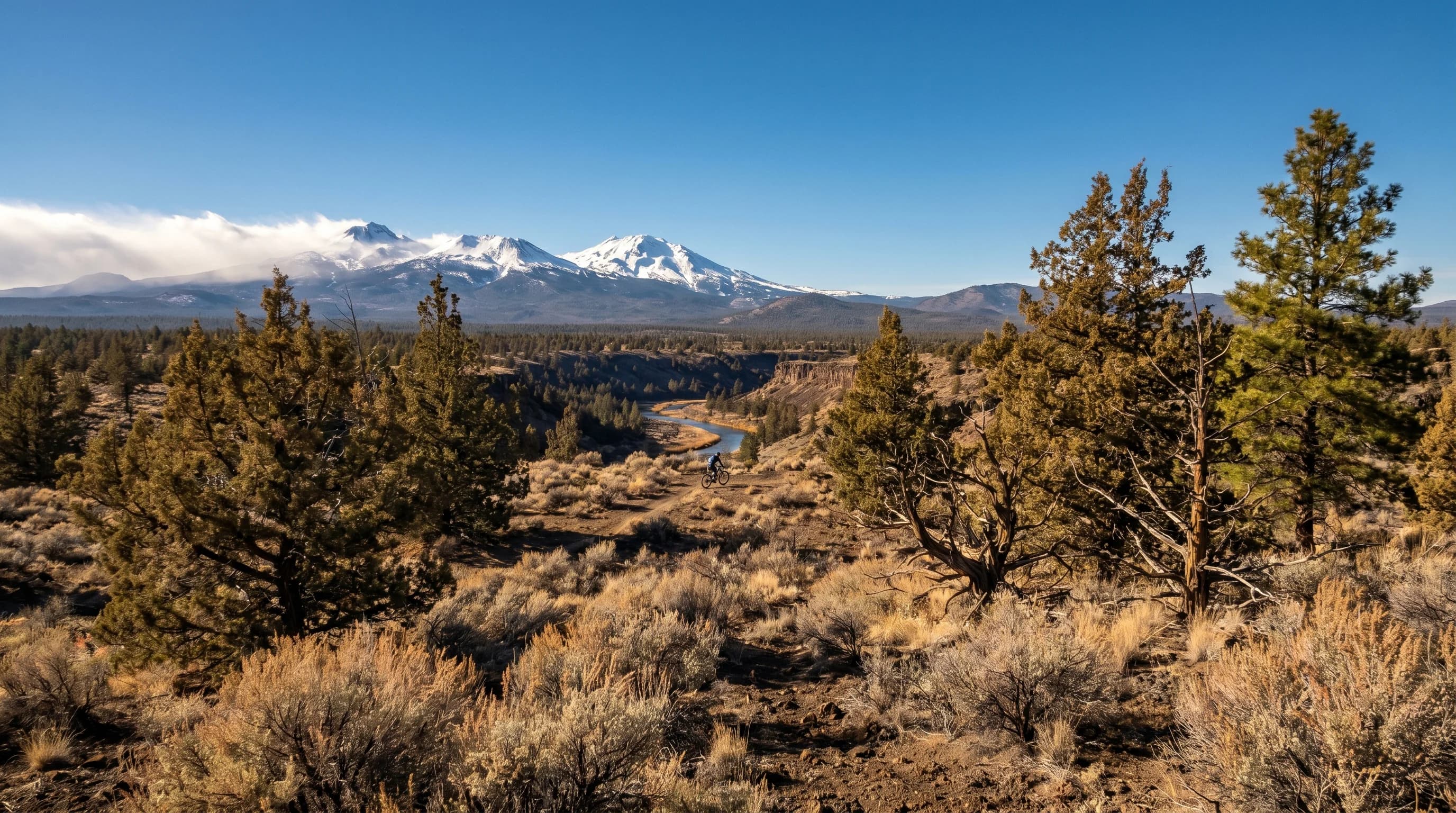
Bend is one of the sunniest places in Oregon, with roughly 300 days a year that see sun and about twice the clear weather of Portland. It sits east of the Oregon Cascades, on the dry, sunny side of the mountains that gray out the Willamette Valley. Redmond, just to the north, is slightly sunnier still. If you are moving east to escape the valley's long gray season, the difference is real and it is large, and it comes down almost entirely to one mountain range and what it does to the air moving in off the Pacific.
Is Bend One of the Sunniest Places in Oregon?
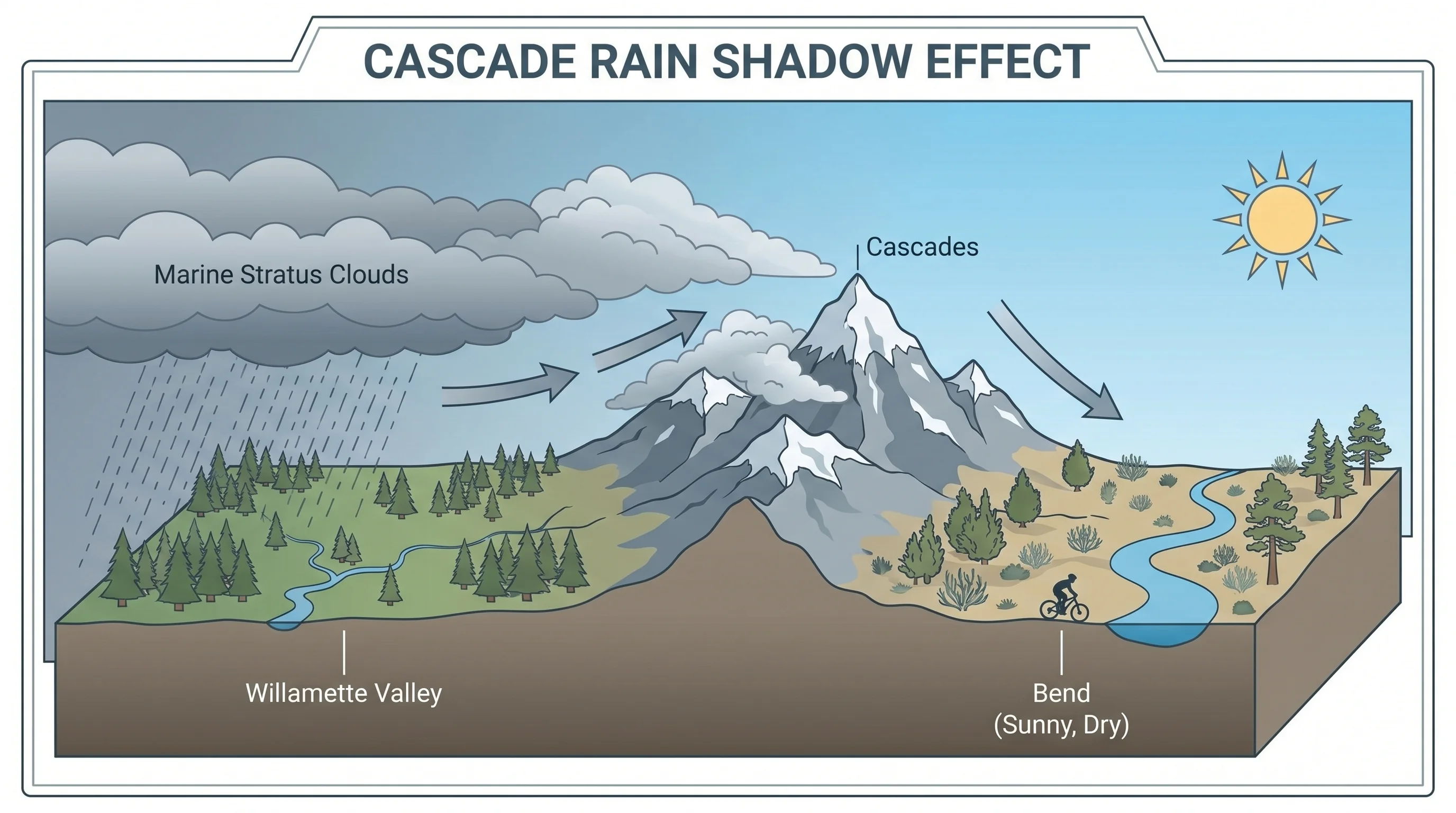
Yes. Bend is consistently ranked among the sunniest places in Oregon, and the whole high desert east of the Cascades shares the advantage. The town sees close to 300 days with measurable sunshine in a typical year, summers are reliably clear for weeks at a time, and even in the depths of winter, cold high-pressure spells deliver bright, blue-sky days between storms. Compared with the persistent overcast that settles over western Oregon for much of the cool season, the contrast is dramatic enough that many people notice it the first week they spend on each side of the mountains.
It is worth being precise about what that 300 number means, because it is easy to misread. It counts days that receive at least some measurable sunshine, not days that are cloudless from dawn to dusk. The count of truly clear, zero-cloud days is lower, and Bend absolutely gets storms, smoke, and gray stretches. But by the standard yardstick used to compare cities, days with meaningful sun, Bend genuinely sits near the top of the state, and the gap over the Willamette Valley is not marketing, it is geography. For the fuller breakdown of the numbers, see Bend's sunny days.
Why Is Bend Sunnier Than Portland?
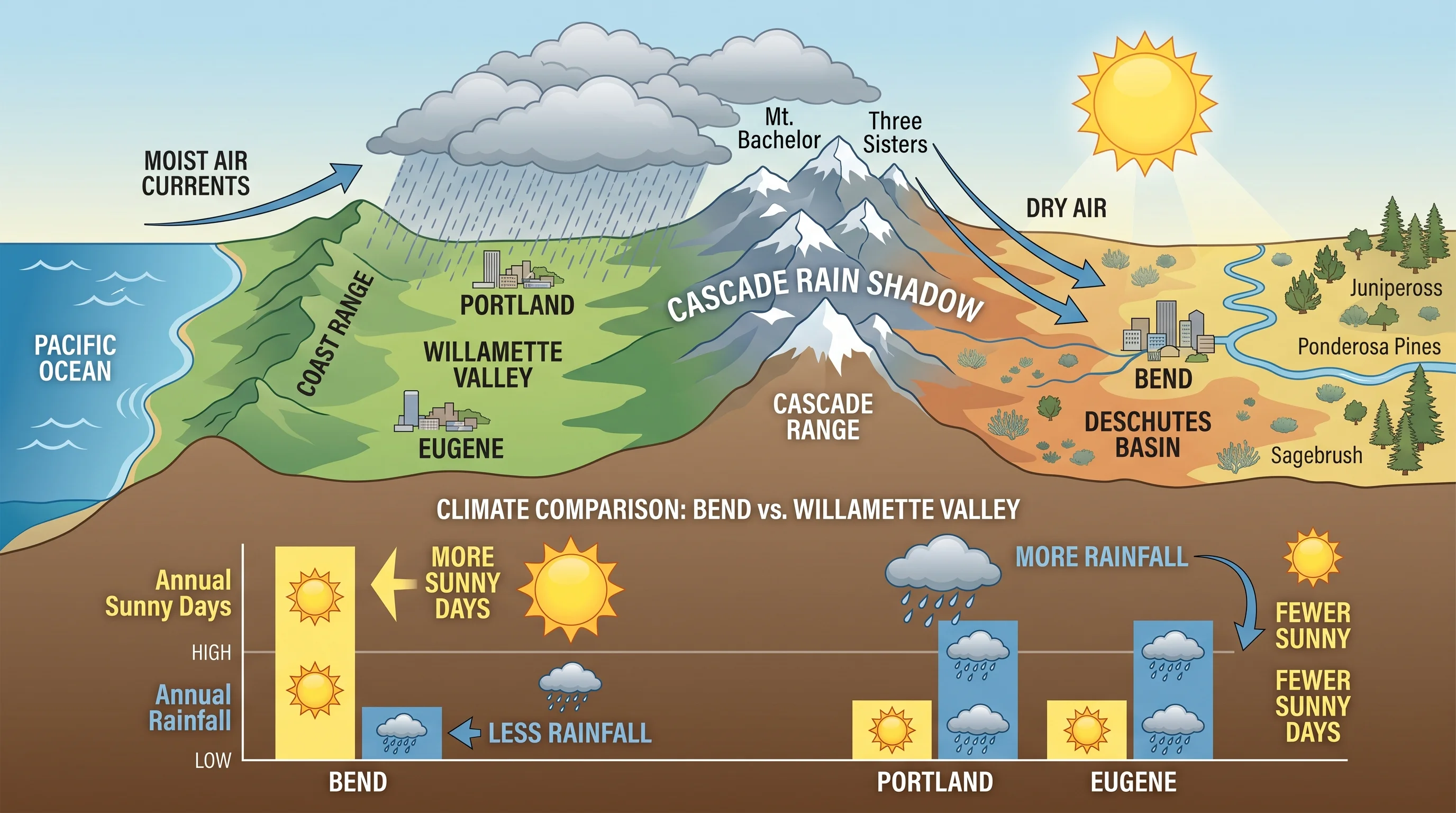
The reason is the Cascade rain shadow. Storms in the Pacific Northwest almost all arrive from the west, carried by moist marine air off the Pacific. When that air hits the Cascades, it is forced upward, and rising air cools and condenses its moisture into clouds, rain, and snow. The mountains essentially wring the water out of the incoming air on their western slopes. By the time that air crests the range and descends toward Bend, it has lost most of its moisture, and as it sinks it warms and dries further, which discourages clouds from forming. The general process is orographic lift, and the dry zone it creates downwind is the rain shadow.
Portland sits on the wrong side of that wall for sunshine. It is west of the Cascades, close to the Pacific, and directly in the path of the marine air and the storm track. The same systems that climb and rain out over the mountains spend their energy on the western valleys first, and the low marine clouds that ride in behind them have nothing to stop them. Bend, a little over a hundred miles away but on the far side of a 6,000-to-10,000-foot mountain barrier, lives in a completely different air mass for much of the year. That single geographic fact is the whole explanation for the sunshine gap.
Why Does the Willamette Valley Stay So Gray?
The Willamette Valley's gray is not mainly about rain falling, it is about clouds sitting. Through the long cool season from late fall into spring, Pacific moisture and low clouds settle into the valley and simply stay, often for days at a time, producing the flat overcast and drizzle the region is known for. The valley is boxed in by the Coast Range to the west and the Cascades to the east, which helps trap that low cloud deck and the cool, moist air beneath it. Even when it is not actively raining, the sky can stay solid gray for a week.
Bend rarely sees that drawn-out overcast because the rain-shadow air is too dry to sustain it. Clouds need moisture, and the descending air east of the crest does not carry enough to hold a persistent cloud deck together. Storms still cross the mountains and bring snow and gray to Bend, but they tend to move through rather than settle in, and they are followed by the clearing that high-desert air allows. The result people feel most when they move east is not just more sun in total, it is the absence of the relentless multi-week gray. The same dryness is why the high desert is so dry in the first place.
Is Bend Always Sunny? When Is It Not?
No, and it is worth setting expectations honestly. Bend has real gray and stormy periods, they are just shorter and less frequent than the valley's. Winter storms crossing the Cascades bring snow, clouds, and dim days. Spring is the most variable season, with fast-changing skies and frequent wind. And two distinctly Central-Oregon situations cut the sunshine in ways a coastal city never sees.
The first is winter temperature inversions, when cold air and fog pool in the Deschutes Basin under a warm lid and can leave Bend gray and frigid for days while the mountains above sit in sunshine. The second is late-summer wildfire smoke, which can dim the sky to a brown haze and turn the sun orange for stretches of August and September. Neither changes Bend's overall standing as a sunny place, but both are real, and anyone picturing year-round blue skies should factor them in. The smoke side of that is covered in Bend air quality and smoke.
Does Sunnier Mean Warmer Than Western Oregon?
Not necessarily, and this surprises a lot of newcomers. Bend is sunnier and far drier than western Oregon, but it is often colder, especially at night. The same dry, clear air that lets the sun through during the day also lets the day's heat radiate straight back to space after sunset, so Bend's nights drop hard even after a warm afternoon. A sunny February day in Bend can be genuinely cold, and a brilliant July afternoon is routinely followed by a 40-degree dawn. The mild, cloudy valley actually holds its overnight warmth better, because clouds and moisture trap heat near the ground.
That tradeoff is the high desert in a nutshell, and it is explained in more depth in why Central Oregon has such big temperature swings. The extra sun also comes with stronger ultraviolet exposure, because Bend's elevation and clear, dry air filter out less of it. The bottom line for anyone weighing the move east: if you want the gray season behind you, Bend delivers in a way few places in the state can match. Just trade the valley's damp, mild overcast for bright days, cold clear nights, and a winter sun that is more about light than warmth.