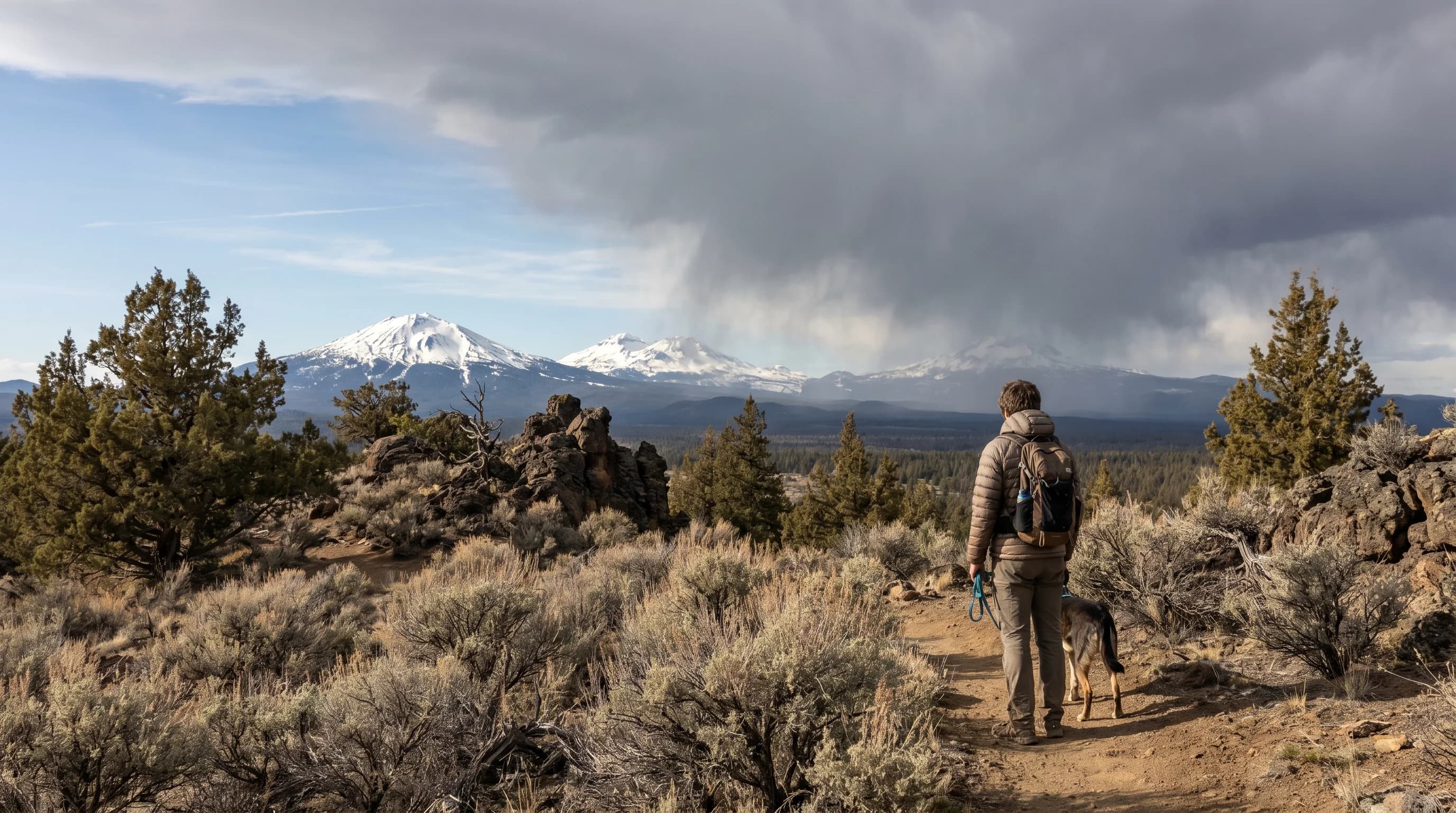
The Oregon Cascades rain shadow is the single biggest reason Central Oregon is so dry and so sunny. Bend receives only about 12 inches of precipitation a year, while the western slopes of the Cascades just 50 miles away can get 80 to 100 inches or more. The cause is the mountain range itself: as moist Pacific air is forced up and over the Cascades, it drops nearly all its moisture on the west side, and the air that descends into Central Oregon is wrung out, warming and drying as it falls. The high desert sits in the dry shadow of the mountains, and that one fact shapes almost everything about its weather.
What Is a Rain Shadow?
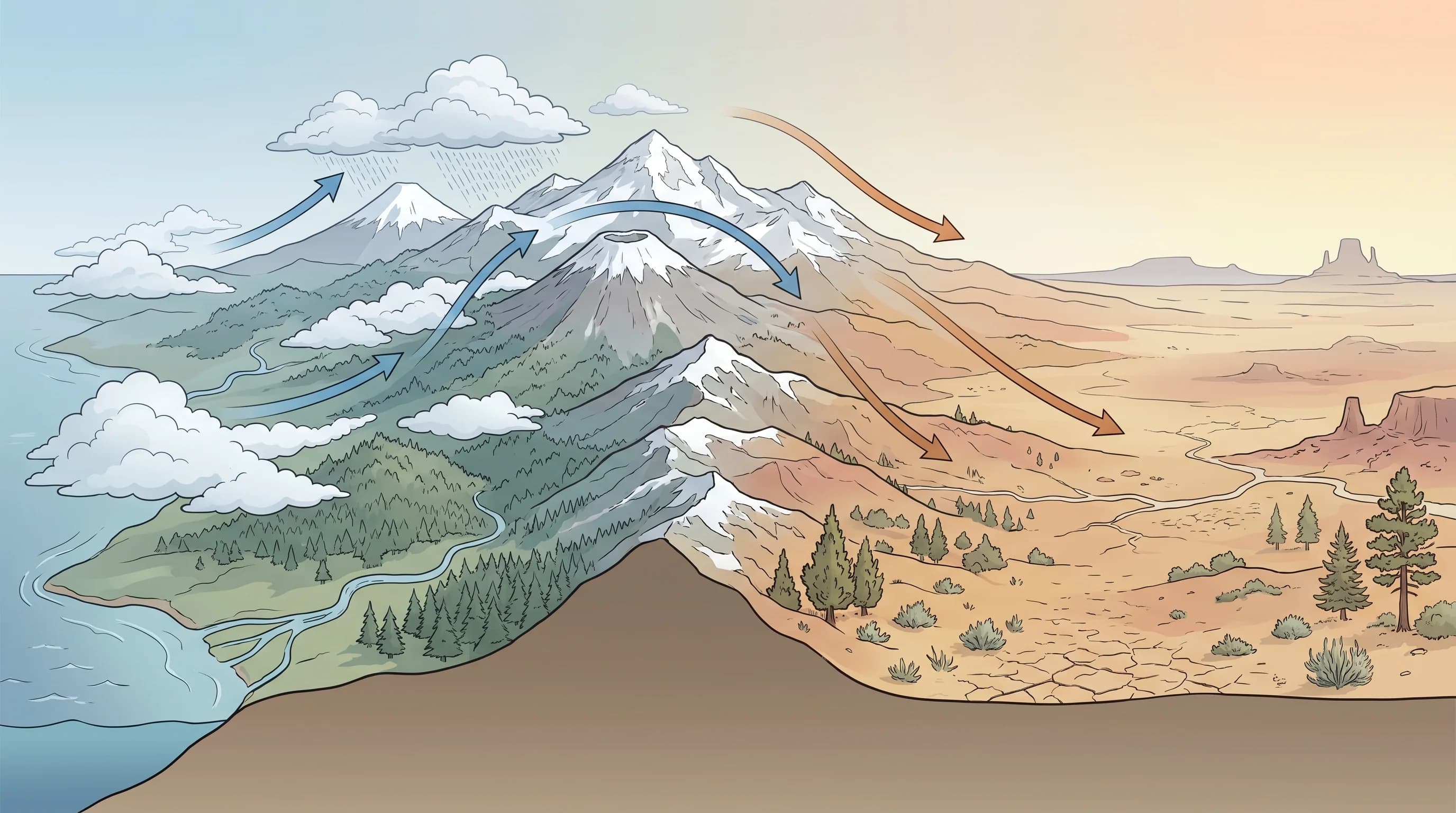
A rain shadow is the dry area on the downwind, or leeward, side of a mountain range, created when the mountains strip the moisture out of air passing over them. The pattern shows up wherever tall mountains sit across a prevailing moist wind: one side is wet and lush, the other dry and often desert. In Oregon, the prevailing weather comes off the Pacific from the west, the Cascades run north to south directly across that flow, and so the western slopes are soaked while the eastern side, including Central Oregon, lies in the shadow.
The contrast is stark and happens over a short distance. The wet western Cascades support dense evergreen rainforest, while just east of the crest the land transitions quickly to ponderosa pine, juniper, and sagebrush high desert. That transition, from rainforest to near-desert in a matter of miles, is the rain shadow made visible, and it is why Central Oregon feels like a different world from the gray, wet Willamette Valley on the other side of the mountains.
How the Cascades Wring Out the Air
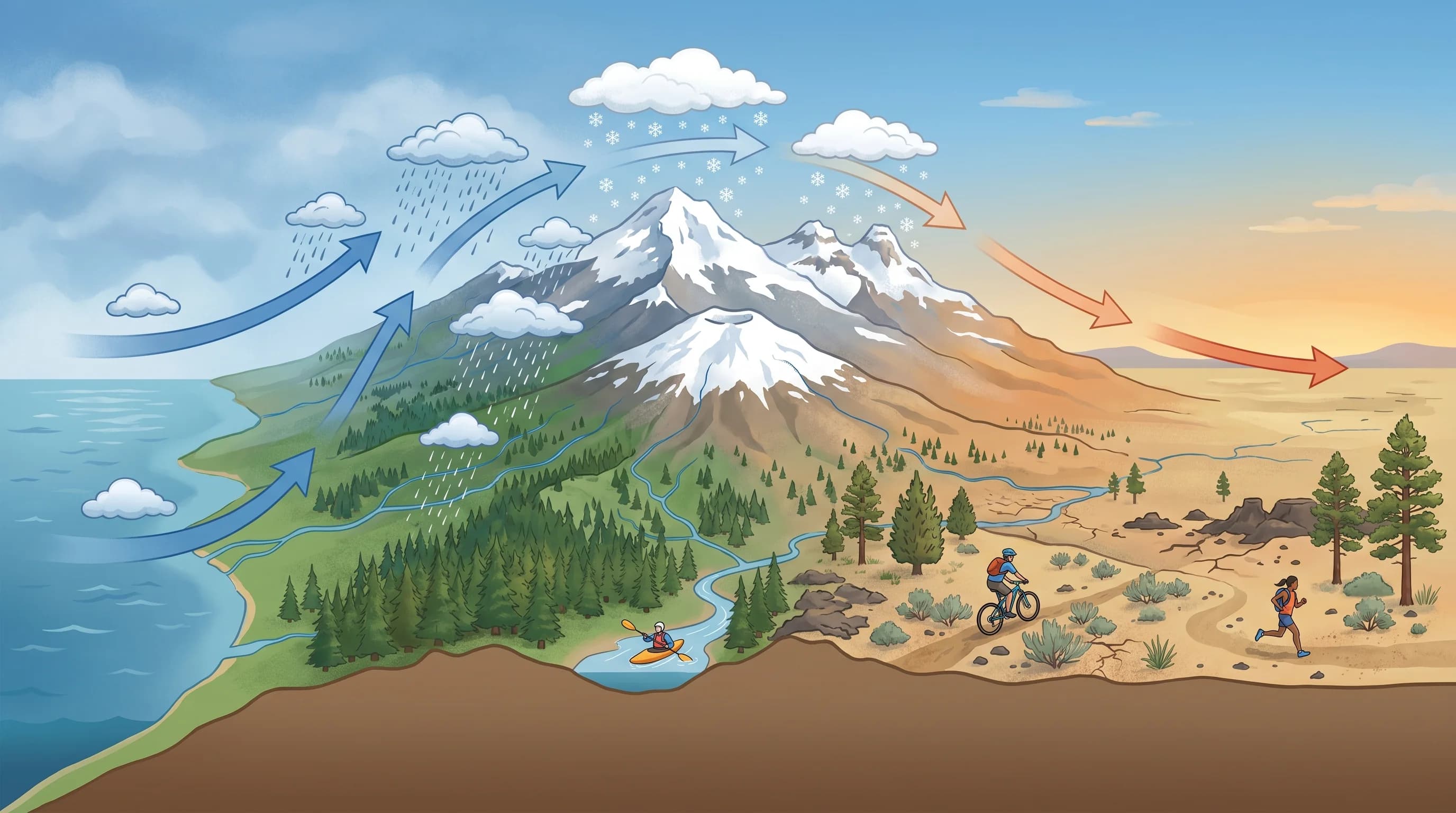
The Cascades create the rain shadow through a process called orographic lift, in which moist Pacific air is forced upward as it hits the mountains, cools, and drops its moisture as rain and snow on the western slopes. Air can only hold so much water vapor, and that capacity falls as the air cools. As the Pacific air climbs the western Cascades, it cools, reaches saturation, and the water vapor condenses into clouds and falls out as the heavy precipitation that feeds the west-side forests and rivers. The mechanism is covered in more detail in what is orographic lift.
By the time that air crests the Cascades and starts down the eastern side toward Central Oregon, it has lost most of its moisture. As it descends, it compresses and warms, and warming air can hold more water vapor, so its relative humidity drops further and it becomes actively drying rather than raining. This descending, warming, drying air is what reaches Bend, Redmond, and the high desert. The same crest that buries the west side in snow leaves the east side clear, which is why it can rain in Bend but snow at Mt. Bachelor and why the snow level matters so much here.
What the Rain Shadow Does to Central Oregon
The rain shadow is why Central Oregon is dry, sunny, and high-desert rather than wet and forested like western Oregon, with Bend getting roughly a quarter of Portland's annual rainfall. The dryness defines the landscape, the sagebrush and juniper, the open skies, the lack of the west side's perpetual drizzle, and it is the foundation of the region's identity as one of Oregon's sunniest places, covered in why Bend is sunnier than Portland. With less moisture in the air and on the ground, the high desert simply gets more sun.
The dryness ripples into nearly every other feature of the climate. Dry air drives the big day-to-night temperature swings, because there is little water vapor to trap heat overnight. The same aridity explains why the high desert is so dry and why precipitation that does fall sometimes evaporates before reaching the ground as virga. The rain shadow is the root cause, and most of Central Oregon's distinctive weather traces back to it.
Why the Cascades Still Feed Central Oregon
Even though the Cascades block the rain, they are also Central Oregon's water tower, since the deep snowpack that piles up on the high peaks melts through spring and summer to feed the rivers, lakes, and aquifers below. The rain shadow keeps the basin dry, but the mountains themselves catch enormous snowfall, and that frozen reservoir releases its water gradually long after the storms have passed. The Deschutes and its tributaries, and the region's farms and towns, depend on that mountain snowmelt.
This is the paradox of the rain shadow: the same mountains that make the high desert dry also make it livable, storing winter precipitation as snow and metering it out across the dry months. It is why the depth of the Cascade snowpack matters so much to the region year to year, and why the high country stays snowy long after the basin has dried out. For the full picture of how the rain shadow fits the region's weather, see the Central Oregon climate guide.
Is the Rain Shadow the Same Everywhere in Central Oregon?
The rain shadow's intensity increases the farther east you go from the Cascade crest, so the towns closest to the mountains are slightly wetter and the eastern reaches are driest. Sisters, nearer the mountains, picks up a bit more precipitation than Bend, and Bend in turn is wetter than Redmond and the country farther east, where the shadow is deepest and the high desert most arid. Elevation and exact position relative to the crest both play a role, creating a gradient rather than a sharp line.
This gradient is part of why conditions can vary noticeably across the region even on the same day, with the area near the mountains catching clouds and showers that never reach the drier country to the east. Understanding where you are in the rain shadow helps explain the local differences in snow, rain, and sun across Central Oregon. The rain shadow is not a single line but a deepening dryness, and it is the master key to the high desert's weather.