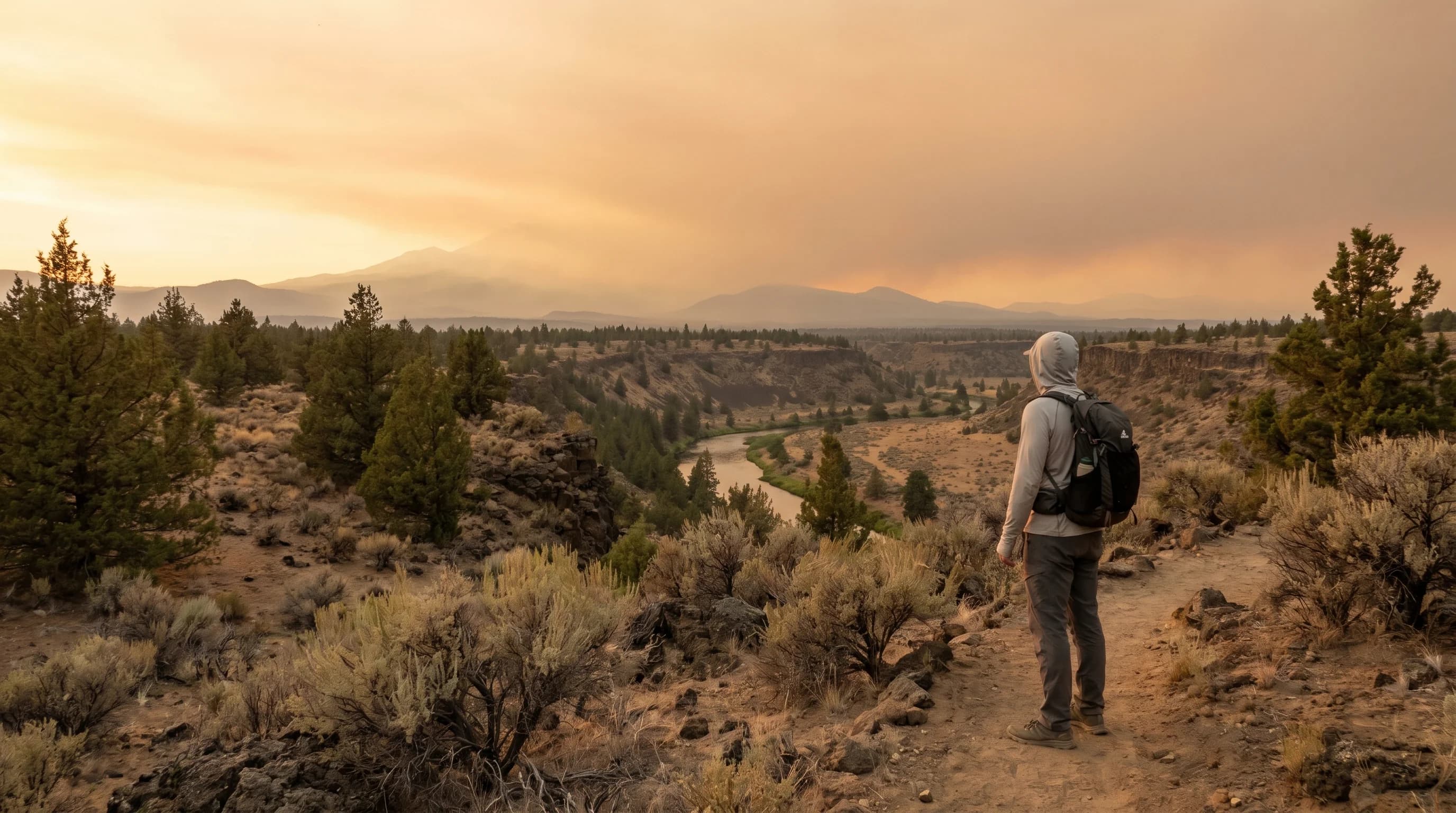
Central Oregon's smoke season runs from roughly July through September, peaking in August, when wildfire smoke can turn the region's famously clear skies into a hazy, orange-tinted blur and send air quality plummeting. The frustrating part is that most of Bend's smoke does not come from local fires at all: it drifts in on the wind from fires across Oregon, California, and the broader West, sometimes from hundreds of miles away. Whether a given week is crystal clear or choked with haze comes down to where the fires are burning and which way the wind is blowing. Understanding where the smoke comes from is the key to anticipating it.
When Is Central Oregon's Smoke Season?
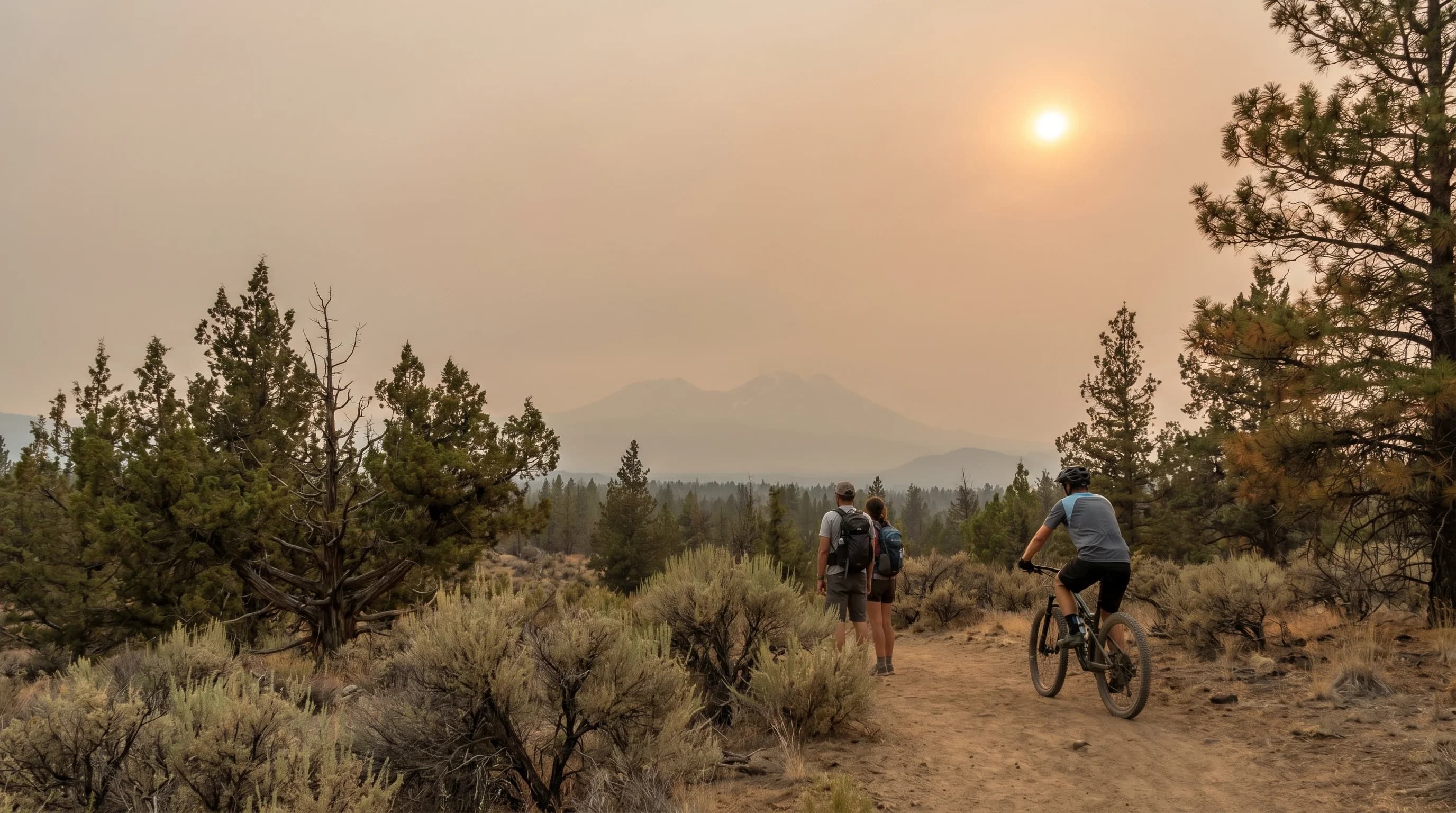
Central Oregon's smoke season generally runs from July through September and peaks in August, tracking the height of wildfire activity across the West. Early summer is usually still clear, as the landscape retains spring moisture and fires are few, but as the dry, hot summer wears on and vegetation cures, fire activity ramps up through July and reaches its peak in August. By September, the first weather systems and cooler, wetter conditions begin to wind the fire season down, though a late-season fire can still bring haze.
The season is highly variable from year to year. A wet, cool summer can pass with little smoke, while a hot, dry one with active fires can bring weeks of haze. There is no guaranteed smoky or clear summer, which is why locals and visitors watch the fire and air-quality reports closely from midsummer on. The smoke risk is the single biggest weather caveat for a summer trip to the region, woven through the August weather guide and the rest of the summer months.
Where Does Bend's Smoke Come From?
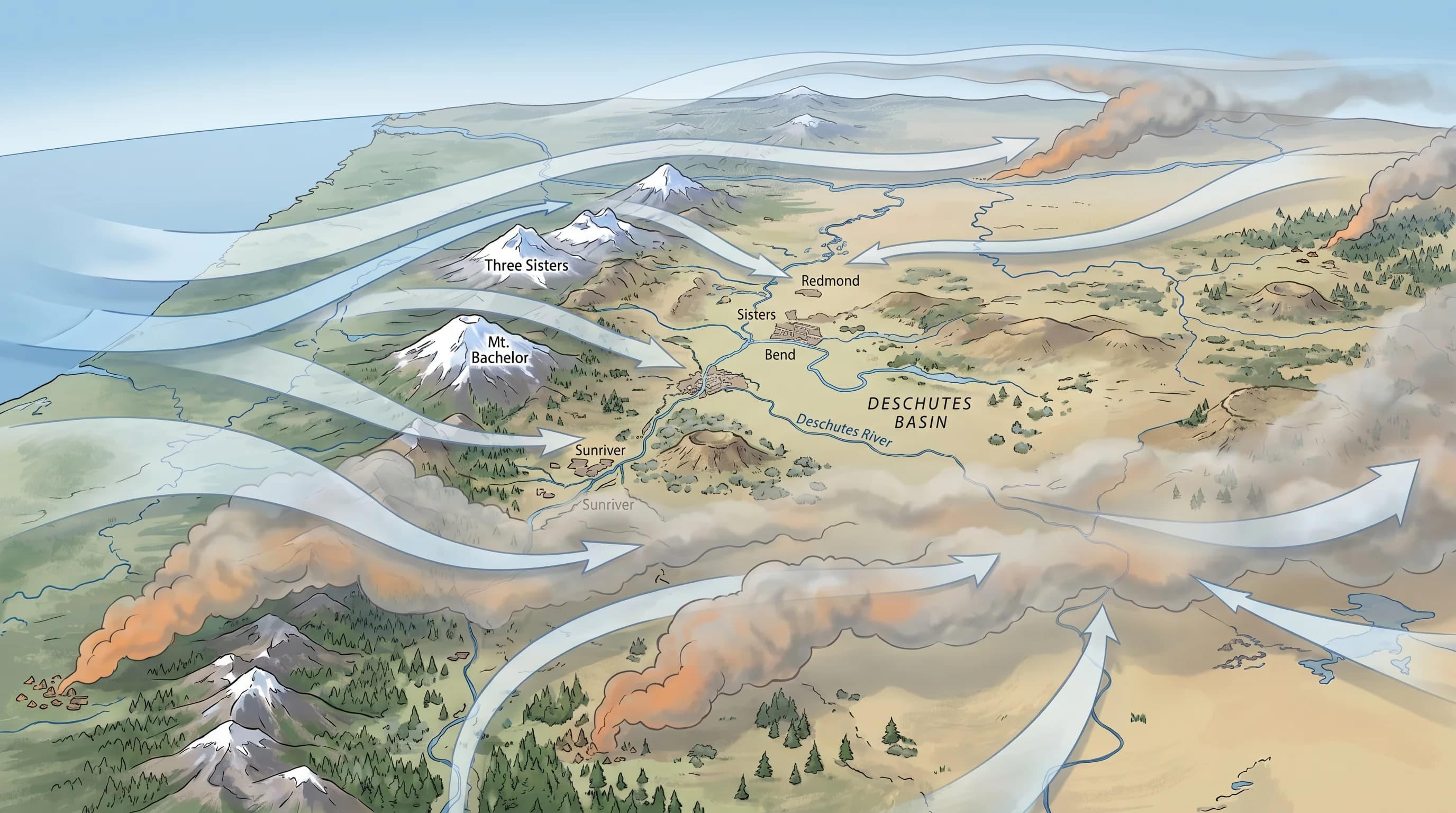
Most of Bend's wildfire smoke is transported in from fires elsewhere, often far away, rather than produced by fires right next to town. Smoke from large wildfires rises high into the atmosphere and rides the prevailing winds for hundreds of miles, so a fire in the Oregon Cascades, southern Oregon, Northern California, or even farther afield can fill the Central Oregon sky with haze. This is why the region can be smoky on a day with no nearby fire at all, and why the smoke can appear and vanish as the wind pattern shifts.
Local and regional fires in the Cascades and the surrounding forests do contribute, especially when one ignites nearby, and those can bring the thickest, most sudden smoke. But the background haze that settles over the region for days at a time is usually imported. Because the source is often distant and the delivery depends on the wind, smoke is one of the hardest weather factors to forecast precisely. The wind direction is the decisive variable, covered in east wind vs. west wind.
Why Wind and Weather Decide Everything
Whether Central Oregon is smoky or clear on a given day comes down to wind direction and the larger weather pattern, which steer smoke in or push it out. When the wind blows from the direction of active fires, smoke pours into the region; when it shifts to come from a clear direction, the air can clean out within hours. A west or northwest flow might clear the basin while a south or southwest flow drags in California and southern Oregon smoke, so the same fires can mean clean air one day and haze the next.
The weather pattern matters as much as the wind. Stable summer high pressure can trap smoke near the surface and let it pool in the basin, much like a temperature inversion traps cold and fog in winter, holding the haze in place for days. An incoming front or a change in the upper-level winds can sweep it all away. This is why smoke forecasts are issued in terms of probabilities and short windows rather than certainties: it all hinges on shifting winds and evolving weather.
How Bad Can the Air Get?
During heavy smoke events, Central Oregon's air quality can swing from pristine to among the worst in the country within hours, with the Air Quality Index spiking into unhealthy or even hazardous ranges. On the worst smoke days, the haze cuts visibility to a few miles, the sun glows orange, and the fine particulate pollution makes the air genuinely harmful to breathe, especially for children, older adults, and anyone with heart or lung conditions. The health side and what the AQI numbers mean are covered in what is PM2.5 and why the air quality is bad today.
Smoke also changes the sky before it becomes thick enough to erase the landscape. Fine particles preferentially scatter shorter wavelengths, helping explain why the sun turns red and why the moon looks orange during smoky periods.
The contrast with the region's normal clean air is jarring, which is part of why smoke events are so disruptive to summer plans. Outdoor recreation, the whole point of a Central Oregon summer for many, becomes unwise or unhealthy when the AQI is high, and the haze can settle in for days at a stretch. Checking the current AQI before committing to big outdoor outings is the single most useful habit during smoke season, since conditions can change fast and a clear morning can turn smoky by afternoon.
Planning Around Smoke Season
The best way to plan around Central Oregon's smoke season is to stay flexible, watch the air-quality forecasts, and keep indoor or higher-elevation backup options ready. Because smoke is unpredictable and can clear as quickly as it arrives, rigid plans suffer most; travelers who build in flexibility can shift outdoor adventures to the clear windows and pivot to indoor or less-affected activities when the haze rolls in. Sometimes driving a short distance to a less smoky area is enough to find clean air.
It is worth keeping perspective: many summer days, even in smoke season, are clear and brilliant, and plenty of summers pass with only brief smoky spells. Smoke is a real and growing factor in the Western summer, but it is a risk to manage, not a guarantee of a ruined trip. For how the smoke season fits the broader weather year, see the Central Oregon climate guide, and watch the AQI from July onward to stay ahead of the haze.