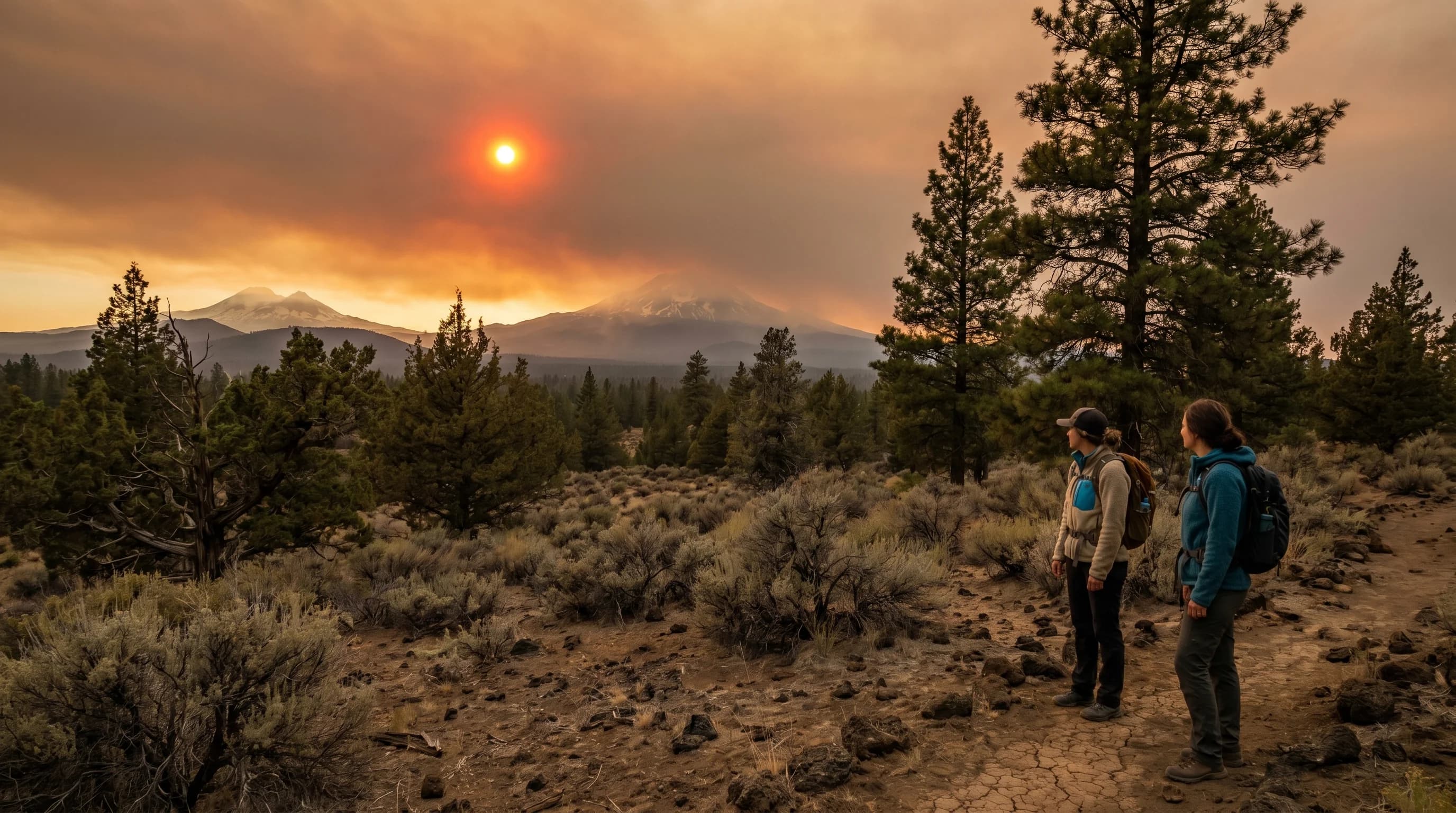
The sun looks red when its light passes through air full of smoke or haze, which scatters away the shorter blue wavelengths and lets the longer red and orange ones reach your eyes. The same scattering reddens every sunset, but a sun that glows red or orange high in the daytime sky is almost always a sign of wildfire smoke. During fire season in Central Oregon, a red daytime sun is a common and unsettling sight, and it usually means the air at the surface is unhealthy too. One important caution up front: never look directly at the sun, even a dim red one.
Why Is the Sun Red?
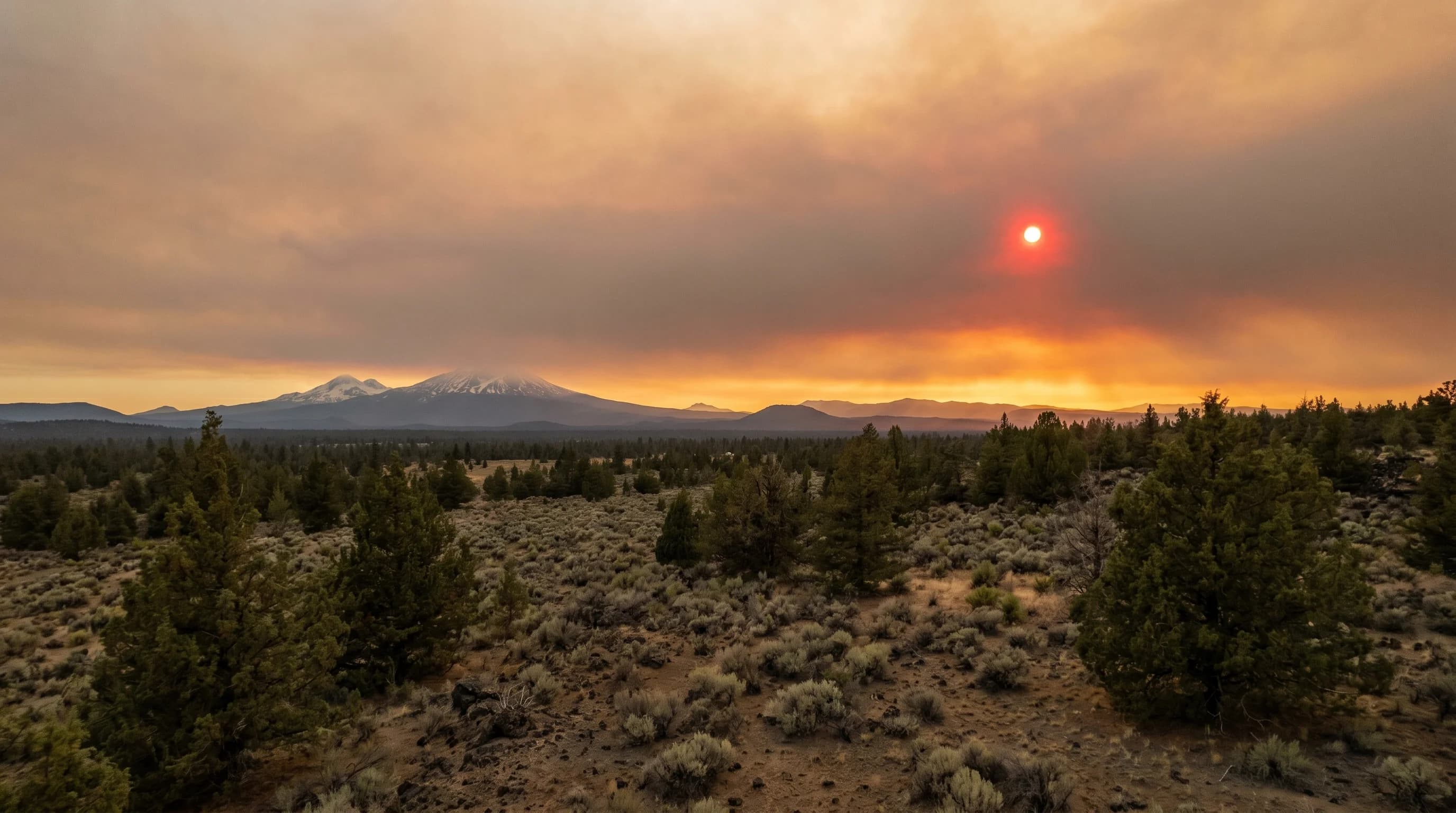
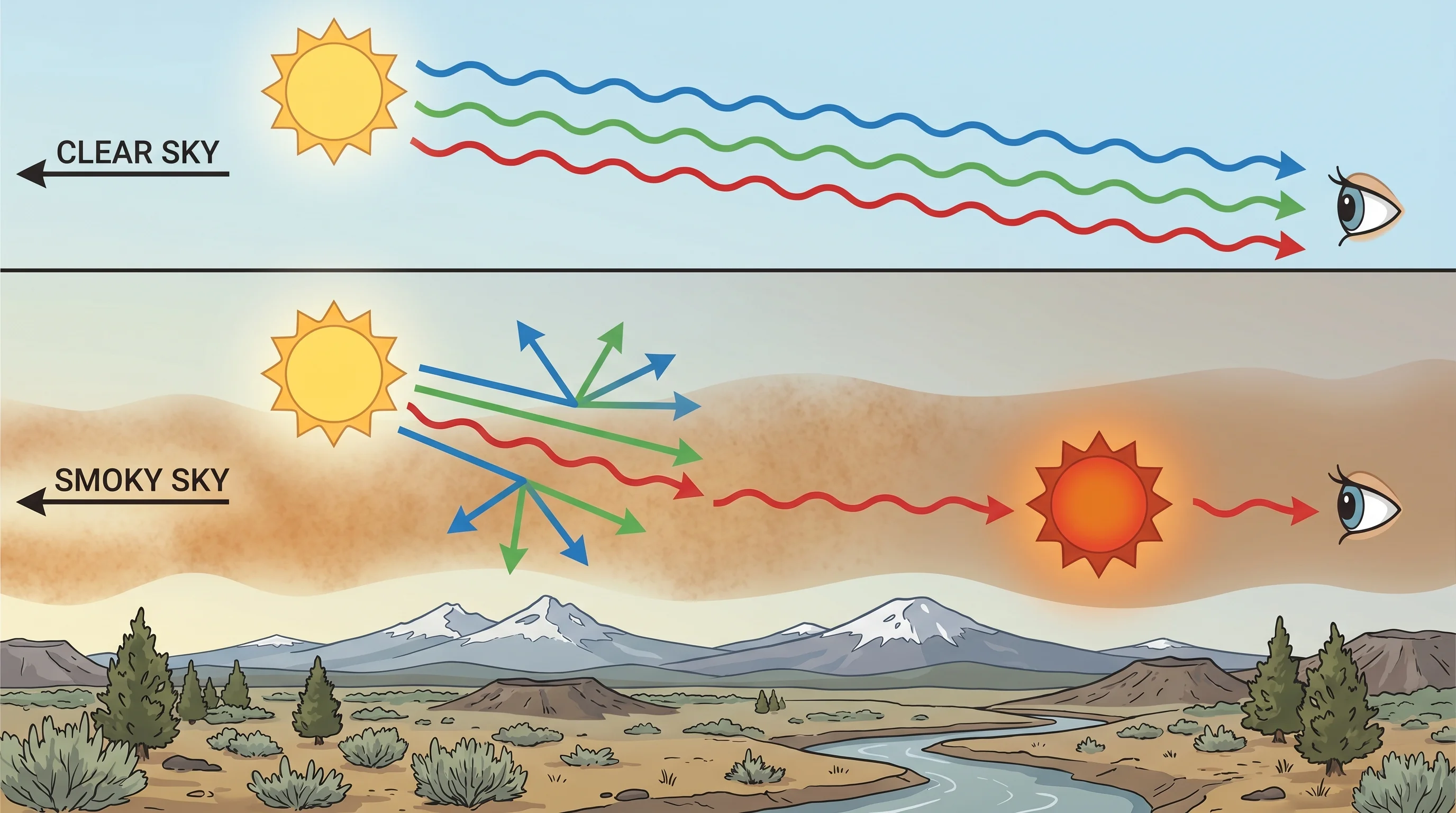
Sunlight contains all colors mixed together, which is why it normally looks white or pale yellow. What reaches your eye depends on what the light passes through, because the atmosphere does not treat all colors equally. Air molecules and airborne particles scatter short-wavelength blue light far more strongly than long-wavelength red light, so when sunlight travels through a lot of atmosphere or a thick layer of smoke, the blue is scattered away and the surviving light skews toward red and orange.
On a clear day with the sun high overhead, the light takes a short path through clean air, only a little blue is removed, and the sun looks white. The redder the sun appears, the more scattering has happened, either because the sun is low and the light is taking a long, slanting path, or because the air is full of particles. A red sun high in the daytime sky is the tell-tale sign of the second case: something in the air, almost always smoke, is scattering the blue out even on the short overhead path.
How Does Light Scattering Make the Sun Red?
The everyday reddening of the sun comes from a process called Rayleigh scattering, in which the tiny molecules of the air scatter blue light much more than red. This is what makes the daytime sky blue, the scattered blue light coming at you from all directions, and it is what makes sunrises and sunsets warm, when the long, slanting path through the atmosphere strips away so much blue that the direct sunlight turns gold, orange, and red. The longer the path, the redder the result.
Smoke adds a second, stronger layer of scattering and absorption. Smoke particles are larger than air molecules and are extremely effective at removing blue and even some green light, so a smoky sky reddens the sun far more, and at any time of day, not just at sunrise and sunset. The same effect reddens the moon at night, which is covered in why the moon is orange tonight. In both cases the principle is identical: blue gets scattered away, red gets through.
Why Does Wildfire Smoke Turn the Sun Red?
Wildfire smoke turns the sun red because the fine smoke particles scatter and absorb blue light so strongly that even a midday sun glows red or orange through thick smoke. The thicker the smoke, the deeper the color, and in heavy smoke the sun can dim to a soft red disc you can almost look at, though you still should not. A red or orange sun overhead in the middle of the day is one of the clearest visual signals that significant smoke has moved into the area.
It is also a practical warning. A smoky red sun usually means the air at the surface is degraded, with elevated levels of the fine-particle pollution measured as PM2.5, so it is a good prompt to check an air-quality reading before spending the day outside. In Central Oregon the smoke that reddens the sun drifts in from fires across the West, and whether it thickens or clears depends heavily on the wind direction.
Is a Red Sun the Same as a Normal Red Sunset?
A red sunset is the everyday version of the same scattering, caused by the long path the light takes near the horizon, while a red sun high in the daytime sky is the smoke version. At sunset, the sun's light slants through a long stretch of atmosphere, removing enough blue to turn the sun and the surrounding sky warm colors, and this is normal, harmless, and happens everywhere. A red daytime sun, by contrast, requires something extra in the air to do the scattering on the short overhead path.
So the simple rule is to notice where the sun is. Red and low, near sunrise or sunset, is ordinary geometry. Red and high, in the middle of the day, is a sign of smoke or heavy haze. Both are scattering, and both can be beautiful, but only the daytime red sun carries the message that the air may be unhealthy to breathe.
When Does the Sun Turn Red Over Central Oregon?
The sun turns red over Central Oregon mainly during summer and fall fire season, when wildfire smoke fills the high-desert sky. A red or orange daytime sun over Bend, Redmond, or the Cascades is a near-certain sign that smoke has moved in, and it often coincides with the days of worst air quality. The depth of the color roughly tracks the thickness of the smoke, so a deeply red, dim sun usually means a heavy smoke event.
Outside of fire season, you will still see the warm-colored sun at sunrise and sunset thanks to the ordinary long-path scattering, which is simply one of the rewards of the region's clear skies. But during the smoke months, a red sun is the sky's way of telling you to check the air before you head out, the visible companion to the orange moon and the wider story told in Central Oregon smoke season.