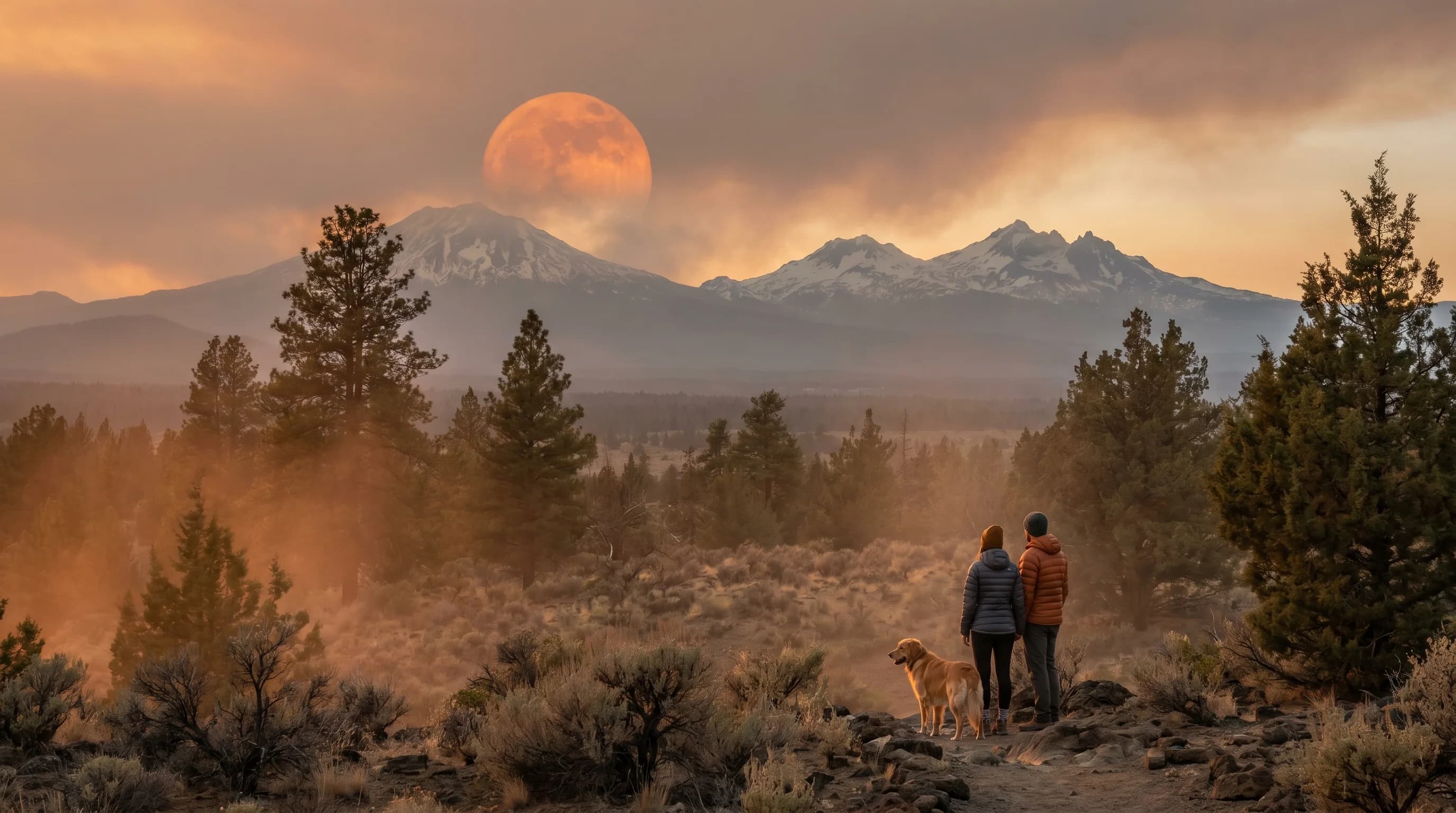
The moon looks orange when its light has to pass through more of the atmosphere or through smoke and haze, which scatter away the shorter blue wavelengths and let the longer red and orange ones through. The two most common reasons are a moon sitting low on the horizon and wildfire smoke in the air. During fire season in Central Oregon, smoke is usually the culprit, turning the moon a deep orange or red even when it climbs high in the sky, a beautiful sight that doubles as a sign of poor air quality.
Why Is the Moon Orange Tonight?
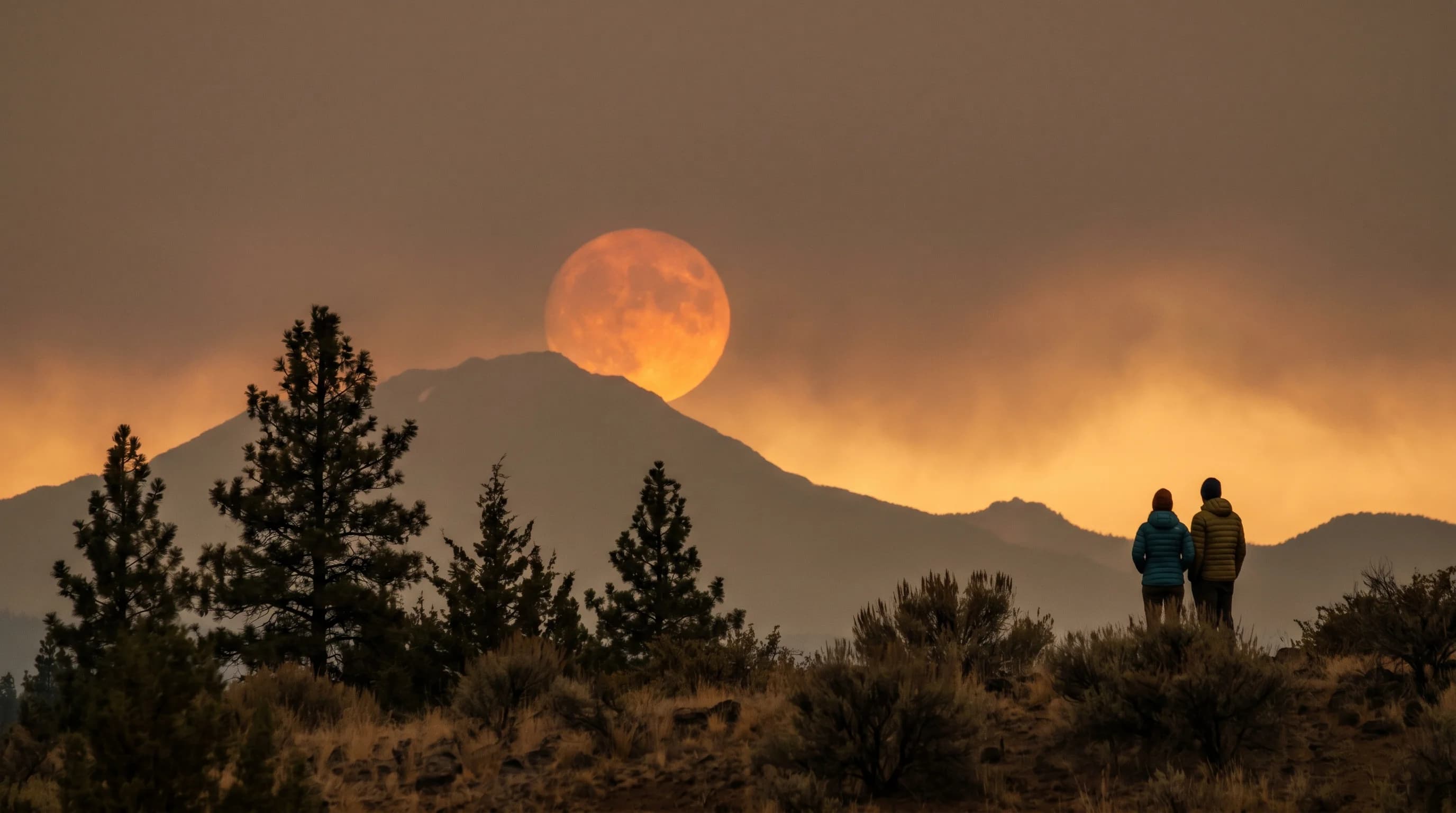
The color of the moon is really about the color of the light reaching your eye, and that depends on what the moonlight passes through on its way down. Moonlight is just reflected sunlight, containing all colors, but air molecules and airborne particles scatter blue light far more than red. When the light travels through a lot of atmosphere or through a layer of smoke or haze, much of the blue gets scattered away in other directions, and what survives the trip to your eye is weighted toward orange and red.
This is the same process that paints sunrises and sunsets in warm colors, applied to the moon. On any given night, two situations push the moon toward orange: it being low near the horizon, where its light skims through a long slice of atmosphere, and smoke or haze in the air, which scatters blue light even when the moon is high. When both happen at once, as on a smoky evening at moonrise, the effect stacks and the moon can glow a vivid, almost unreal orange.
Why Does a Low Moon Look More Orange?
A moon near the horizon looks orange because its light travels through a much longer path of atmosphere to reach you than a moon overhead does. When the moon is straight up, its light takes the shortest route through the air and stays whiter. When it is near the horizon, the light slants through many times more atmosphere, giving the air far more opportunity to scatter the blue away and leave the warm colors behind.
This is why a rising or setting moon so often looks orange or amber even on a perfectly clear night with no smoke at all. As the moon climbs higher, the path shortens, the scattering decreases, and the color fades back toward white or pale yellow. So a brief orange moon at moonrise that turns white as it rises is the everyday, smoke-free version of the effect, driven purely by the geometry of how the light reaches you.
Why Does Wildfire Smoke Turn the Moon Orange?
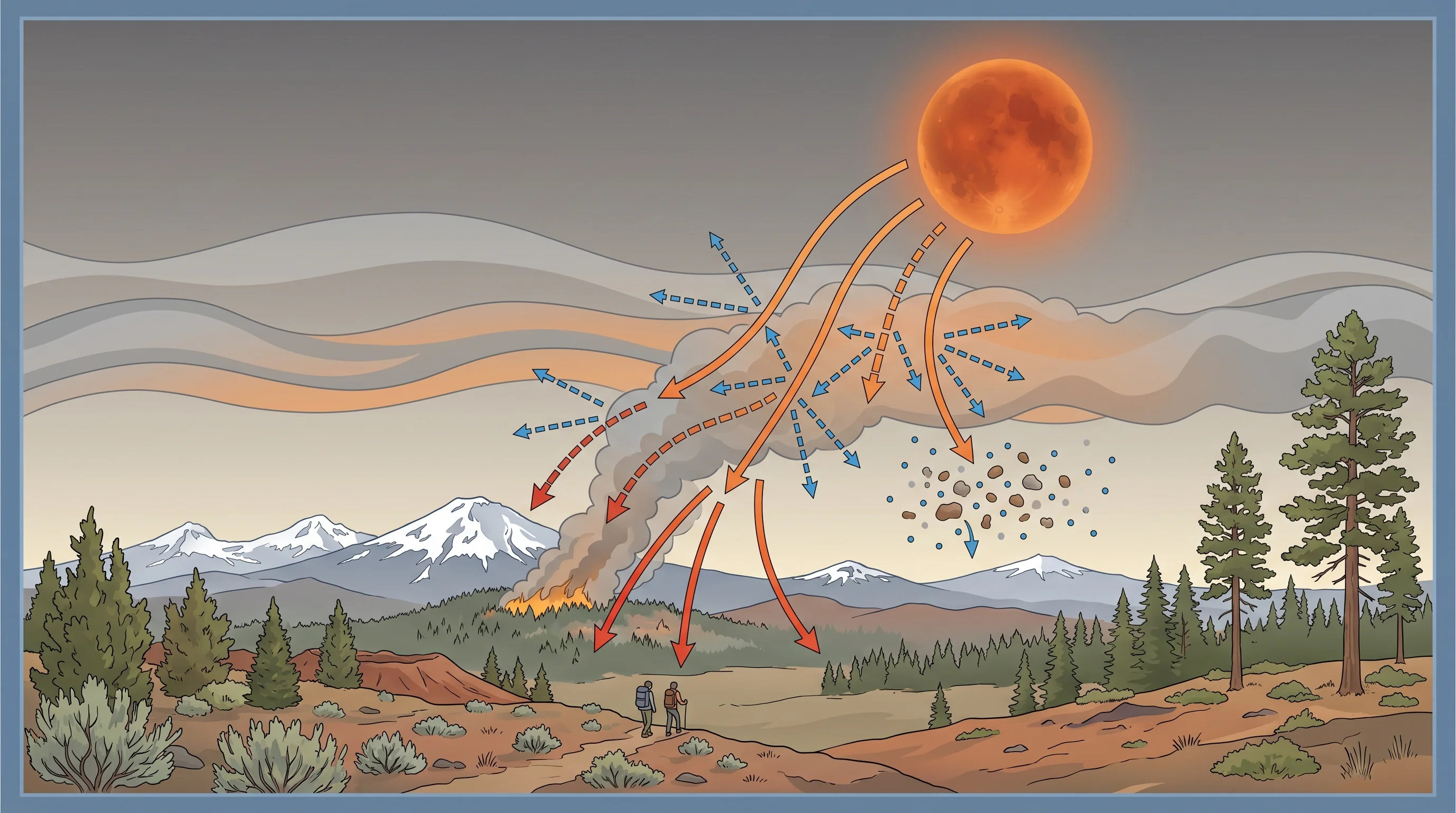
Wildfire smoke turns the moon orange because the fine smoke particles are very effective at scattering and absorbing blue light, leaving a deep orange or red moon even when it is high overhead. Unlike the horizon effect, which fades as the moon rises, smoke darkens the moon at any height because the particles are spread through the air the light must pass through. The thicker the smoke, the deeper and redder the color, so a strikingly red high moon is a reliable sign of significant smoke.
That makes an orange or red moon a useful, if unwelcome, signal during fire season. In Central Oregon, smoke drifts into the Deschutes Basin from fires across the West, and a smoky orange moon usually means the air at the surface is degraded too, the kind of poor air quality measured as PM2.5. The same smoke that colors the moon at night reddens the sun by day, and where it comes from is covered in Central Oregon smoke season.
Is an Orange Moon the Same as a Blood Moon?
An orange moon from smoke or the horizon is not the same as a blood moon, which is the deep red moon that occurs during a total lunar eclipse. A blood moon happens on a known, predictable eclipse date, when Earth passes directly between the sun and the moon and bends red sunlight onto the moon through its atmosphere. It is a precise astronomical event, not an everyday atmospheric one.
The everyday orange moon, by contrast, is just scattering, and it is not an omen of anything. It can happen on any night the moon is low or the air is smoky or hazy. If the moon is red and it is a scheduled eclipse night, that is a blood moon; if it is red because of smoke or because it just rose, that is ordinary scattering. The same physics, incidentally, is what reddens the sun, as explained in why the sun is red.
When Do You See an Orange Moon Over Central Oregon?
You see an orange moon over Central Oregon most often during summer and fall fire season, when wildfire smoke settles over the high desert. A rising or setting moon over the Cascades can glow orange on any clear night thanks to the horizon effect, but a moon that stays deep orange or red well after it has climbed high is a strong sign of smoke in the air. The two causes are easy to tell apart by watching whether the color fades as the moon rises.
For anyone watching the high-desert sky, a smoky orange moon is one of the more memorable, if bittersweet, sights of late summer, beautiful overhead and a reminder that the air is worth checking before a hard outdoor effort the next day. Outside of fire season, an orange moonrise is simply the everyday magic of the geometry of light, fading to white as the moon climbs into the clear high-desert night.