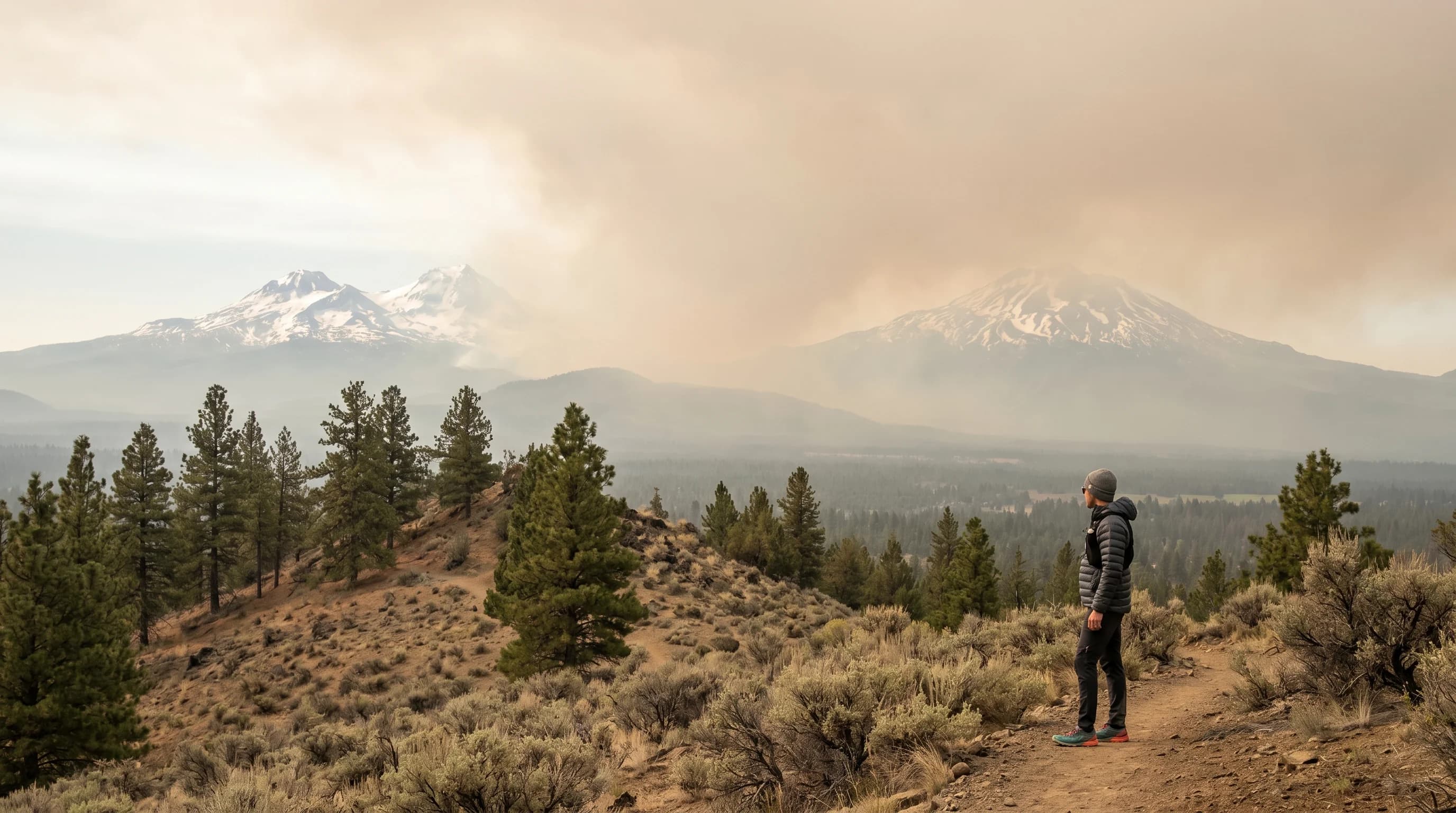
PM2.5 is fine particle pollution made of particles smaller than 2.5 microns across, about 30 times thinner than a human hair. They are small enough to slip past the body's natural defenses, lodge deep in the lungs, and even pass into the bloodstream, which is why they are the main health threat in wildfire smoke. When an air-quality app shows a high number on a smoky day, PM2.5 is almost always what it is measuring. Understanding what it is, where it comes from, and how to read the levels is the difference between guessing about smoke and actually managing your exposure to it.
What Is PM2.5?
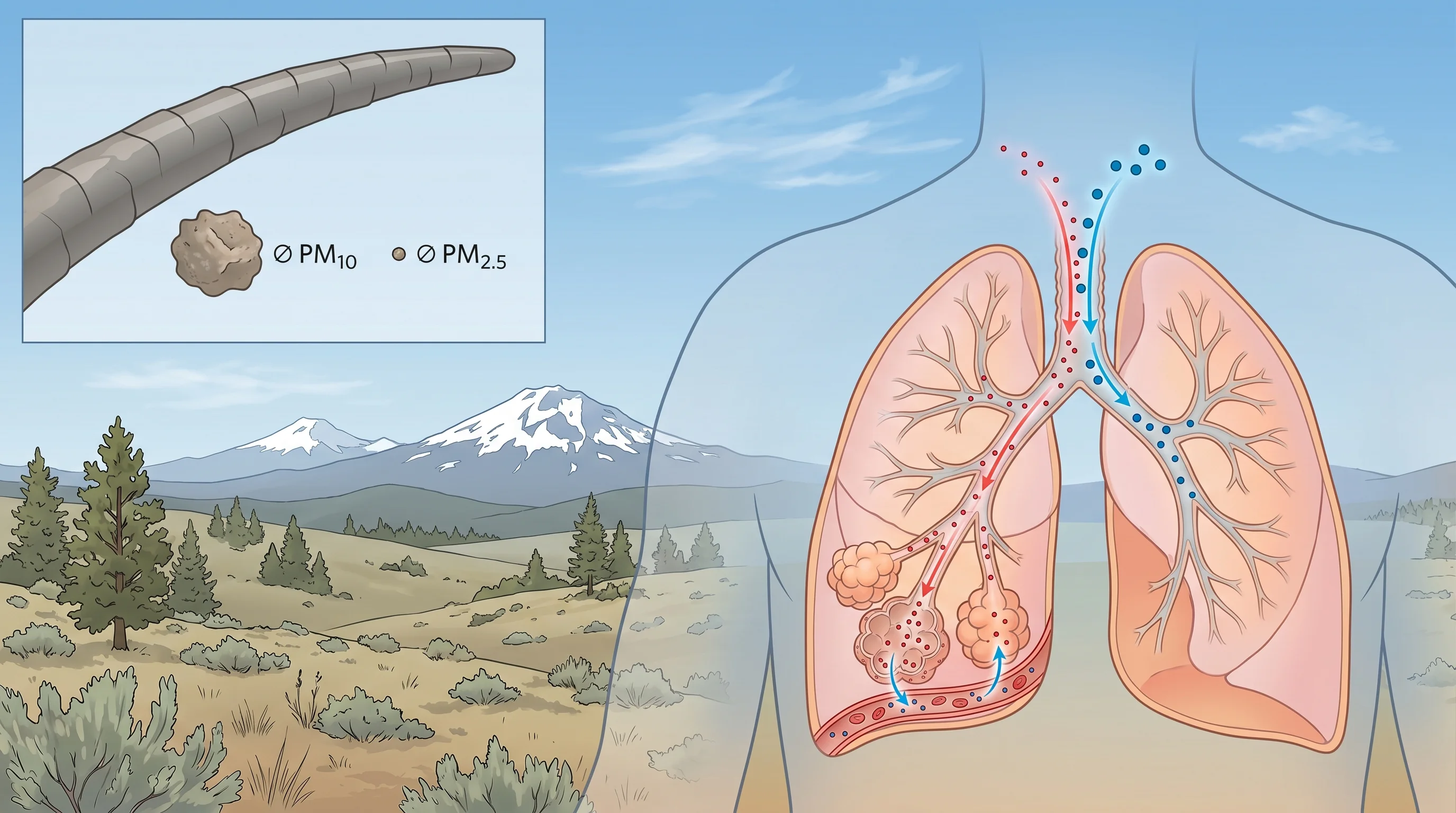
"PM" stands for particulate matter, the general term for tiny solid particles and liquid droplets suspended in the air, and "2.5" is the size cutoff in microns. A micron is a millionth of a meter, so a 2.5-micron particle is far too small to see; for scale, a human hair is roughly 50 to 70 microns across, making PM2.5 about 30 times thinner. That size is the whole story. It is small enough to stay airborne for hours or days, travel hundreds of miles on the wind, and slip deep into the respiratory system rather than being filtered out in the nose and throat.
PM2.5 is measured as a concentration, in micrograms per cubic meter of air, and that measurement is what feeds the Air Quality Index. The U.S. Environmental Protection Agency tracks it as one of a handful of criteria pollutants precisely because of its reach into the body. Wildfire smoke is a dense mix of PM2.5 along with gases, but it is the fine particulate fraction that monitors watch most closely during a smoke event, because it is both the most abundant and the most damaging component.
Why Is PM2.5 So Dangerous?
The danger of PM2.5 comes down to where the particles end up. The body's airways are good at trapping larger particles: nose hairs, mucus, and the cough reflex catch most coarse dust before it gets far. PM2.5 is small enough to bypass those defenses and travel all the way down into the alveoli, the tiny air sacs deep in the lungs where oxygen crosses into the blood. The very smallest particles can cross that barrier and enter the bloodstream directly, which is how an air-quality problem becomes a whole-body problem.
Once there, PM2.5 drives inflammation in the lungs and blood vessels. In the short term that means worse asthma, more frequent respiratory infections, and added strain on the heart, which is why smoke events are linked to spikes in emergency room visits for breathing and cardiac problems. Over the long term, sustained exposure is associated with serious heart and lung disease. The people most at risk are children, older adults, pregnant people, and anyone with existing heart or lung conditions, but heavy enough smoke affects everyone. This is why smoke days carry genuine health warnings rather than being merely unpleasant.
What Is the Difference Between PM2.5 and PM10?
PM10 is the other size class you will see on air-quality reports, and it covers coarser particles up to 10 microns across, including road dust, soil, pollen, and ash. PM2.5 is the fine fraction under 2.5 microns, and it is the more dangerous of the two because it penetrates deeper and stays airborne longer. PM10 tends to settle out faster and is more likely to be caught in the upper airways.
The two also tend to come from different sources, which is a useful clue to what is happening outside. PM10 is mostly mechanical: wind kicking up dust, soil, and pollen. PM2.5 is mostly combustion: wildfires, vehicle exhaust, and wood stoves, where burning produces enormous numbers of microscopic particles. Wildfire smoke is overwhelmingly PM2.5, which is exactly why a smoky sky is a direct health concern and not just a visibility nuisance. A dusty, windy day might spike PM10 while a smoky day spikes PM2.5.
What Is a Safe PM2.5 Level and How Do You Read the AQI?
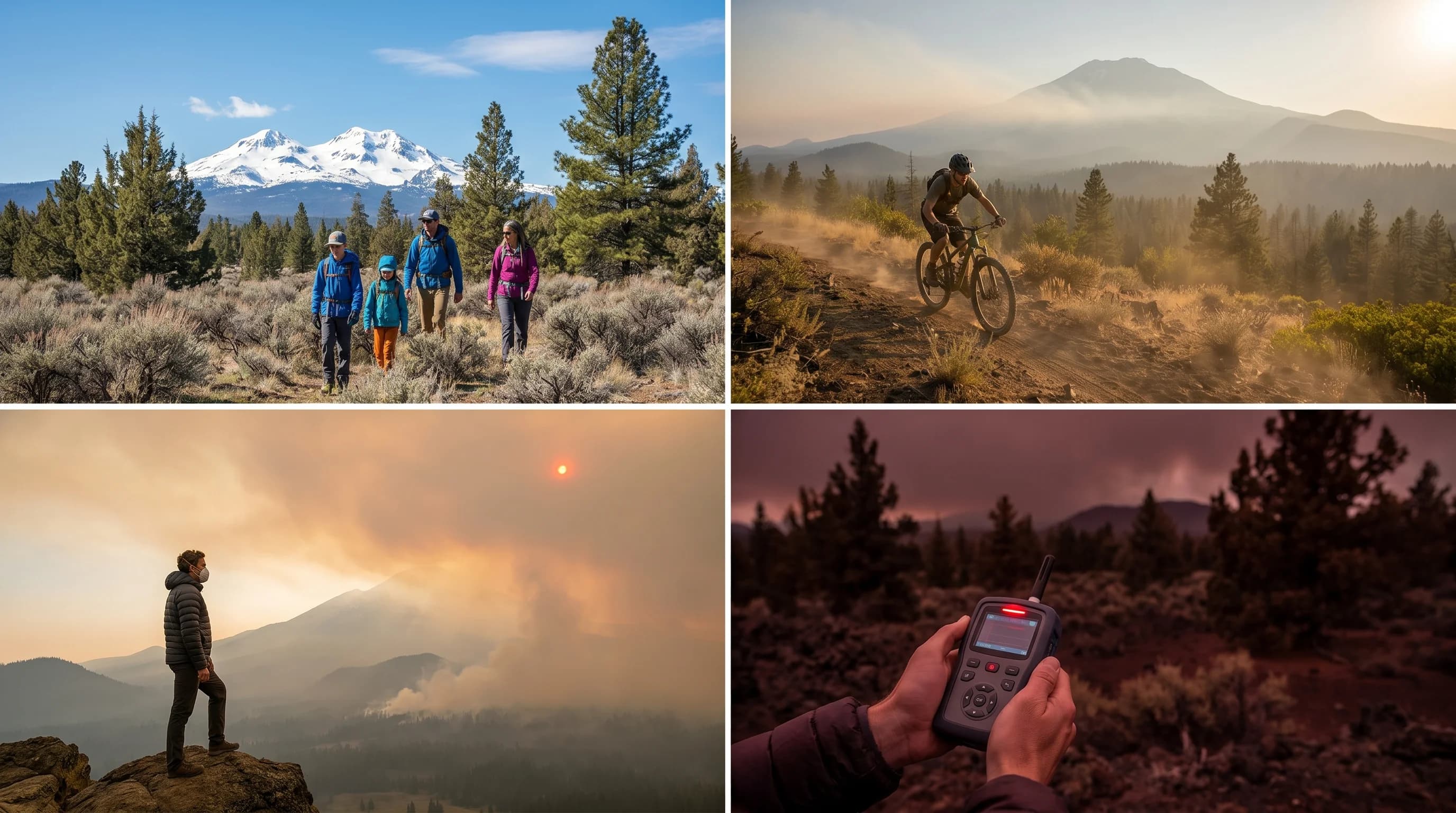
The Air Quality Index is a 0-to-500 scale that translates raw PM2.5 concentrations into a color-coded health warning, which is easier to act on than micrograms per cubic meter. An AQI at or below 50 is green and considered good, with clean air and no action needed. From 51 to 100 is yellow and moderate, generally fine but worth noting for unusually sensitive people. From 101 to 150, orange, the air is unhealthy for sensitive groups, who should ease up on strenuous outdoor activity.
Above 150 the warnings broaden quickly. The 151-to-200 red band is unhealthy for everyone, 201 to 300 purple is very unhealthy, and anything above 300 is hazardous, the level where outdoor exposure should be avoided entirely. During a wildfire smoke event the number can swing dramatically within hours as the wind shifts, so a morning that starts green can be purple by afternoon. Checking a current AQI reading before going outside, rather than relying on yesterday's conditions or how the sky looks, is the single most useful habit during smoke season.
How Does PM2.5 Connect to Wildfire Smoke in Places Like Central Oregon?
Wildfire smoke is the biggest source of dangerous PM2.5 spikes across the West, and Central Oregon sees it nearly every fire season. Smoke can arrive from local fires or drift in from blazes hundreds of miles away in California, Washington, or the Oregon Cascades, then settle into the Deschutes Basin. Because PM2.5 travels so far and lingers so long, Bend's air can go from pristine to hazardous in a single day depending on where the smoke is coming from and which way the wind is blowing.
Summer wildfire smoke is not the only source. In winter, a strong temperature inversion can trap wood-stove smoke and vehicle exhaust in the basin, pushing PM2.5 to unhealthy levels even with no fire anywhere nearby, simply because the polluted air has nowhere to go. Either way, the protection is the same: reduce exposure. Check the AQI, stay indoors with windows closed and a HEPA or box-fan filter running when it climbs above 100, and wear a well-fitted N95 outdoors in heavy smoke, since cloth and surgical masks do not stop particles this small. The particles themselves are invisible, but the number on the app is a reliable guide to when the air is genuinely unsafe, and treating it as seriously as a temperature or a storm warning is the right call during a Central Oregon smoke event.
It helps to know what actually filters PM2.5 and what does not. A true HEPA filter, or a well-made box-fan filter using a high-rated furnace filter, captures these fine particles and can keep indoor air far cleaner than outside during a smoke event, especially in a single room set up as a clean-air space. Recirculating a car's air with the windows up and a cabin filter installed helps on the road. What does not work is waiting for the smell to fade or judging by how the sky looks, since light haze can still carry unhealthy levels, and cloth or surgical masks let the smallest, most dangerous particles straight through. Knowing those distinctions turns a smoke day from something endured into something managed.