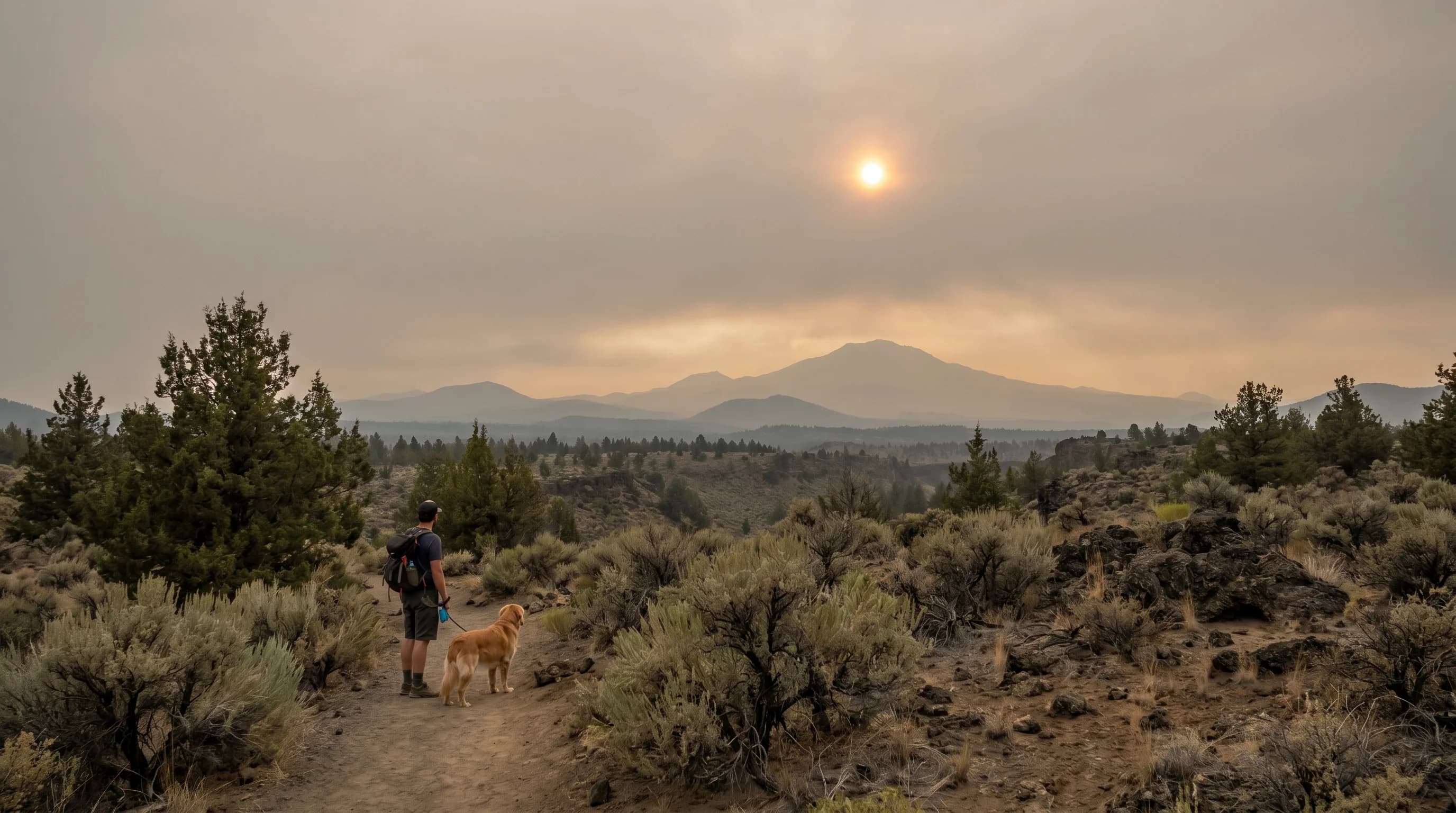
If the air quality is bad today, it is almost always one of three things: wildfire smoke drifting in, pollution trapped near the ground under a temperature inversion, or stagnant air with no wind to clear it. In summer and fall the cause is usually smoke; in winter it is usually a trapped inversion; and on hot summer afternoons in big cities it can be ozone smog. The fastest way to tell which one you are dealing with is to check for a smoke smell, look at a smoke map, and read the Air Quality Index, which tells you how serious it is and what to do about it.
Why Is the Air Quality So Bad Today?
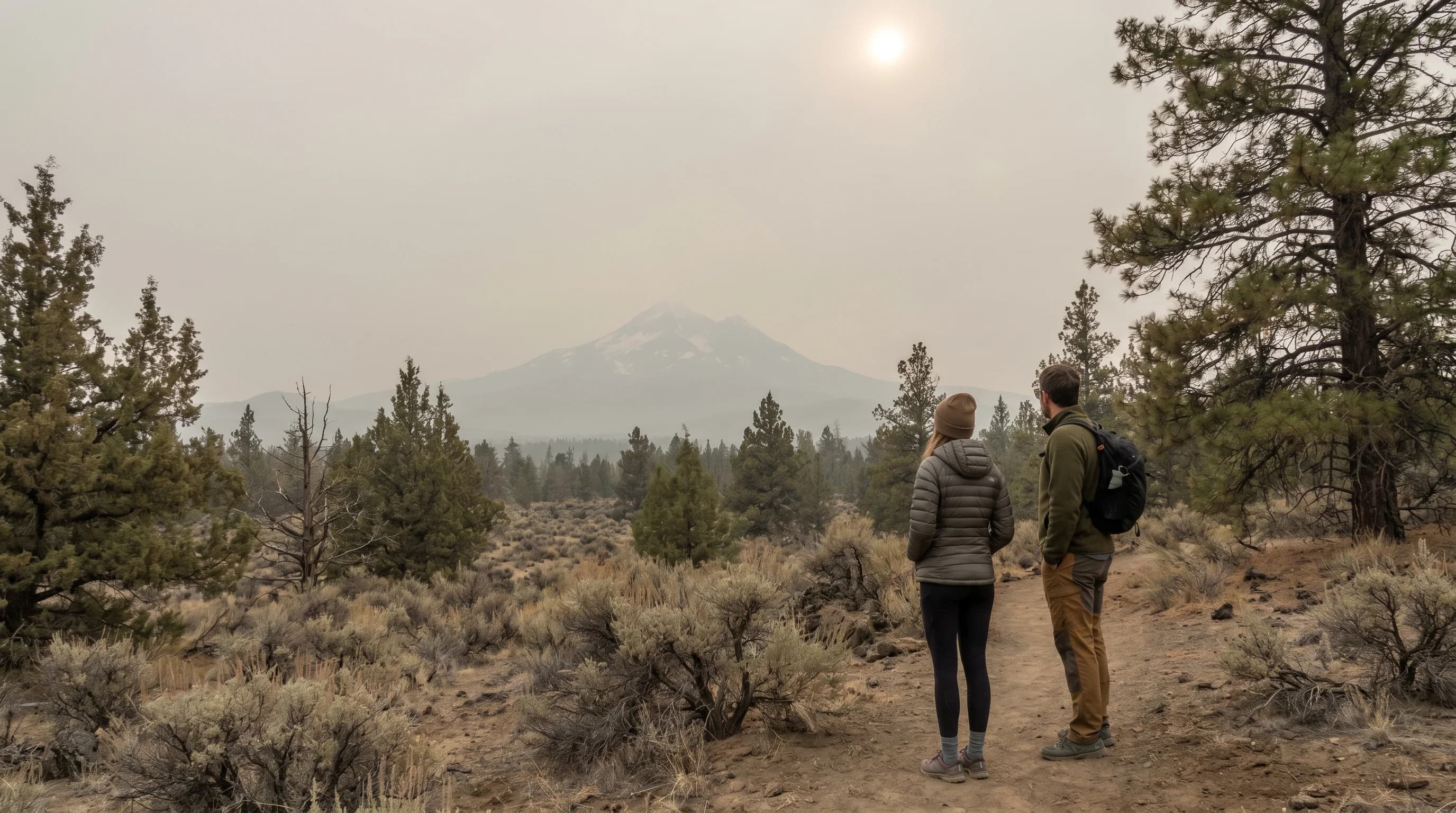
The single most common reason for a sudden drop in air quality is wildfire smoke. Smoke is made of fine particles small enough to travel hundreds of miles on the wind, so the air can turn hazardous in a place with no fire anywhere near it. If the sky is hazy, the sun looks orange or dim, you can smell smoke, and the murk covers a wide area rather than hugging a valley floor, smoke is almost certainly the cause. During the Western fire season from summer into fall, this is the default explanation.
The second common cause is a temperature inversion, and it shows up mostly in cold weather. On clear, calm winter nights, cold air pools in valleys and basins under a lid of warmer air aloft, and that lid stops the normal upward mixing that would carry pollution away. Wood-stove smoke, vehicle exhaust, and dust then build up in the shallow, trapped layer near the ground, sometimes to unhealthy levels, with no new pollution source at all. If the bad air is cold, calm, and confined to a low area, an inversion is the likely culprit. The third cause, ozone smog, mostly affects large metro areas on hot, sunny, stagnant days and comes with haze but no smoke smell.
How Do You Read the Air Quality Index (AQI)?
The Air Quality Index is a 0-to-500 scale that converts pollution levels into a color-coded health warning, which is far easier to act on than a raw measurement. An AQI at or below 50 is green and good, 51 to 100 is yellow and moderate, 101 to 150 is orange and unhealthy for sensitive groups, 151 to 200 is red and unhealthy for everyone, 201 to 300 is purple and very unhealthy, and above 300 is maroon and hazardous. The number you see during smoke and inversions is almost always driven by fine particle pollution, the component that reaches deepest into the lungs.
The most important habit is to check a current reading rather than trusting how the sky looks or how it looked yesterday, because the number can change dramatically within hours as the wind shifts. A free air-quality app or a local monitor will give you the live AQI for your exact area. The particle that the index is tracking, PM2.5, is invisible, so the reading is genuinely more reliable than your eyes for deciding whether it is safe to be outside.
Is It Wildfire Smoke?
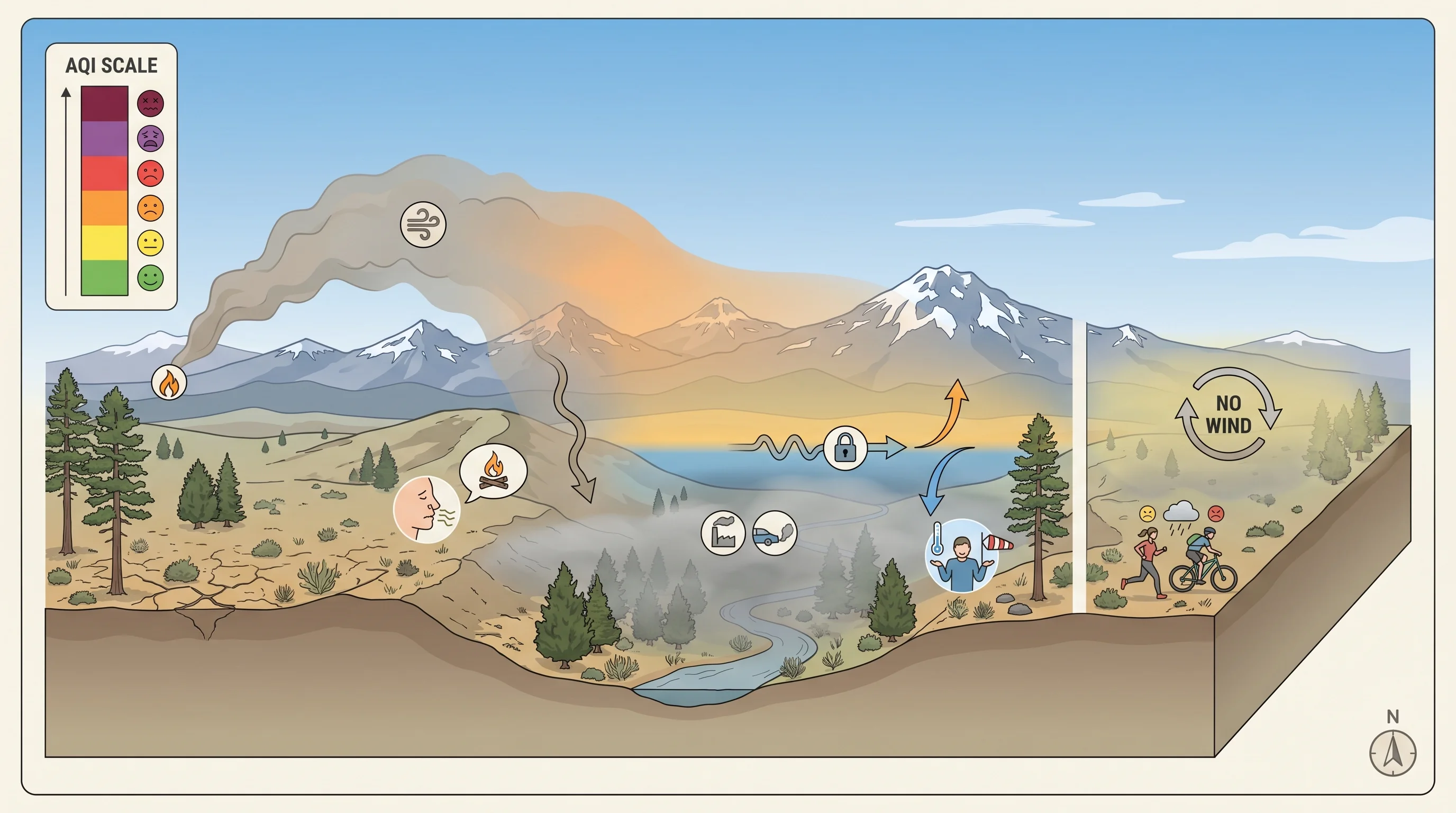
If the air smells of smoke, the sun looks orange or red, and the haze covers a whole region rather than pooling in a valley, the cause is wildfire smoke. Because smoke travels so far, the fire responsible can be hundreds of miles away in another state, so a clear local forecast does not rule it out. A smoke map, which most weather services and air-quality apps provide, shows where the plumes are and which way they are heading, and it is the quickest way to confirm smoke and to anticipate whether your air will get better or worse over the next day.
The color overhead is a useful clue, even though it is not a substitute for an AQI monitor. The same scattering that makes wildfire haze visible explains why the sun looks red through smoke and why the moon can rise orange.
In places like Central Oregon, summer smoke is the dominant air-quality story. Plumes from fires across the West settle into the Deschutes Basin, and the air can swing from pristine to hazardous and back within a day as winds change. Which fires affect a given town depends heavily on wind direction, which is why two nearby towns can have very different air on the same afternoon. The details of where regional smoke comes from are covered in Central Oregon smoke season.
Is It a Temperature Inversion Trapping Pollution?
If the air is cold, calm, and hazy in winter, with no fire anywhere and the murk sitting in a valley or basin, the cause is usually a temperature inversion trapping pollution near the ground. The warm lid aloft prevents the smoke from wood stoves and the exhaust from traffic from rising and dispersing, so the same daily emissions concentrate in a thinner and thinner layer of air. The longer the inversion holds, often through a multi-day high-pressure spell, the worse the air gets, which is why the worst winter air-quality readings tend to come at the end of a long cold, calm stretch.
This is a defining winter pattern in basin terrain like Central Oregon's, where cold air drains off the surrounding higher ground and pools around the towns. The mechanism, and why it is so stubborn once it sets in, is explained in what is a temperature inversion and in the local version, Central Oregon inversions. The same cap that traps the haze also traps cold and fog, so a bad-air winter day often comes bundled with freezing fog and a hard chill.
When Will the Air Clear, and What Should You Do Now?
Bad air clears when something mixes it out: a wind shift that brings cleaner air, a front or storm that scours the region, or, for an inversion, enough daytime heating or wind to break the cap. Smoke can clear in hours when the wind turns favorable, while a stubborn winter inversion can hold for days until a system finally moves through. The forecast for wind and an approaching front is your best clue for timing, so checking it tells you not just how bad the air is but how long it is likely to last.
While the air is bad, the goal is simply to reduce how much of it you breathe. Check the AQI before going outside, and when it climbs above 100 keep windows closed and run a HEPA or box-fan filter to keep one room as a clean-air space. Limit strenuous outdoor activity, more strictly for children, older adults, and anyone with heart or lung conditions, and wear a well-fitted N95 outdoors in heavy smoke, since cloth and surgical masks do not stop the fine particles. The sky may look dramatic, but the number on the app is the honest measure of when the air is genuinely unsafe and when it is fine to head back out.