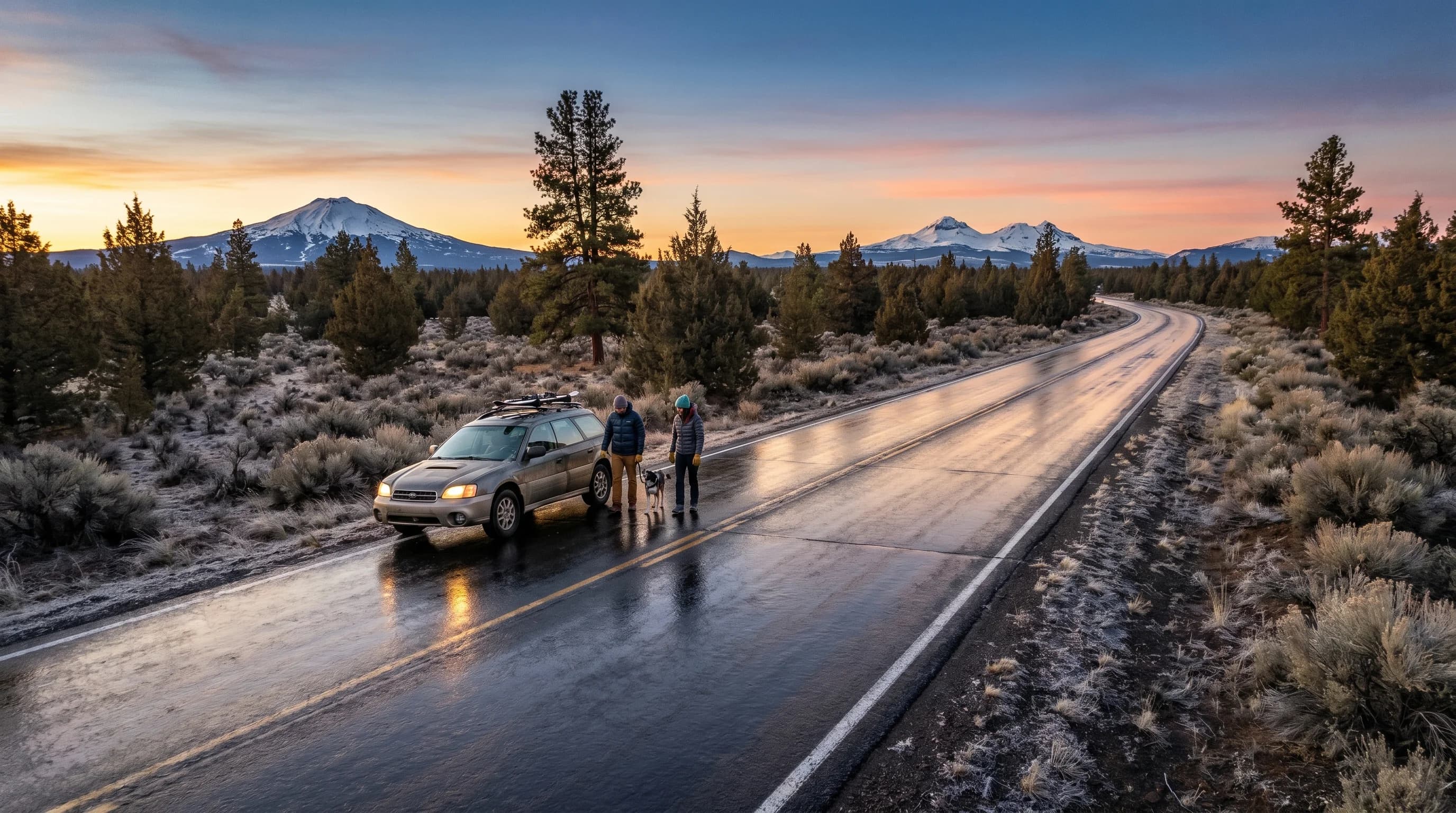
Black ice is a thin, transparent layer of ice on a road or sidewalk that is nearly invisible because you see the dark pavement straight through it. It is not actually black; it just takes on the color of the surface beneath it, which is exactly what makes it so dangerous. The road looks merely wet, or even dry, right up until a tire or a foot loses all grip. Black ice forms when a thin film of water freezes smooth and clear, and it is one of the most common and underestimated winter hazards in cold, high-elevation places like Central Oregon.
What Is Black Ice?
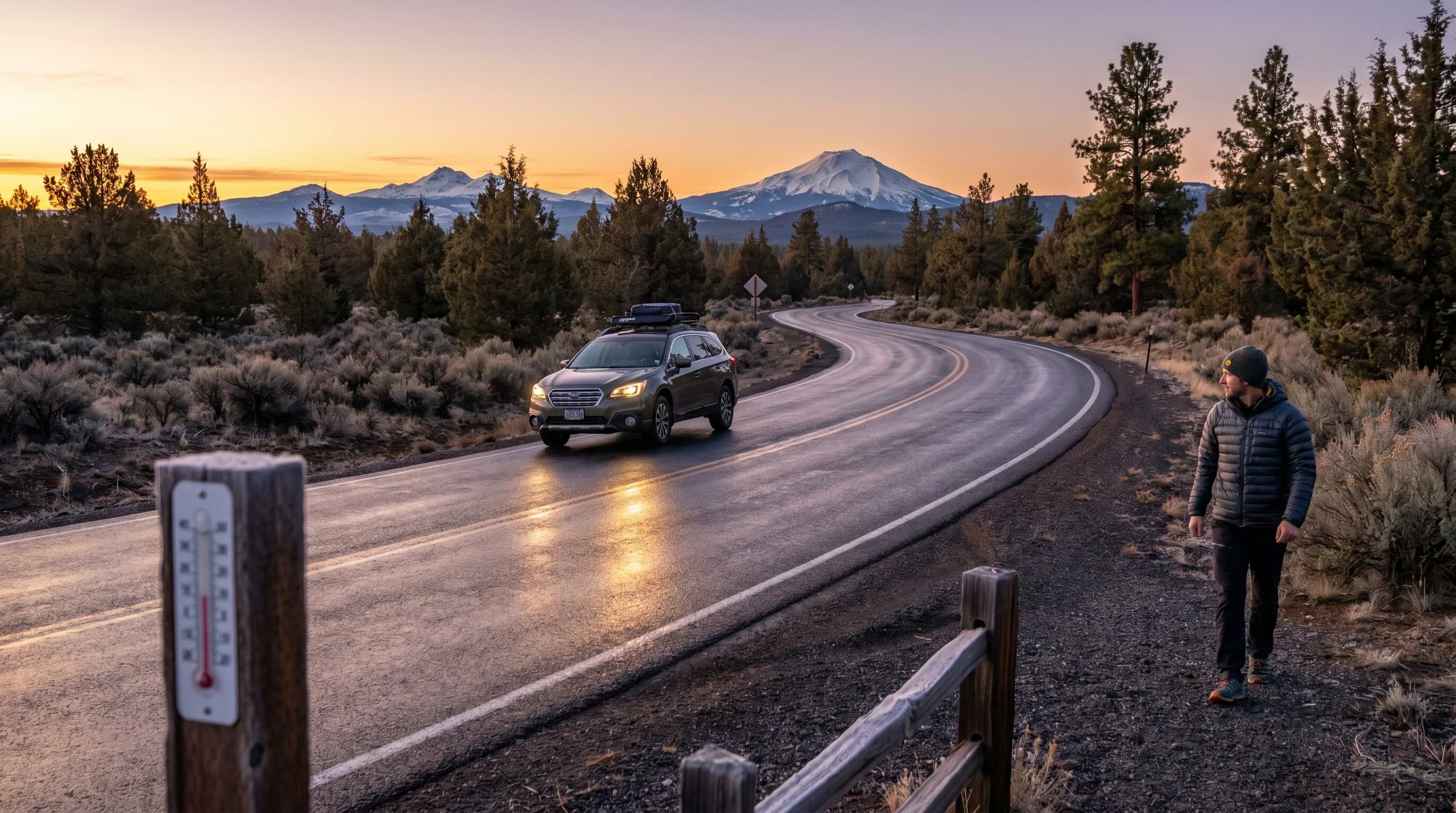
The defining feature of black ice is transparency. Most ice looks white or frosty because it is full of trapped air bubbles that scatter light, but black ice forms from a thin, still film of water that freezes into a smooth, clear sheet with few bubbles. With nothing to scatter the light, you see right through it to the dark asphalt below, so it reads as a wet patch rather than an icy one. That visual trick is the whole danger: drivers and walkers do not slow down for what looks like ordinary wet pavement.
It also tends to form in thin, patchy stretches rather than a continuous sheet, which makes it even more treacherous. A road can be bare and grippy for a hundred yards and then carry a glassy patch across a shaded curve or a bridge deck, giving no warning at the moment traction matters most. Because it is so hard to see, black ice causes a disproportionate share of winter crashes and falls relative to how little ice is actually present.
How Does Black Ice Form?
Black ice forms when a thin layer of water on the pavement freezes at or below 32 degrees Fahrenheit, smoothly enough to stay clear instead of turning white. The water can come from several sources: snow that melted during the day and refroze after dark, light rain or drizzle falling onto a road already below freezing, or the moisture left by freezing fog, where supercooled fog droplets freeze directly onto the road surface. The thinner and cleaner the water film, the more transparent the resulting ice.
A crucial detail is that the surface temperature matters more than the air temperature. Pavement, and especially a bridge deck, can be several degrees colder than the air the thermometer is reading, because it radiates heat away to the clear night sky and, in the case of bridges, loses heat from below as well as above. So a road can glaze over with black ice even when the official air temperature is a degree or two above freezing. This is also closely related to the way freezing rain coats surfaces, the difference being that black ice often forms from water already on the ground rather than rain falling onto it.
It helps to understand why black ice is clear when most ice is not. When water freezes quickly or while it is agitated, it traps countless tiny air bubbles, and those bubbles scatter light and make the ice look white, the way an ice cube or a snowbank does. Black ice forms from a thin, undisturbed film of water freezing slowly and evenly, so few bubbles get trapped and the ice stays optically clear. That is the difference between a road you can see is icy and one you cannot, and it is purely a matter of how the water froze, not what it is made of.
When Does Black Ice Form, and at What Temperature?
Black ice forms when surface temperatures are at or below 32 degrees, and the highest-risk window is overnight and in the early morning around dawn, when the air and pavement are coldest. It also appears after sunset when the day's snowmelt refreezes. The dawn commute is the classic danger period: the sun is not yet warming the pavement, and any moisture from melt, drizzle, or fog has had all night to freeze into a clear glaze.
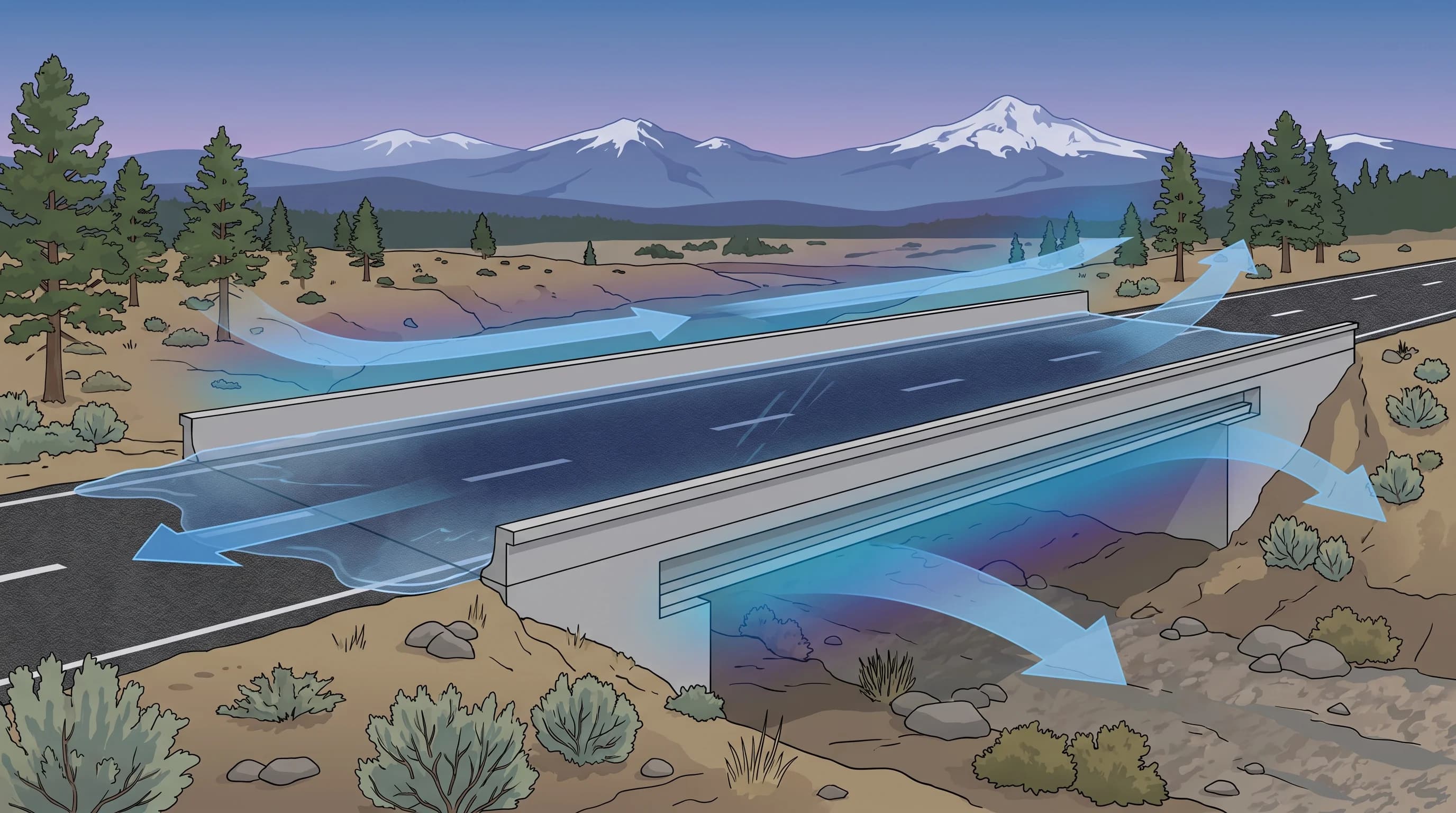
Where it forms is as predictable as when. Bridges and overpasses freeze first because cold air circulates both above and below them, so they ice over while the approaching road is still merely wet. Shaded curves, tree-lined stretches, and north-facing sections stay frozen long after sunlit pavement has thawed. Low spots where cold air pools and runoff collects are also prone. If you learn the handful of spots on your regular route that match these descriptions, you can anticipate black ice rather than discover it.
Where Is Black Ice a Problem in Central Oregon?
Central Oregon is prime black-ice country because it combines cold, clear nights, frequent freezing fog in the basins, and high mountain passes. In the towns, freezing fog and refrozen melt glaze the bridges and overpasses along Highway 97 and the shaded side streets of Bend and Redmond on cold winter mornings, often with no precipitation falling at all. The same clear-night cooling that produces the region's big temperature swings is what chills the pavement below freezing.
The mountain routes raise the stakes. Santiam Pass, the Cascade Lakes Highway, and the Mt. Bachelor access road ice up regularly through winter, and they can be glazed even on days that feel merely cold and dry in town. Drivers heading up to ski or play should treat the access roads as potentially icy regardless of how the morning looked at home, and the same caution applies to anyone driving the passes between Central Oregon and the valley.
How Do You Drive Safely on Black Ice?
The safest approach to black ice is to slow down before you reach the high-risk spots and to avoid any sudden inputs that can break traction. Reduce speed on the approach to bridges, overpasses, and shaded curves rather than once you are on them, because by the time you feel the ice it is too late to brake hard. Increase your following distance well beyond what feels necessary on dry roads, since stopping distances on ice can be many times longer.
If you do start to slide, ease off the accelerator, keep the steering wheel pointed where you want to go, and avoid slamming the brakes, which only locks the wheels and removes what little control you have. Above all, treat any wet-looking road near or below freezing as if it were iced, especially at dawn and on bridges. Black ice rewards anticipation and punishes surprise, so the drivers who handle it best are the ones who assumed it was there before they ever saw it. When freezing fog or a hard overnight freeze is in the forecast, plan for a slower, more deliberate morning drive.