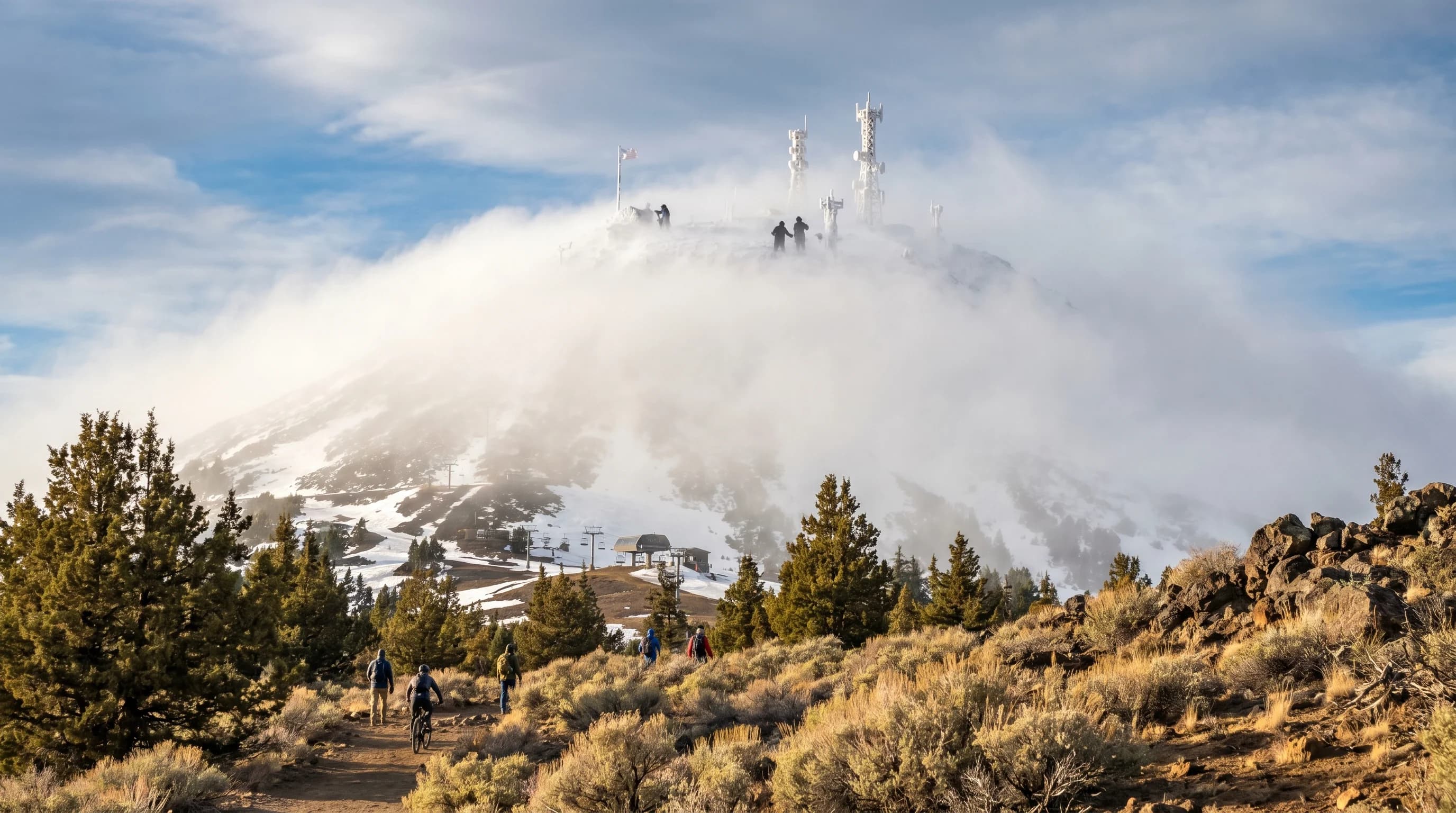
Mt. Bachelor weather is a tale of two mountains. The base is often mild and skiable while the 9,068-foot summit can be brutally cold, windy, and whited-out at the very same time. The mountain sits 22 miles southwest of Bend and catches the full force of Cascade storms, averaging well over 300 inches of snow a season across one of the longest seasons in the Pacific Northwest. The summit chair runs only when the wind allows, so checking base-versus-summit conditions, and the lift status, is the key to planning a day here.
What Is the Weather Like at Mt. Bachelor?
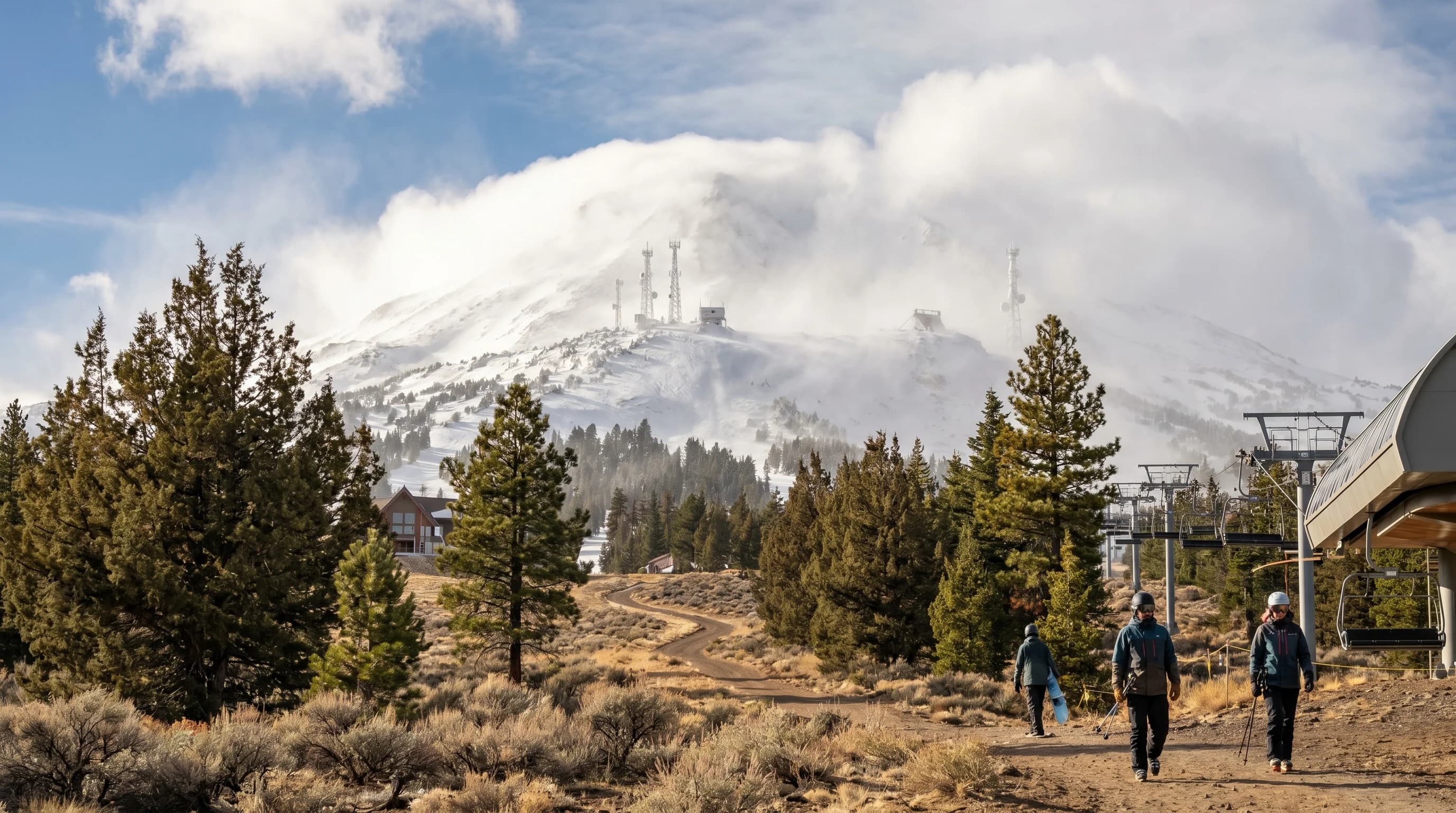
Mt. Bachelor's weather is dominated by elevation and exposure. The base area sits around 6,300 feet and the summit reaches 9,068 feet, and that nearly 2,800-foot span is enough to create genuinely different weather at the top and bottom on the same day. Conditions can change in minutes up high, where the mountain is fully exposed to whatever the Cascades throw at it, while the more sheltered lower slopes stay calmer and milder.
As a tall, isolated Cascade peak, Bachelor intercepts the moisture-laden storms rolling in off the Pacific and turns them into deep snow, which is why it has such a long, reliable season. But the same exposure that brings the snow also brings wind and whiteouts to the upper mountain, so a powder day and a wind hold can arrive together. Reading Bachelor's weather means thinking in layers, base, mid-mountain, and summit, rather than one number.
That is why the mountain's own snow report and conditions page lists separate readings for the base and the summit, and why experienced visitors check both. A base reading of 28 degrees and light wind can sit beneath a summit that is in the teens with gusts strong enough to close the top, and a clear sky at the lodge can hide a whiteout 2,800 feet above. Treating the base report as the whole story is the most common planning mistake at Bachelor; the conditions that decide your day are usually the ones up high.
Why Is the Summit So Much Colder and Windier Than the Base?
The summit is far colder and windier than the base because air cools as you climb and the exposed peak has nothing to block the wind. Temperature falls by several degrees for every thousand feet of elevation, so the summit routinely runs 15 to 20 degrees colder than the base before wind is even considered. Add the wind, which accelerates over the unsheltered summit, and the difference in how it feels becomes extreme.
That is where wind chill comes in: a moderate temperature plus strong summit wind can drive the feels-like number far below the base reading, which is why a comfortable morning in the parking lot can mean dangerous exposure at the top. The smart move is to dress for the summit conditions, not the base, and to carry more layers than a base-area glance would suggest you need.
What Is a Wind Hold, and When Does the Summit Close?
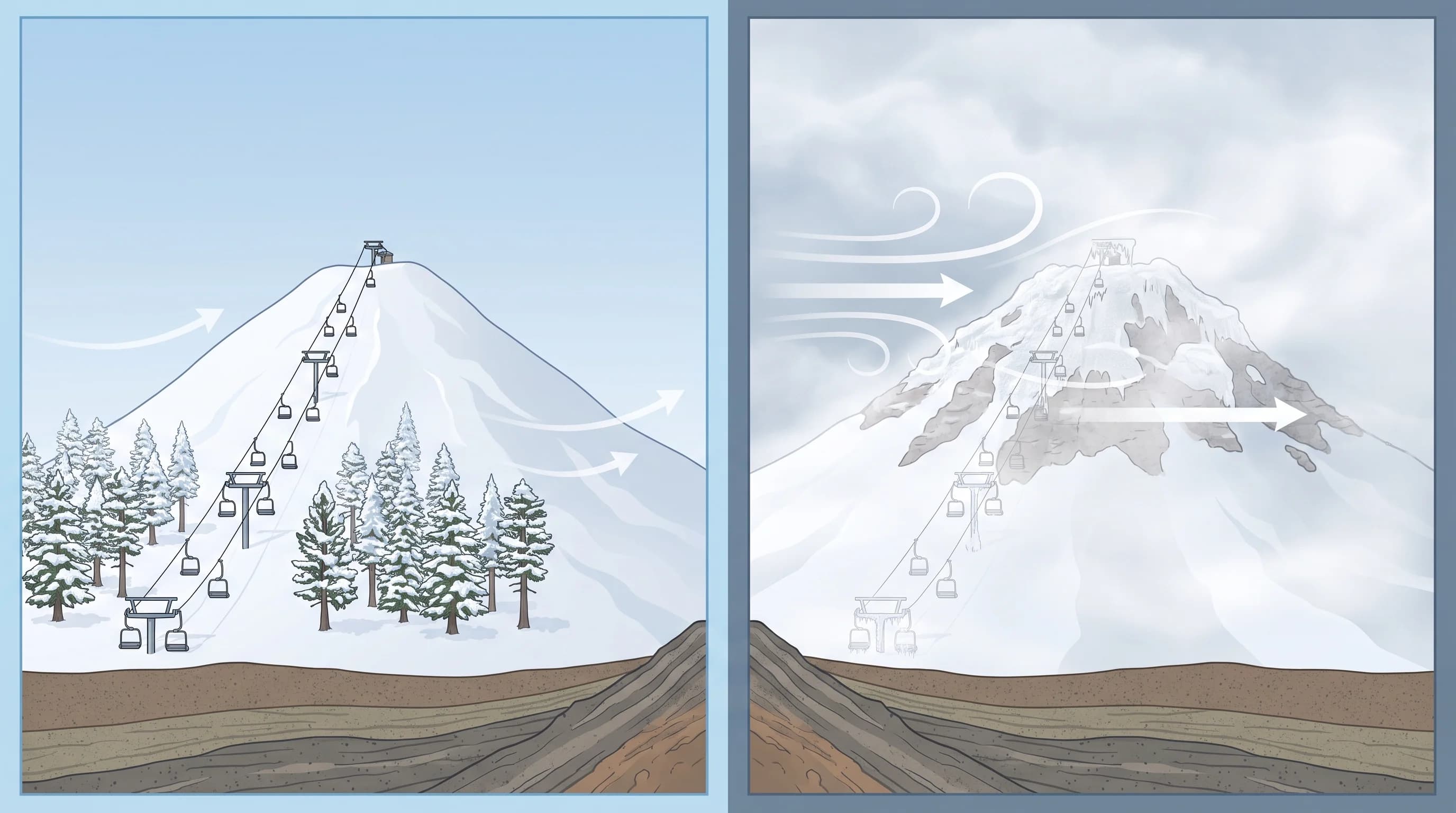
A wind hold is when high winds force the summit lift to stop running, and it happens often at Mt. Bachelor because the exposed peak catches strong storm winds. Lifts have wind limits for safety, and Bachelor's summit chair, reaching the most exposed terrain on the mountain, hits those limits frequently. A wind hold can keep the summit closed even on a clear, bluebird day if the wind aloft is strong, which surprises visitors expecting that sunshine means open terrain.
When the summit is on hold, the lower and mid-mountain lifts usually keep running, so a day is rarely lost entirely, but the marquee summit terrain and the 360-degree access it provides may be off the table. This is why checking the lift status and the wind forecast before you go, and again on arrival, is essential at Bachelor in a way it is not at many ski areas. Plan your day with the assumption that the summit may not open, and treat it as a bonus when it does.
Snow, Rime Ice, and Whiteouts at the Summit
The summit collects deep snow, thick rime ice, and frequent whiteouts as Cascade storms slam into it. When freezing fog and cloud envelop the upper mountain, supercooled droplets freeze onto every surface as rime ice, caking towers, signs, and trees in wind-sculpted white. In the thick of a storm, visibility up high can drop to nothing, and a snow squall can whiteout the upper mountain in minutes.
Those conditions are the price of Bachelor's famous powder, and they call for the right gear and judgment: goggles for the flat light and blowing snow, the navigation sense to ski familiar terrain in a whiteout, and the patience to wait out the worst of a squall. The deep snow and the harsh summit weather are two sides of the same coin, both products of an exposed peak in the path of Pacific storms.
How Much Snow Does Mt. Bachelor Get, and When Is the Season?
Mt. Bachelor averages more than 300 inches of snow a season and typically runs from late November into May, one of the longest seasons in the Pacific Northwest. Midwinter brings the deepest, most frequent storms, while spring offers softer, sunnier riding and the famous long Bachelor spring season that can stretch toward Memorial Day in big years. The depth and duration come straight from the mountain's elevation and its exposure to Cascade storms. The 2026-27 El Niño outlook for Mt. Bachelor explains why a warmer seasonal signal still does not produce a simple mountain snow-total forecast.
In summer, Mt. Bachelor turns into a mild, breezy high-elevation playground for hiking, biking, and the scenic chairlift, with cool temperatures even on hot valley days and occasional afternoon thunderstorms building over the peak. Smoke can reach it during fire season. Whatever the season, the broader regional snow picture is covered in the Central Oregon snow guide, and the reason town and mountain differ so much is explained in why it can rain in Bend but snow at Mt. Bachelor.