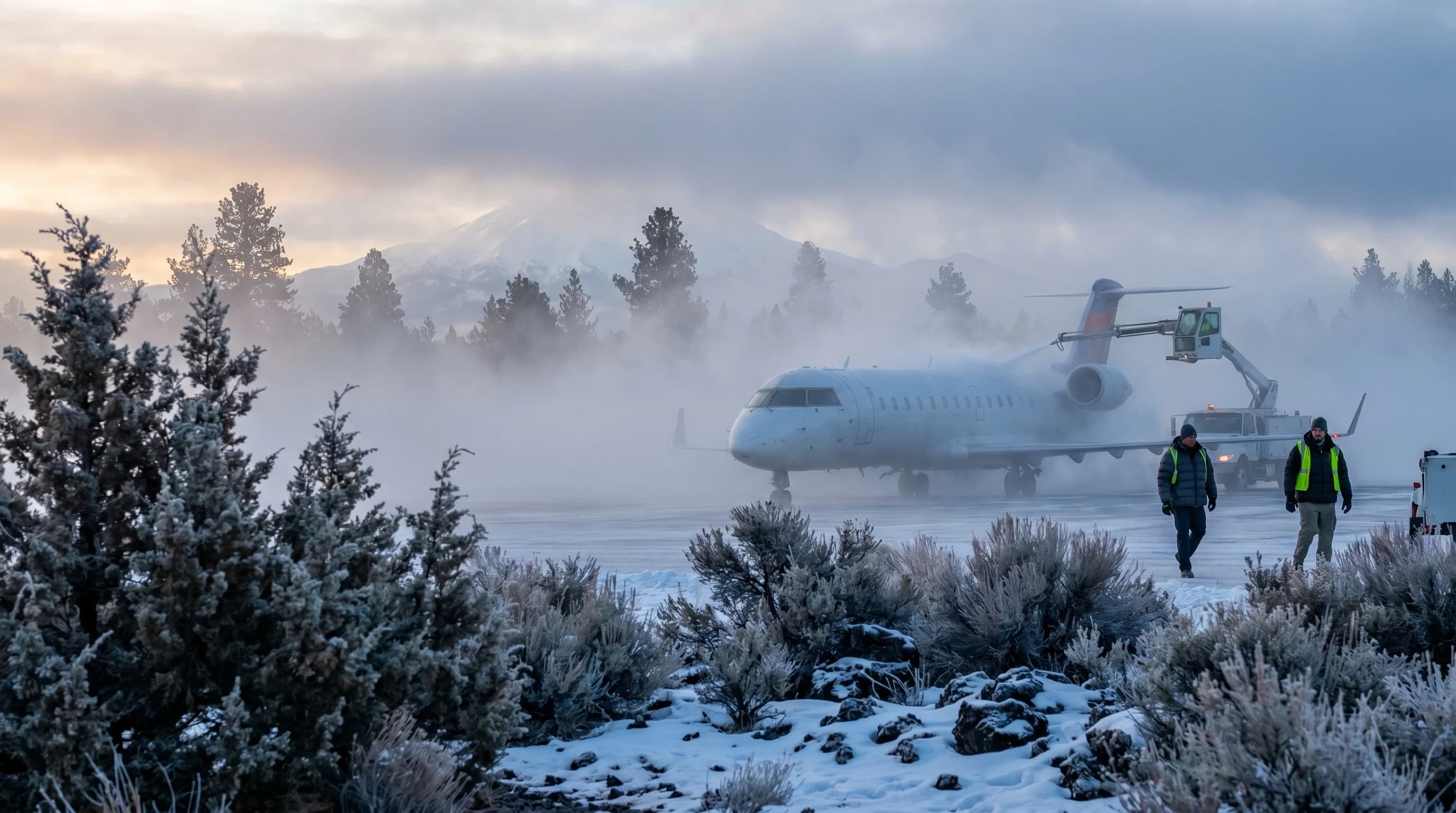
Most weather delays at RDM, Redmond Municipal Airport, also known as Roberts Field, come from three things: freezing fog and low visibility in winter, snow and ice on the runway, and wildfire smoke in late summer. Because RDM is the air gateway for the whole Bend area, these delays ripple across Central Oregon travel. Freezing fog is the most common and least expected culprit, settling into the cold Deschutes Basin on calm winter mornings, while summer smoke is the warm-season wildcard. Knowing the seasonal pattern helps you plan flights that are less likely to be disrupted.
What Causes Weather Delays at RDM (Redmond) Airport?
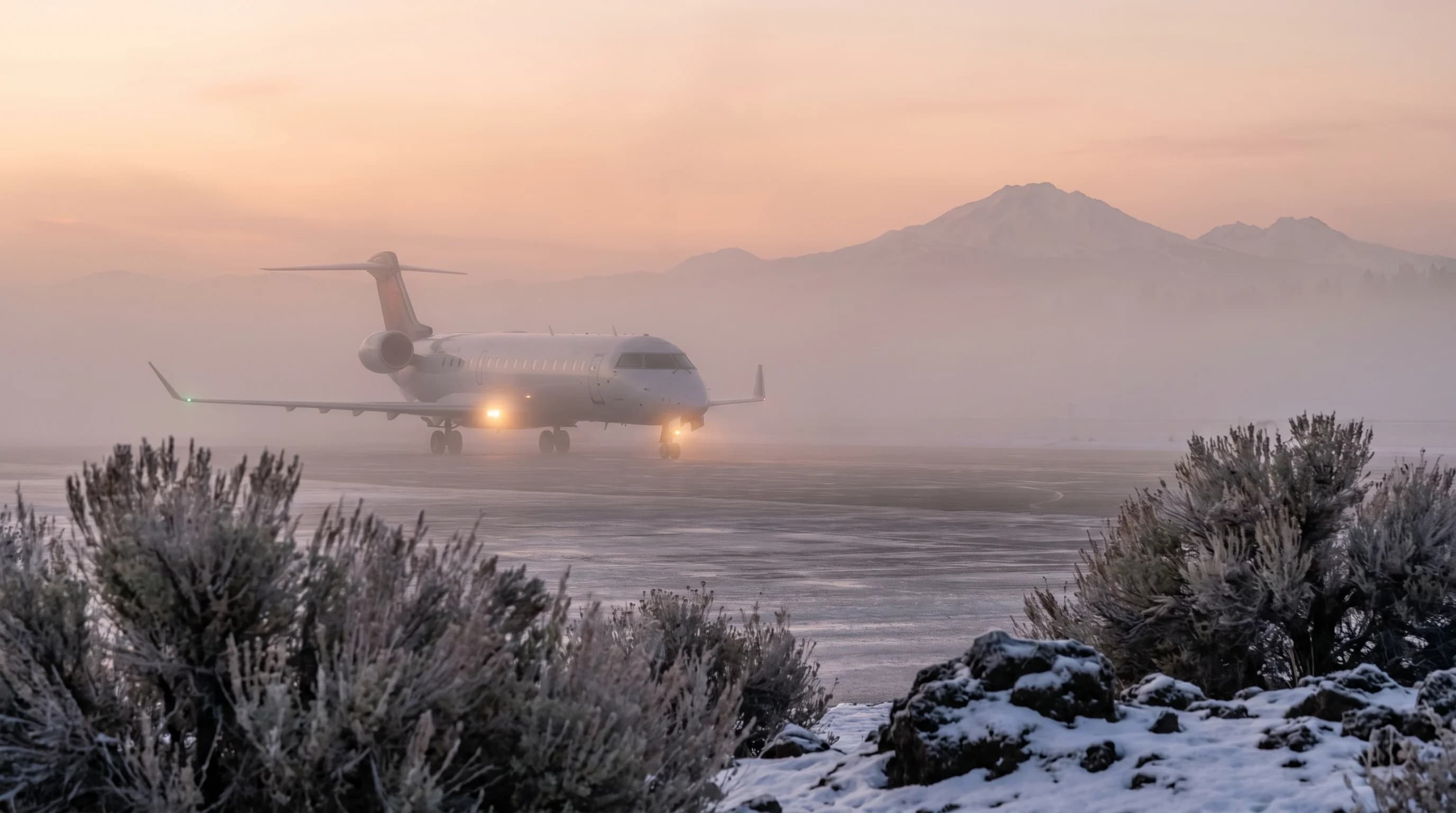
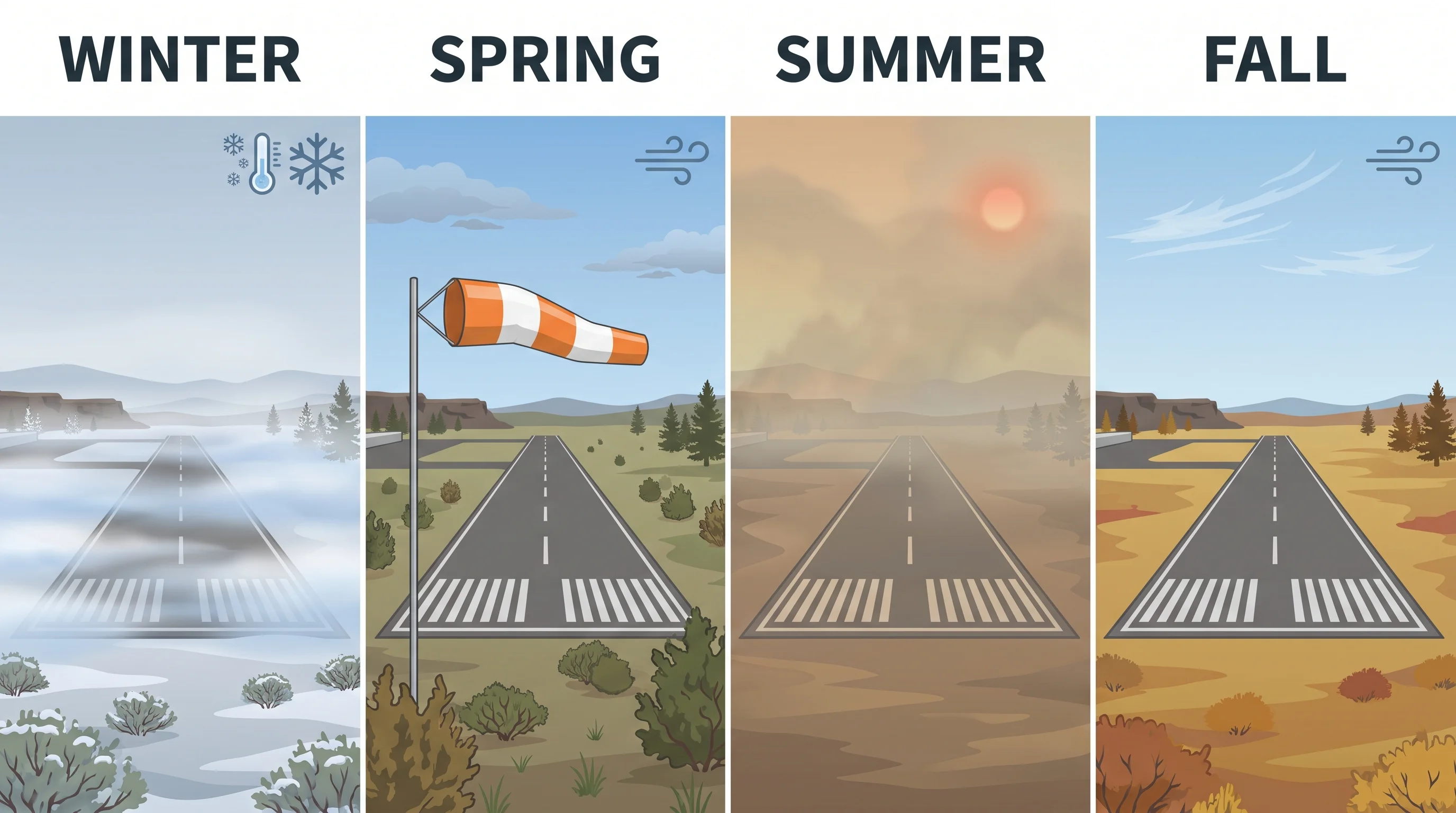
RDM serves Central Oregon from a spot in the high desert that is prone to exactly the conditions that disrupt aviation. The three big weather causes of delays are winter freezing fog and low visibility, snow and ice that require runway clearing and aircraft de-icing, and wildfire smoke that cuts visibility in late summer. Strong spring winds occasionally play a role too. Of these, freezing fog is both the most frequent and the most surprising to travelers, since it can ground or slow flights on a morning when no storm is anywhere in sight.
Because Redmond is the airport for Bend, Sunriver, and the wider region, a weather delay here affects far more than the immediate area, scrambling connections and trip plans across Central Oregon. Understanding which season brings which hazard, fog and ice in winter, smoke in late summer, lets you build in the right buffer and pick flight times that dodge the worst of it. The same conditions that delay flights are the everyday weather of the high desert, just seen from the runway.
It is worth noting how weather delays actually propagate, because it explains why a brief local fog event can affect a flight for much longer than the fog itself lasts. Airlines run aircraft on tight, chained schedules, so a plane held by morning fog in Redmond arrives late for its next leg, which arrives late for the one after that, and the original delay echoes through the day. A two-hour fog hold at dawn can nudge an afternoon departure even after the sky has cleared. This is why checking not just the current weather but the status of your specific inbound aircraft can tell you more than the forecast alone, especially during the fog-prone winter mornings.
Why Does Freezing Fog Delay Flights at RDM?
Freezing fog delays RDM flights because it drops visibility below safe approach and takeoff limits and ices aircraft and runway surfaces, forcing de-icing and holds. The Deschutes Basin is prone to it: on clear, calm winter nights, cold air pools in the basin under a temperature inversion, and when that trapped air is humid and below freezing, fog forms and freezes onto everything it touches. The fog often forms overnight and lingers into the morning bank of flights, exactly when many departures are scheduled.
This is the same phenomenon that glazes the region's roads, covered in freezing fog, but at the airport it adds the aviation problems of low visibility and aircraft icing. A strong inversion can hold the fog in place for hours or even all day, which is why freezing-fog delays can cascade through a whole morning's schedule before the fog finally lifts or burns off.
How Do Snow and Ice Affect RDM?
Snow and ice affect RDM mainly through runway clearing and aircraft de-icing, which add time even when the snow itself is light. Crews have to plow and treat the runway, and aircraft have to be de-iced before departure, both of which slow the operation during and after a winter storm. Cold, clear nights after a snowfall refreeze surfaces, so the ice problem can outlast the snow, and a busy winter-storm day can stack delays as the work piles up.
Because Redmond sits at about 3,000 feet in the high desert, it gets less snow than the mountains but enough cold and ice to matter, and the same freezing-fog and refreezing dynamics that create black ice on the roads create slick conditions on the ramp. Winter travelers should expect that even a modest snow event can mean delays for clearing and de-icing, and build in extra time accordingly. The broader winter-driving picture is in does it snow in Bend.
Does Wildfire Smoke Delay Flights at RDM?
Yes, heavy wildfire smoke can delay or disrupt RDM flights by cutting visibility during fire season, especially in August and September. When dense smoke settles over the basin, visibility can fall below the minimums needed for safe operations, leading to holds and cancellations much as fog does. Smoke can move in fast with a wind shift, so a clear morning can turn hazy by afternoon, and the disruption depends heavily on how thick the smoke gets.
Smoke-related delays are less frequent than winter fog and ice but can be severe during a bad smoke event, and they are harder to anticipate because they depend on distant fires and shifting winds. Where the region's smoke comes from and when it is worst is covered in Central Oregon smoke season, and the air-quality side in Bend air quality and smoke.
How Do You Plan Around RDM Weather Delays?
The best way to plan around RDM delays is to favor midday winter flights after the morning fog has lifted, build in buffer time in both winter and fire season, and check conditions before heading to the airport. Early-morning winter departures carry the most freezing-fog risk, so a slightly later flight can dodge the worst of it, and keeping an eye on the forecast the night before tells you whether fog, snow, or smoke is likely.
For connecting flights, give yourself extra cushion during the high-risk seasons, since a weather delay out of Redmond can cost you a tight connection downstream. None of this means RDM is unreliable, most days are fine, but the high desert's signature weather, freezing fog, winter ice, and summer smoke, is exactly what occasionally slows it down. A little seasonal awareness goes a long way toward a smooth trip in and out of Central Oregon.