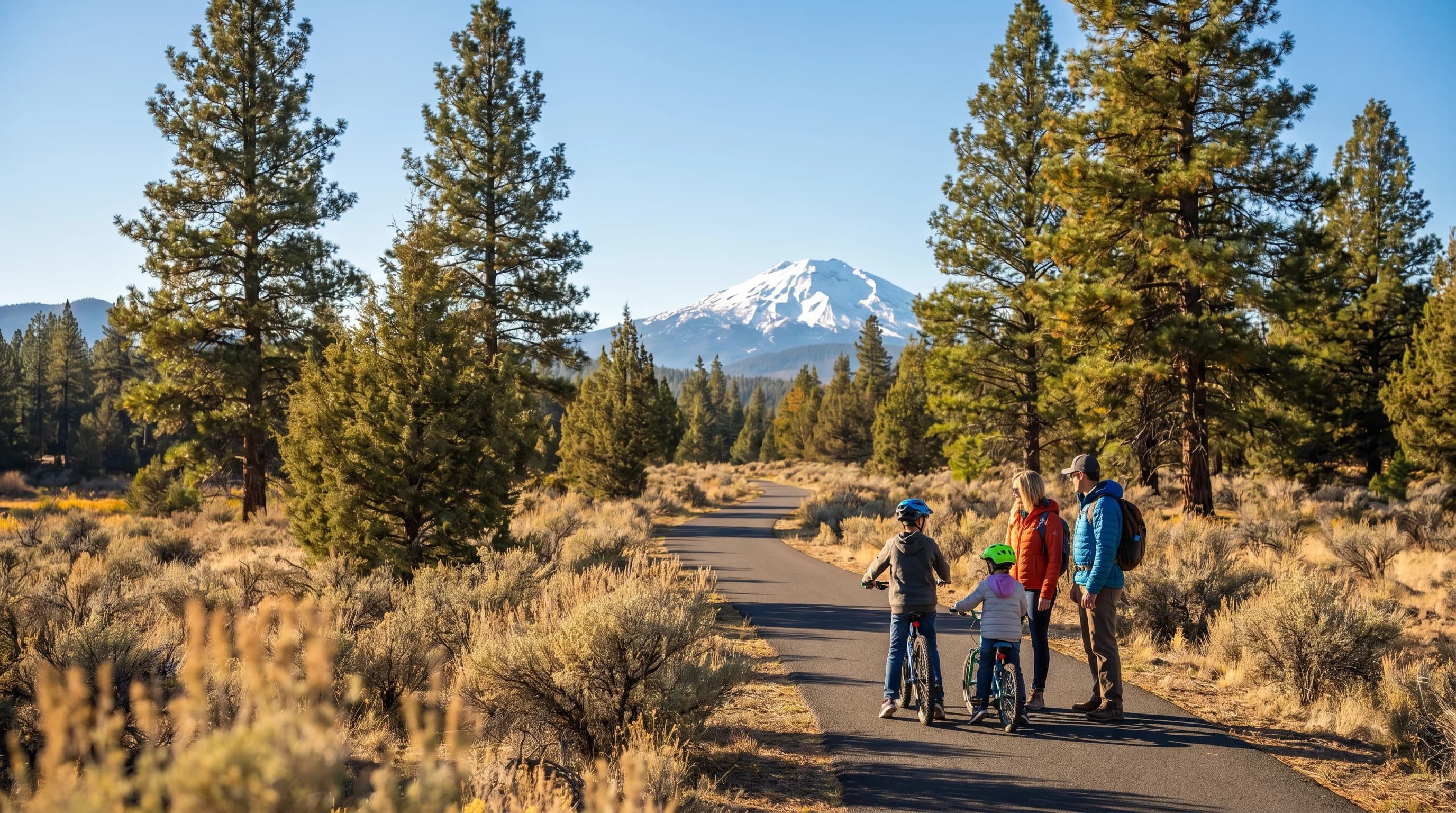
Sunriver has a high-desert resort climate: cold snowy winters, hot dry summers, and dramatic day-to-night temperature swings, sitting at about 4,150 feet just south of Bend. It runs a touch cooler than Bend because of its higher elevation, shares Central Oregon's roughly 300 sunny days and dry air, and carries a real wildfire-smoke risk in late summer. For a family trip, the best months are late June and September for warm, low-smoke days, or December through March for snow and skiing. This guide walks through the Sunriver year season by season.
What Is the Weather Like in Sunriver, Oregon?
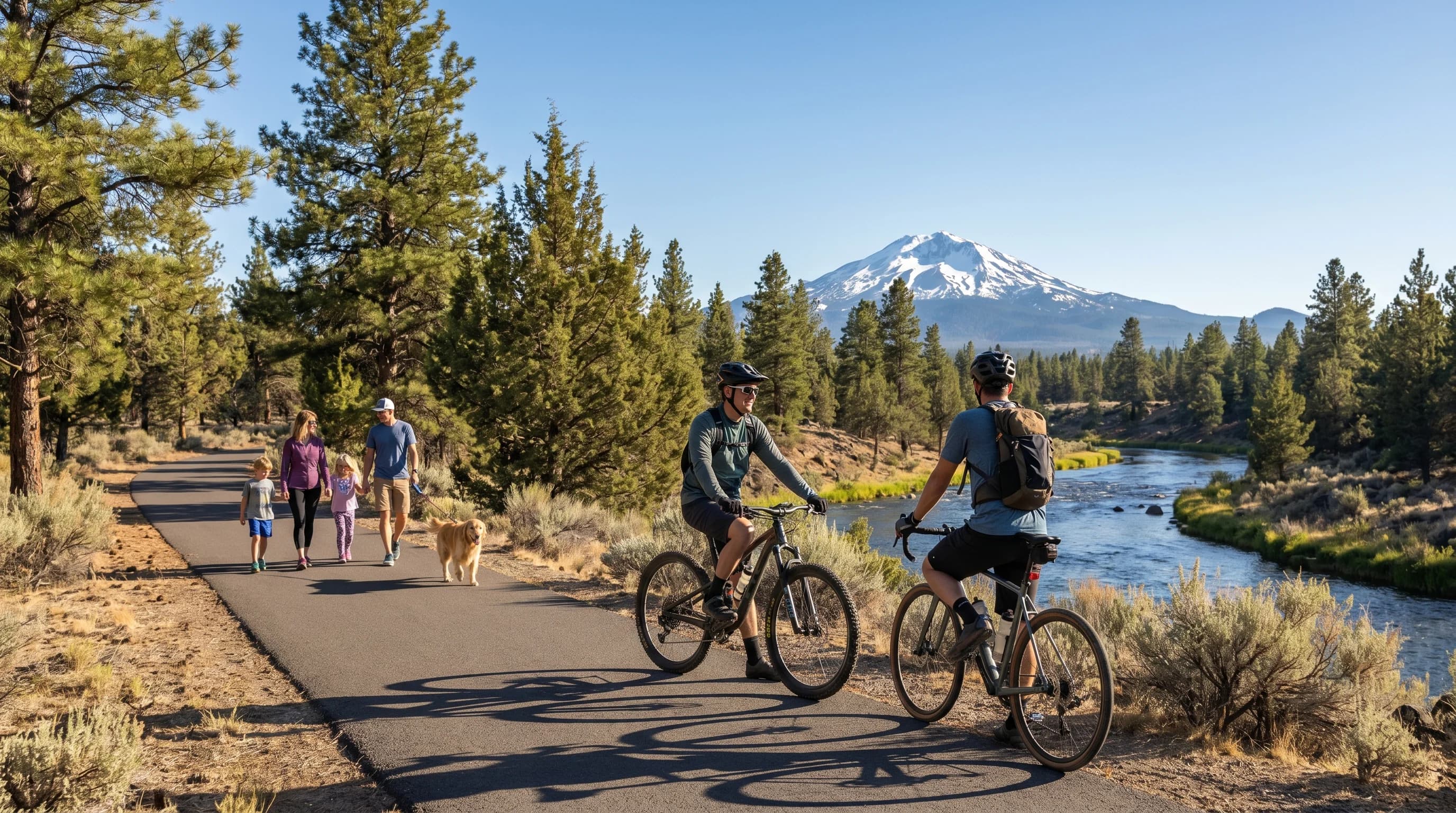
Sunriver's weather is classic Central Oregon high desert, with the edges sharpened a little by elevation. At roughly 4,150 feet it is several hundred feet higher than Bend, so its nights run colder and its winters hold snow a bit longer. The same Cascade rain shadow that keeps the region dry and sunny applies here, so Sunriver gets abundant sunshine, low rainfall, and the big daily temperature swings that define the high desert.
For visitors, the practical headline is to plan for range. A summer day can be hot enough for the pool and the river in the afternoon and cool enough for a jacket at the evening cookout, and a sunny winter day can still bring a hard overnight freeze. The Deschutes River winding through the resort and Mt. Bachelor a short drive away set the rhythm of the seasons, from summer floating to winter skiing.
Because Sunriver is a destination resort rather than a town people pass through, the weather shapes the whole trip in a way it might not on a quick city visit. The difference between a smoky August week and a clear one, or a deep-snow December and a thin one, can decide whether the plan is biking and floating or skiing and sledding. That is why it is worth understanding the seasonal pattern before you book, so your dates match the kind of trip you want. The same high-desert dryness that makes the days bright is what makes the nights cold and the wildfire smoke possible, all parts of one climate.
Sunriver in Winter: Snow and Skiing
Winter in Sunriver is cold and snowy, with regular snow on the ground and easy access to Mt. Bachelor for skiing and riding. Daytime highs sit in the upper 30s to low 40s, and nights routinely drop into the teens, with the higher elevation helping snow linger between storms more than it does in Bend. Freezing fog and icy mornings are common in the cold, calm conditions that settle into the basin.
For a winter family trip, that means real snow play close at hand, from the resort's own snowy paths to the Sno-Parks and the mountain, but also genuine winter driving on cold mornings. The same freezing fog that frosts the pines glazes the roads, so the ice covered in freezing fog and black ice is worth planning around on early starts.
Sunriver in Spring: Mud Season and Warming Days
Spring in Sunriver is a transition of melting snow, muddy trails, and steadily warming days, with late snow possible into May. Highs climb from the 50s into the 60s as the season progresses, while nights stay cold, so the daily swing is at its most extreme. Crowds are thin and rates are lower, making spring a quiet, affordable time to visit if you can accept changeable weather.
It is a pack-for-anything season. The river and bike paths firm up and dry out by late spring, but a warm afternoon can still be followed by a freeze, and an unexpected snow shower is not out of the question early on. For families, late spring is a good window for biking and easy hikes before the summer heat and crowds arrive.
Sunriver in Summer: Heat, River Time, and Smoke Risk
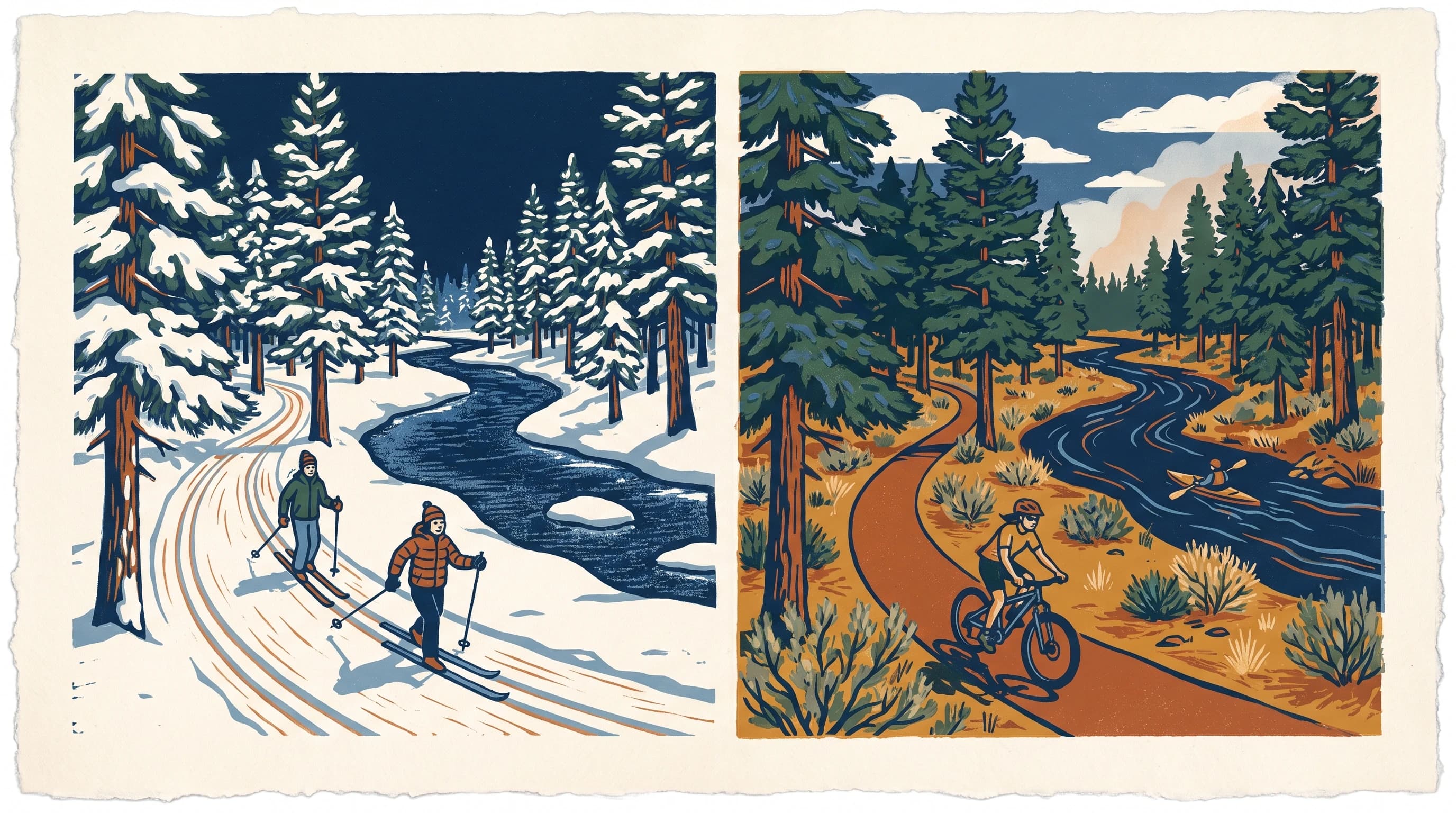
Summer in Sunriver is hot, dry, and sunny by day and cool by night, ideal for biking and the river, with wildfire smoke the main wildcard from July into September. Afternoon highs reach the 80s, occasionally the low 90s, while nights drop into the 40s, so the river and pool rule the afternoons and a light layer is welcome in the evening. This is peak season for the resort, with the warm, settled weather families come for.
The one thing no calendar can promise is clear air. Smoke can roll in and out with the wind during fire season, turning a brilliant week hazy, so summer planning rewards flexibility and a habit of checking the air-quality reading. Early July and the start of the season tend to be cleaner than August, and the smoke story is covered in the Bend air quality and smoke guide.
Sunriver in Fall: Clear Days and Early Frost
Fall in Sunriver brings clear, comfortable days, cold nights, fall color, and the season's first frosts, with smoke risk fading after the first rains. September is often the most reliable month of the year, with warm afternoons, crisp evenings, and thinning crowds, while October cools quickly and the first mountain snow returns. Frost arrives early at this elevation, so the growing season is short and the mornings are sharp.
For a fall family trip, the payoff is settled weather and quiet paths once summer visitors have gone. Bring warm layers for the cold mornings and evenings, and expect the first hints of winter, frost, and even early snow, by late in the season.
What Is the Best Month to Visit Sunriver?
The best months to visit Sunriver are late June and September for warm days, low smoke risk, and fewer crowds, or December through March for snow and skiing. July and August are the hottest and busiest and carry the most smoke risk, though they are also peak season for the river and pool. Spring is quiet and cheap but unpredictable, and late fall is beautiful but cold.
The right choice comes down to what your family wants to do: snow and the mountain in midwinter, river and biking in summer, or settled shoulder-season weather in late June or September. Whatever you pick, plan for Sunriver's wide daily temperature range, and check the best time to visit and what to pack guides, which apply just as well to Sunriver as to Bend.