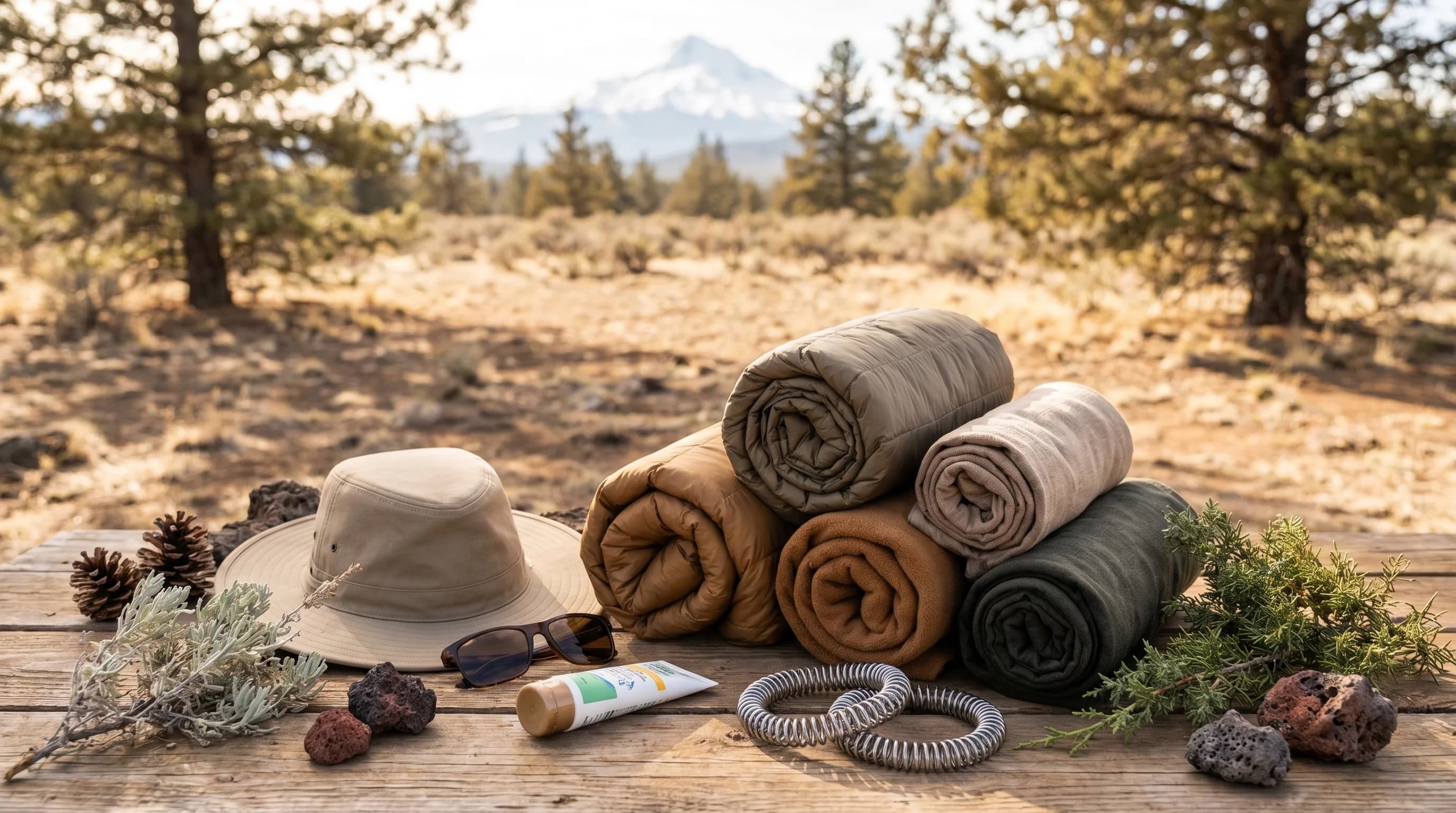
No matter the month, the two rules for packing for Bend are to layer and to bring sun protection, because the high desert swings 35 to 45 degrees between hot afternoons and cold nights and the elevation makes the UV intense year-round. Add winter traction for the ice and an N95 for summer wildfire smoke, and you have the essentials. One outfit will never cover a single Bend day, so the goal is a kit you can add to and shed through the daily temperature swing rather than a single set of clothes for the trip.
What Should You Pack for Bend, Oregon?
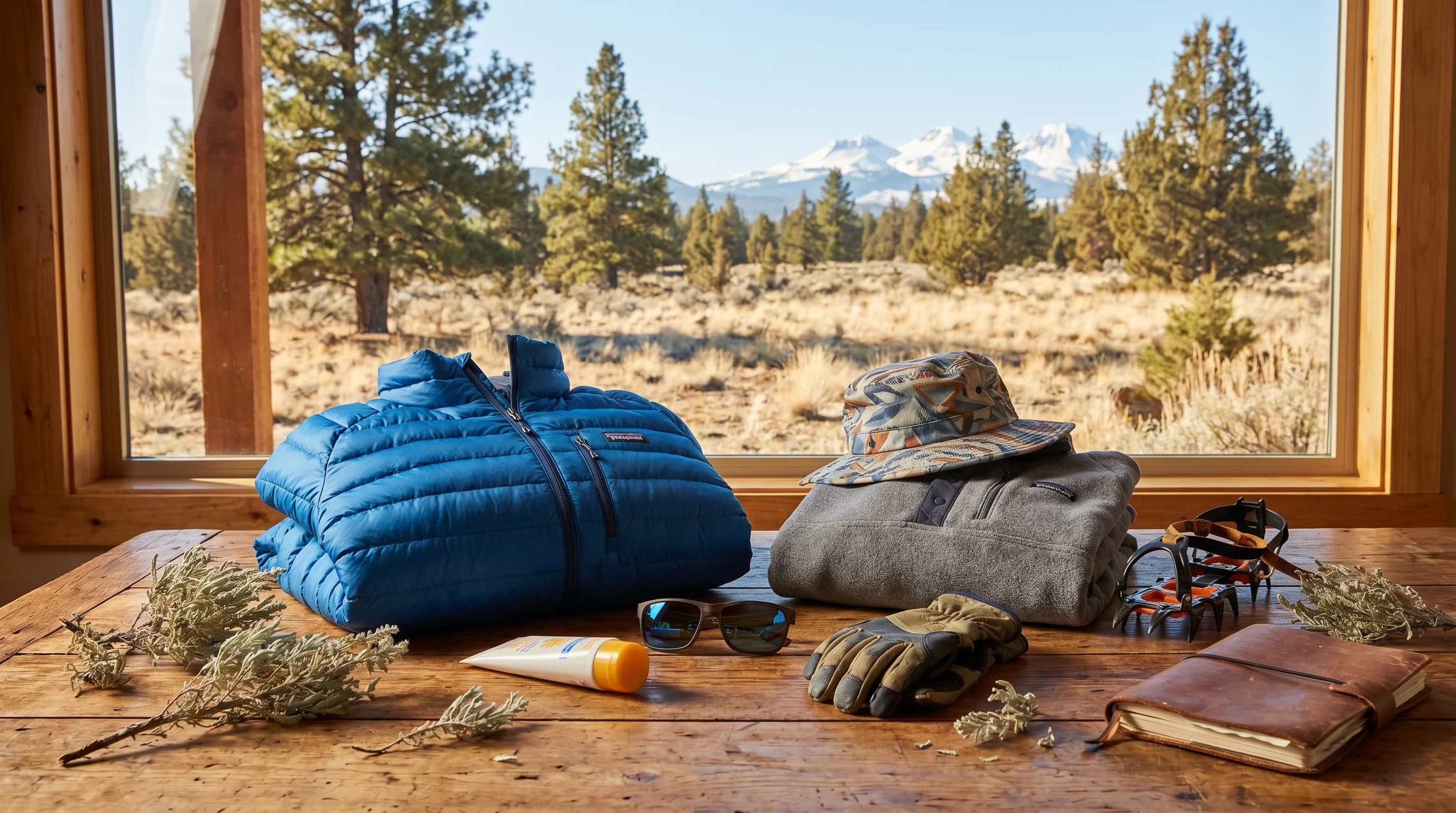
The single most important packing concept for Bend is the layer system, because the daily temperature swing here is enormous. A summer morning can start in the 40s, climb into the 90s by afternoon, and drop back to the 40s after sunset, so you want a base layer, a warm mid layer, and a light shell you can combine and separate through the day. The dry air makes this swing more extreme than the same temperatures would feel in a humid climate.
The other constant is sun protection, in every season. Bend's elevation and clear, dry air push the UV high enough that sunburn happens fast even on cool days, so sunscreen, a hat, and UV sunglasses belong in the bag year-round, including for winter ski days when snow reflects the UV back up at you. Those two ideas, layer for the swing and protect against the sun, cover most of what makes packing for the high desert different, and the reasons are in the temperature-swing guide and the UV guide.
It is worth saying why packing for Bend trips up so many visitors, because the mistakes are predictable. People coming from western Oregon or other coastal places pack for mild, damp, steady weather and get caught by the dryness, the strong sun, and above all the cold nights that follow warm days. People coming from hot, humid summer climates pack only for the heat and freeze after sunset. And almost everyone underestimates the high-desert UV because the dry air keeps the temperature comfortable. Pack as if the day and the night are two different seasons, because in Bend they effectively are, and you will be ready for whatever the high desert does.
What to Pack for Bend in Winter (December to February)
For Bend winters, pack insulated, layered clothing, waterproof boots, and traction for ice, plus sunglasses and sunscreen for bright snowy days. Nights drop into the teens and 20s, so a warm insulating layer and a windproof shell are essential, and waterproof footwear handles the snow and slush. The often-overlooked items are traction devices for the ice, since the real winter hazard in town is the freezing fog and refreezing that glaze the sidewalks and roads.
Do not skip the sun protection in winter. Snow reflects UV strongly, so bright winter days, especially up at the mountain, can burn an unprepared face. The ice that makes traction worth carrying is the same hazard described in freezing fog, and a winter trip is also a winter-driving trip, so think tires and chains alongside your clothing.
What to Pack for Bend in Spring (March to May)
For Bend springs, pack flexible layers, a windbreaker, and a light rain shell, since spring is the windiest, most changeable season with late snow possible. A single spring day can swing from warm sun to cold wind to a snow shower, so versatility is everything: a warm layer for the cold mornings, a shell for the wind and occasional rain, and lighter clothes for the warm afternoons. Mud-ready footwear helps as trails thaw.
Sun protection still applies, since spring UV is already strong and climbing toward its summer peak. The windiness is the season's defining trait, the same pattern covered in why Bend afternoons get gusty, so a windbreaker earns its place in the bag more in spring than any other season.
What to Pack for Bend in Summer (June to August)
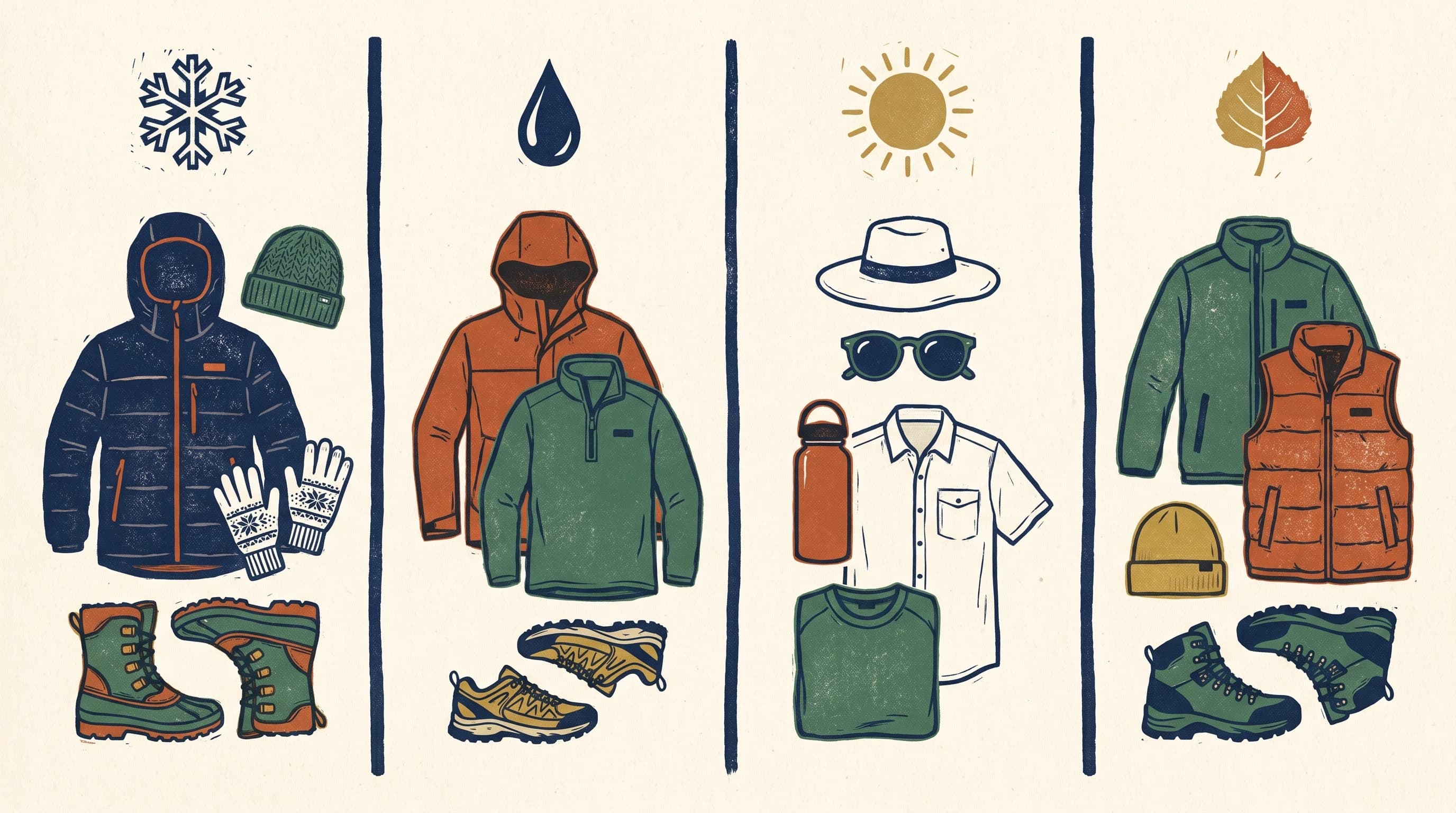
For Bend summers, pack sun protection and breathable clothing for hot days plus a warm layer for cold nights, and keep an N95 handy for wildfire smoke. Afternoons reach the 80s and 90s, so light, breathable clothes, a sun hat, and plenty of sunscreen are the daytime kit, while the nights drop into the 40s, so a fleece or light jacket for the evening is genuinely needed even in July. Hydration gear matters in the dry air, where you lose moisture faster than you notice.
The summer-specific item is an N95 mask for wildfire smoke, which can roll in on short notice from July into September. A cloth mask will not help, but a well-fitted N95 lets you get around on a smoky day. Whether you will need it is impossible to predict, so it is worth packing just in case, and the smoke story is covered in Bend air quality and smoke.
What to Pack for Bend in Fall (September to November)
For Bend falls, pack layers and a light jacket for crisp days and frosty nights, adding traction by November as the first snow and ice arrive. September stays warm and summery, October turns crisp with cold mornings and frost, and November tips toward winter, so a fall trip can span a wide range depending on the dates. A warm layer for the cold mornings and evenings is the throughline.
Sun protection still applies through the clear fall days, and by late in the season you are back to winter thinking, traction, warm layers, and an eye on the ice. Whatever month you visit, the packing logic stays the same: build a layer system, protect against the sun, and add the season's one or two specialty items, traction in winter, a windbreaker in spring, an N95 in summer. Check your travel dates against the Bend by-month guide and you will know exactly what to bring.