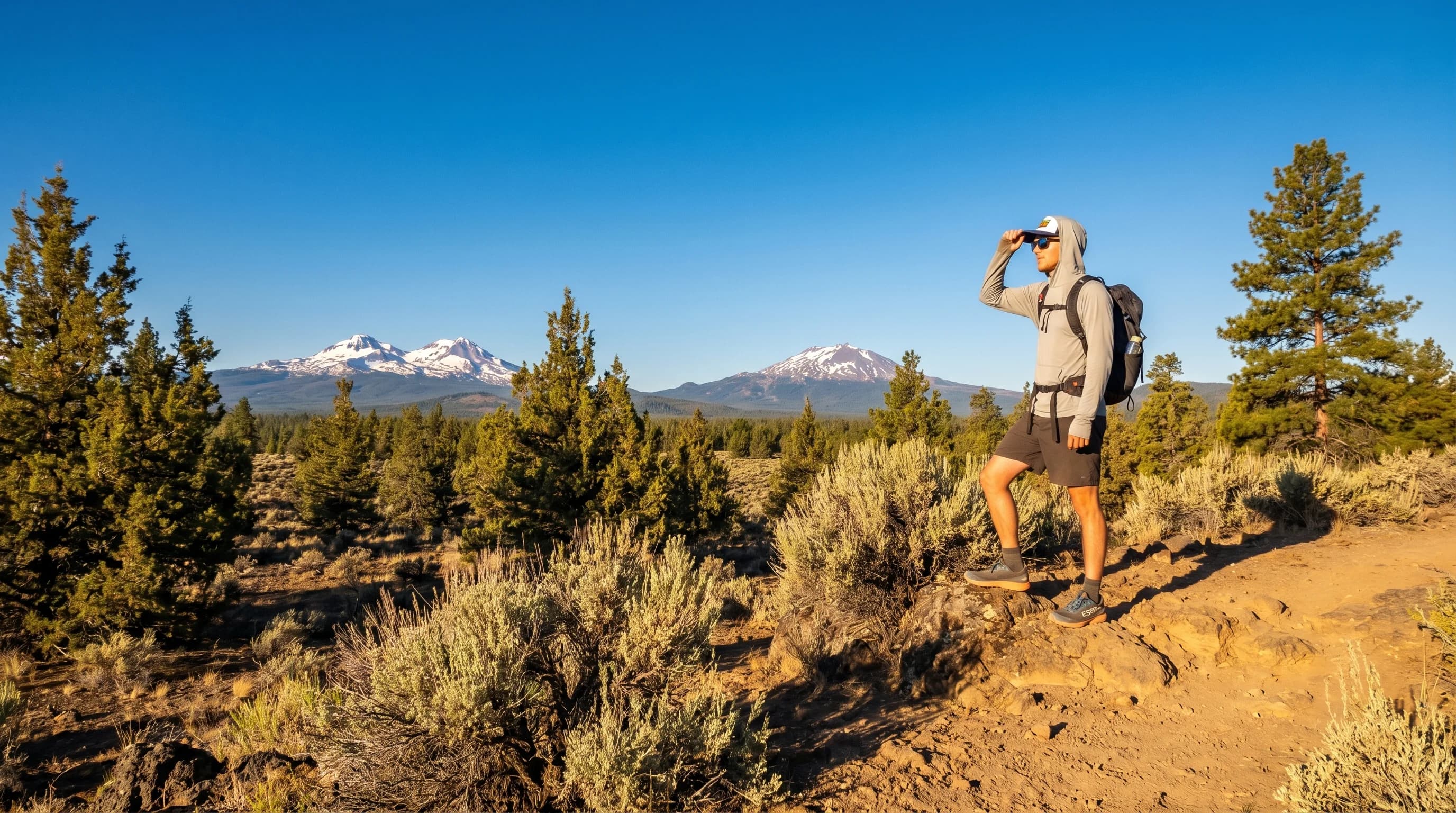
Bend's UV index runs higher than most people expect, because the city sits at about 3,600 feet under thin, clear, dry air that filters out less ultraviolet light. The higher you go, the more UV reaches you, so sunburn happens fast here, even on cool days when it does not feel hot. Add the reflective snow of winter and spring, and the high-desert sun becomes something to manage year-round, not just on summer afternoons. Understanding why Bend's UV is so strong is the first step to enjoying all that sunshine without paying for it.
Why Is the UV Index So High in Bend?
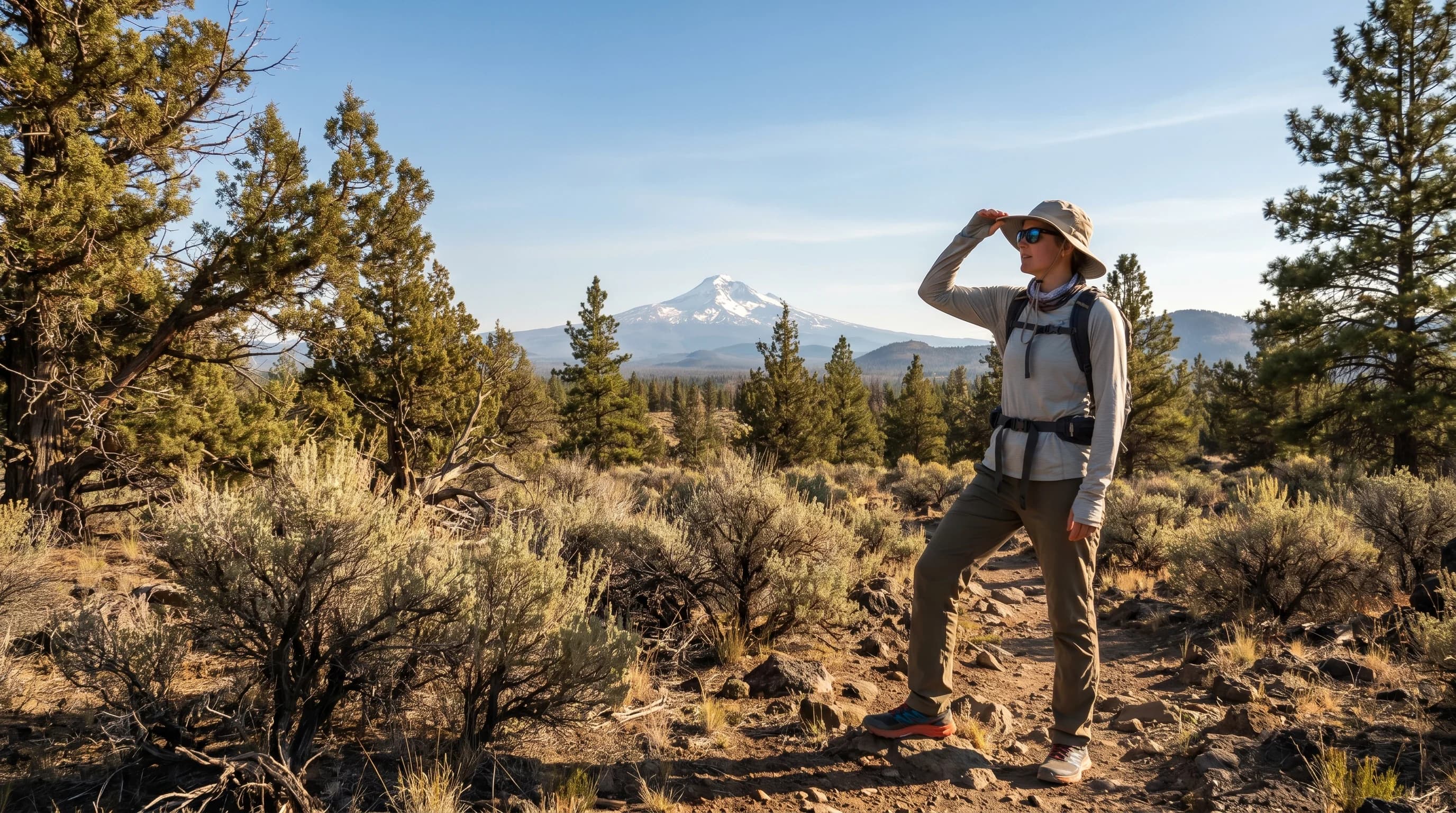
Bend's UV index is high because of elevation and clear, dry air. Ultraviolet light is partly absorbed and scattered as it passes through the atmosphere, so the less atmosphere it has to travel through, the more reaches the ground. At about 3,600 feet, Bend sits under meaningfully less air than a sea-level city, and roughly every 1,000 feet of elevation adds a few percent more UV. The region's clear skies and low humidity mean little cloud or haze to block it, so the UV that elevation lets through arrives largely unfiltered.
The result is that Bend's summer UV index regularly reaches the high or very-high range, and even shoulder-season days can carry a strong UV load. People often underestimate it because the dry air keeps temperatures comfortable, so the sun does not feel as punishing as it does in a humid climate at the same UV level. That mismatch, comfortable temperature but intense UV, is exactly what catches visitors out and leads to fast, unexpected sunburn.
It helps to know how the UV index itself works, since it is the number you will see in a forecast. The scale runs from 0 upward, with 0 to 2 considered low, 3 to 5 moderate, 6 to 7 high, 8 to 10 very high, and 11 or above extreme, and each step up means faster potential skin damage. Bend routinely reaches the high and very-high range in summer, the same readings you would associate with much lower-latitude places, precisely because elevation and clear air compensate for being relatively far north. Checking the day's UV index alongside the temperature is the single most useful habit for managing sun exposure here.
Why Does the High-Desert Sun Burn Even on Cool Days?
The high-desert sun burns on cool days because UV intensity depends on the sun's angle, elevation, and clear skies, not on the air temperature. Sunburn is caused by ultraviolet light, which has nothing to do with how warm it feels, so a cool, breezy spring day with a high sun and clear skies can deliver an intense UV load even though you are wearing a jacket. The comfortable temperature gives a false sense of safety.
This is a common way people get burned in Bend: out for a long hike or a day on the river on a pleasant, not-too-hot day, with no sense that the sun is strong, and back home with a sunburn. The dry air that makes the temperature feel mild is the same dry air letting the UV through, so the two work against each other. The cool-air context that fools people is part of the broader high-desert pattern of big temperature swings.
When Is UV Strongest in Bend?
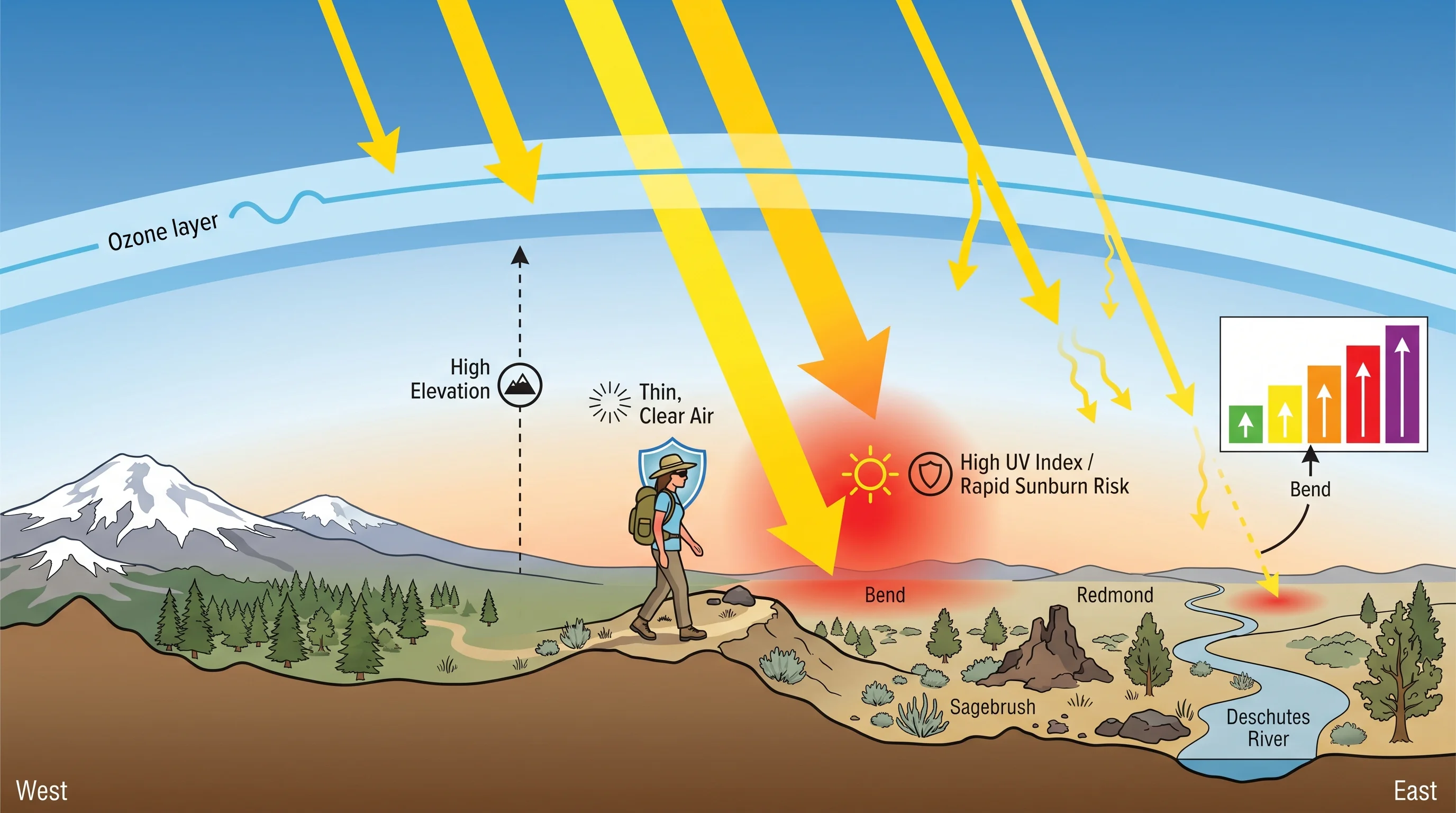
UV is strongest in Bend from late spring through summer, peaking around midday when the sun is highest in the sky. June and July bring the most intense UV, and the hours around solar noon carry the bulk of the daily dose, which is why the standard advice to seek shade in the middle of the day matters even more at elevation. UV stays meaningful in the shoulder seasons too, so spring and fall are not a free pass.
Timing exposed activities for the morning or late afternoon is the simplest way to cut your UV dose, which dovetails neatly with the high-desert habit of starting early to beat both the heat and the afternoon thunderstorms. On the exposed, shadeless rock of Smith Rock and similar terrain, midday UV combines with radiant heat to make early starts essential.
Does Snow Make Winter UV Worse in Bend?
Yes, snow makes winter and spring UV worse because it reflects sunlight back up at you, nearly doubling your exposure on bright snowy days. Fresh snow can reflect a large fraction of the UV that hits it, so a skier or snowshoer is hit from above by direct sun and from below by reflection off the snow. Combined with the higher elevation of the mountains, this makes winter UV at a place like Mt. Bachelor genuinely strong despite the cold.
That is why goggles or sunglasses and sunscreen matter in winter as much as in summer in the high desert, and why snow glare can burn the unprepared on a bluebird ski day. The same bright winter days that make Bend's cold season so pleasant carry a hidden UV punch off the snow, which surprises people who think of sunburn as a summer-only concern.
How Do You Protect Yourself From Bend's UV?
The way to handle Bend's UV is to treat sun protection as a year-round habit rather than a summer one. Wear broad-spectrum sunscreen of SPF 30 or higher and reapply it during long days outside, put on a hat and UV-blocking sunglasses, and seek shade around midday when the UV peaks. Lightweight long sleeves and sun shirts are popular here precisely because they protect without overheating in the dry air.
The simplest mindset is to respect the sun the way you would in any high, sunny place: the comfortable temperature is not a measure of how strong the UV is. Pack sun protection for every season, including winter ski days, and factor it into your plans the way you would water and layers, as covered in the what to pack guide. Enjoying Bend's roughly 300 sunny days is a lot more fun when the sun is not also burning you.