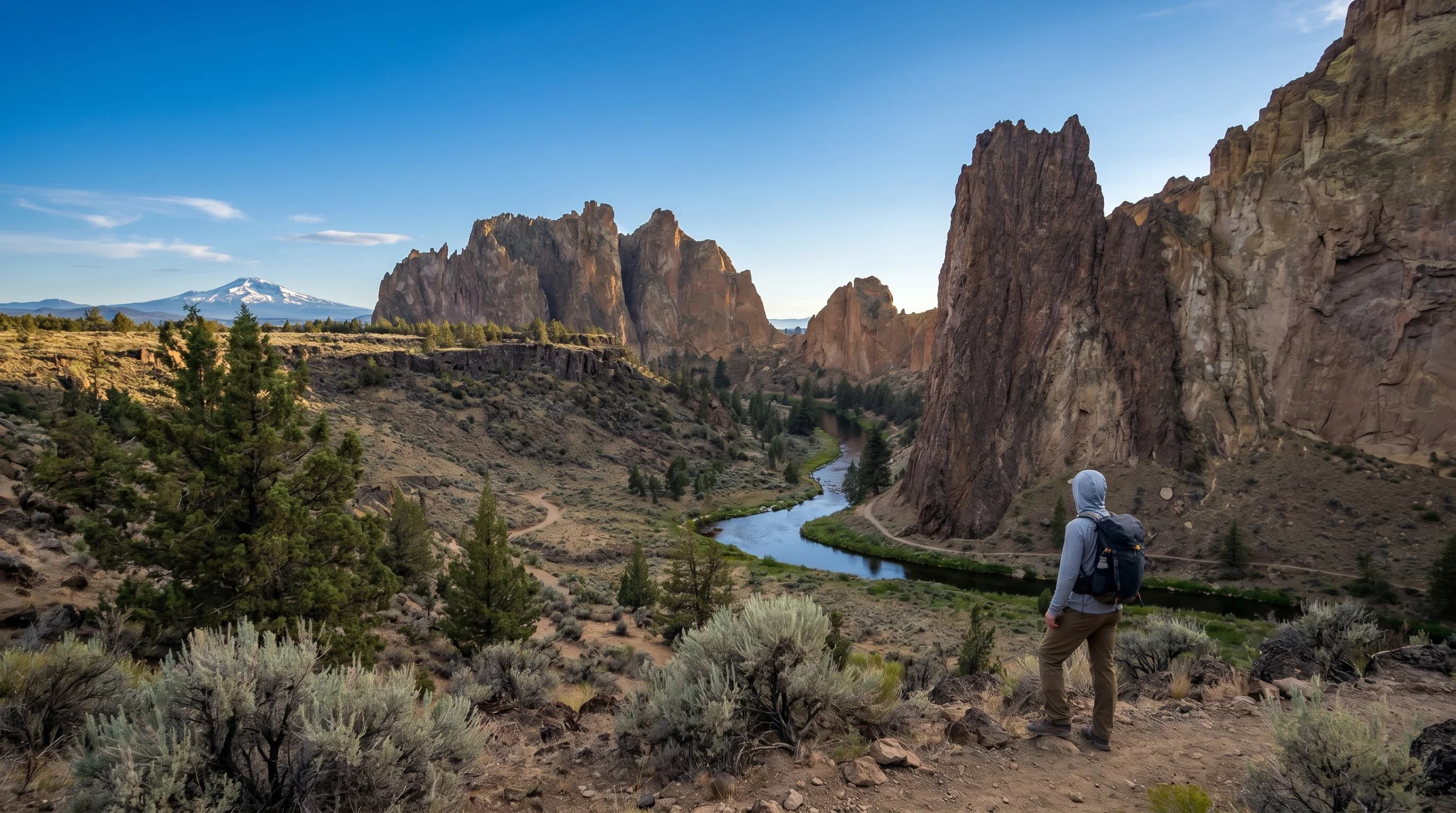
Smith Rock weather is defined by exposure. The park's open basalt and tuff offer almost no shade, so it bakes in summer, freezes in winter, and shines in spring and fall. Sitting near Terrebonne at about 3,000 feet in the high desert, it can top 90 degrees on a summer afternoon with the rock radiating heat, and drop to freezing on a winter night. The best times to hike Misery Ridge or climb the famous walls are spring, roughly April and May, and fall, September and October, when temperatures are mild and the rock is comfortable.
What Is the Weather Like at Smith Rock?
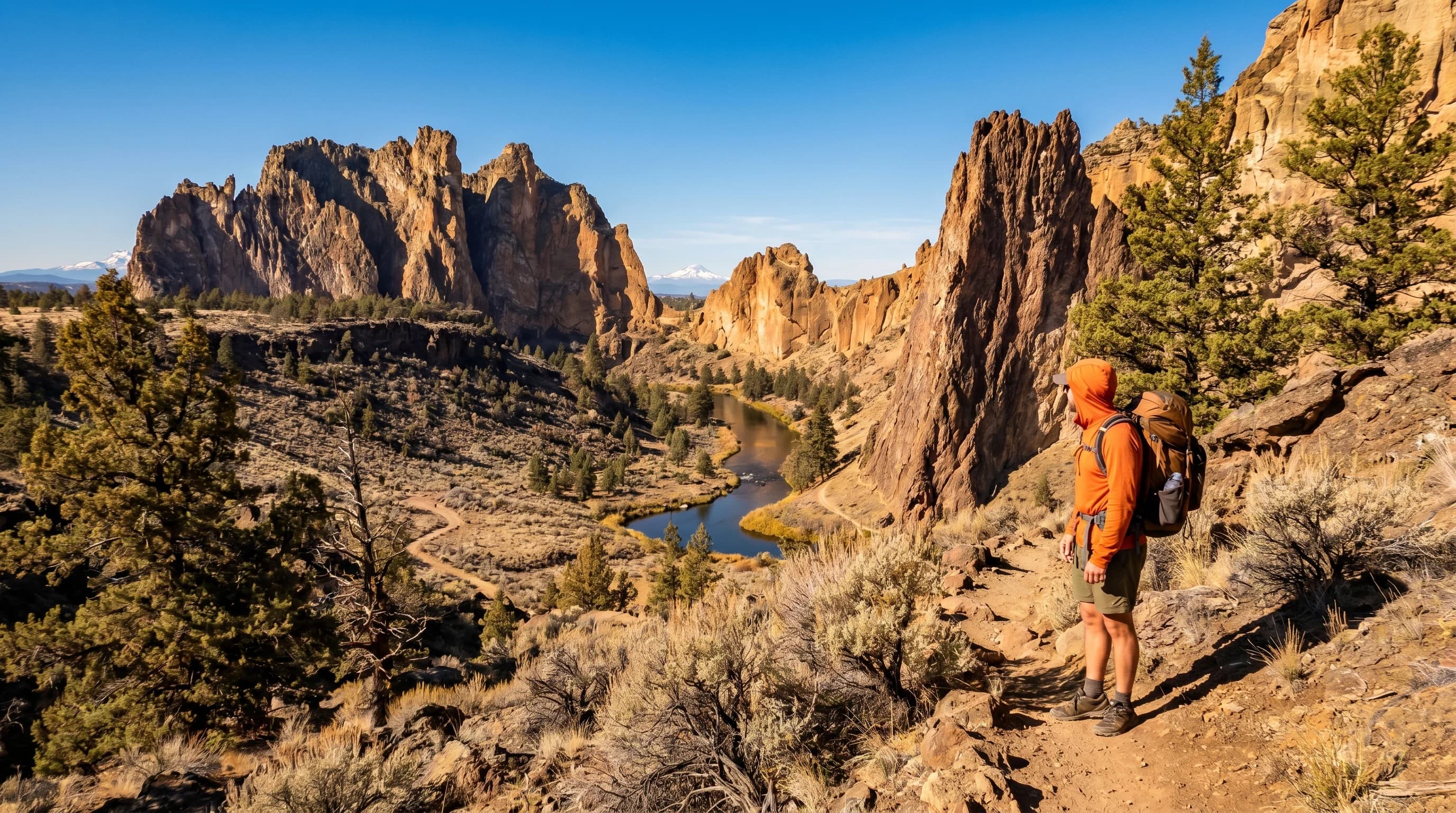
Smith Rock shares the Central Oregon high-desert climate, dry, sunny, and prone to big daily temperature swings, but its terrain amplifies the extremes. The park is a maze of exposed rock and open trail with very little shade and a deep canyon cut by the Crooked River, so the rock soaks up sun all day and radiates heat back, making summer afternoons feel hotter than the air temperature alone. In winter, the same exposure and the canyon's cold-air pooling leave shaded sections icy and cold.
Because the park is fully in the sun and the elevation is moderate at around 3,000 feet, the weather can be excellent in the shoulder seasons and punishing at the extremes. The difference between a comfortable spring morning and a dangerous summer afternoon on Misery Ridge is dramatic, which is why timing matters more here than at many destinations. The rock that makes Smith Rock world-class for climbing is exactly what makes its weather so unforgiving when the sun is high.
Aspect matters as much as season at Smith Rock, and savvy visitors plan around it. Because the walls face every direction, you can often find a comfortable place to be in almost any season by choosing sun or shade: south-facing rock catches warmth on a cold winter day, while shaded, north-facing and riverside areas stay cooler in summer heat. The Crooked River canyon also pools cold air on calm nights, so the low areas can be noticeably colder and frostier at dawn than the rim. Reading the park as a collection of microclimates, rather than a single forecast, is the key to timing a visit well.
What Is the Best Time of Year to Visit Smith Rock?
The best times to visit Smith Rock are spring, April and May, and fall, September and October, when temperatures are mild, the rock is comfortable, and the heat and crowds are manageable. In these shoulder seasons, daytime highs sit in the comfortable 55-to-75 range, the long days give plenty of light, and the wildflowers of spring or the crisp, clear air of fall add to the experience. These windows are also the prime climbing seasons.
Spring can be windy on the high routes and trails, and fall cools quickly toward winter, but both avoid the two hard problems of the calendar: summer's dangerous exposed heat and winter's cold, icy, short days. If you only have one weekend to plan around the weather, a spring or fall trip is the safe bet, and it pairs well with the broader timing advice in the best time to visit Bend.
Why Is Summer at Smith Rock So Dangerous?
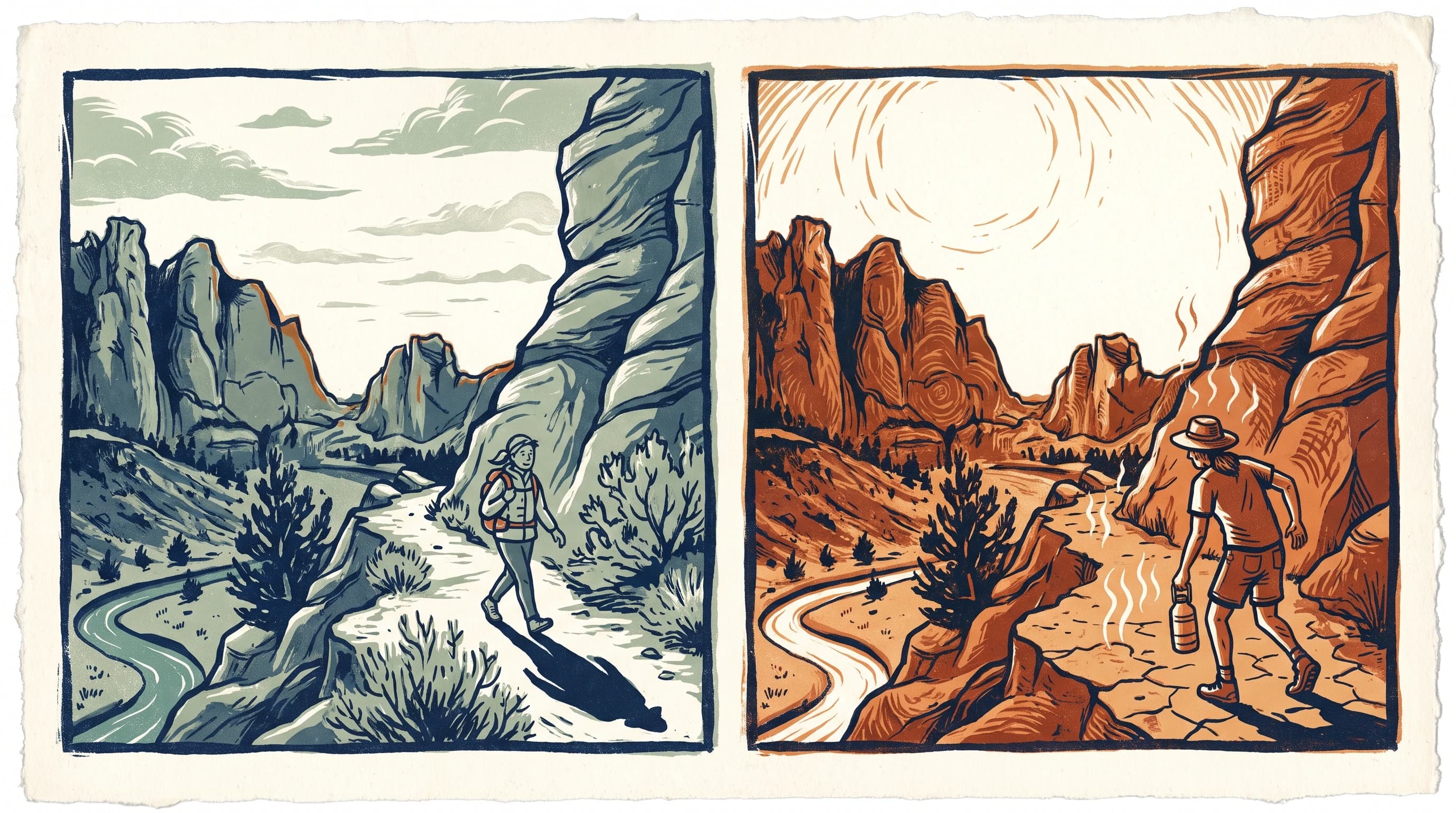
Summer at Smith Rock is dangerous because the exposed rock pushes the effective temperature well past the air temperature, with no shade and little water on the trails. Air temperatures in the 90s become considerably hotter against sun-baked basalt, and Misery Ridge, the park's signature climb, is a steep, fully exposed grind that turns brutal in the midday heat. Heat exhaustion and dehydration are real risks, and the intense high-desert UV adds sunburn to the list.
The way to enjoy Smith Rock in summer is to treat it like a desert: start at dawn, carry far more water than you think you need, turn around by late morning, and simply skip the exposed routes during a heat wave. Late-day visits as the sun drops can also work. The UV risk specifically is covered in the Bend UV guide, and it applies in full force on the unshaded rock here.
Climbing Season at Smith Rock
The Smith Rock climbing season peaks in spring and fall, when temperatures suit long days on the rock, with sunny winter faces offering cool-weather options for the dedicated. Spring and fall deliver the friction-friendly cool-but-not-cold conditions climbers want, and the park draws climbers from around the world during these windows. Summer climbing is limited to the early morning and shaded walls, while winter pushes climbers onto the sunny, south-facing faces on milder days.
Wind is the spring climber's main variable, since the high routes and the rim can be gusty as the season's pressure gradients kick up, a pattern shared with the rest of the region's gusty high-desert afternoons. Checking the wind along with the temperature is part of planning a climbing day, since an exposed belay in a cold spring wind is a different experience than the forecast high might suggest.
Winter at Smith Rock
Winter at Smith Rock is cold, with icy shaded trails and short daylight, but sunny south-facing walls can still be climbable on mild, calm days. Highs often sit in the 40s, mornings can bring freezing fog and frost, and the shaded sections of trail, especially down by the river and on north-facing aspects, can hold ice long after the sunny spots have thawed. Bring traction for those shaded stretches and expect a slower, more cautious day.
The payoff in winter is solitude and, on the right day, surprisingly pleasant climbing in the sun while the rest of the region is gray. But it demands respect for the ice and the cold, and the freezing fog that glazes the trails is the same hazard described in freezing fog. Whatever the season, Smith Rock rewards matching your plan to the weather: dawn starts and water in summer, layers and traction in winter, and easy, comfortable days in spring and fall.