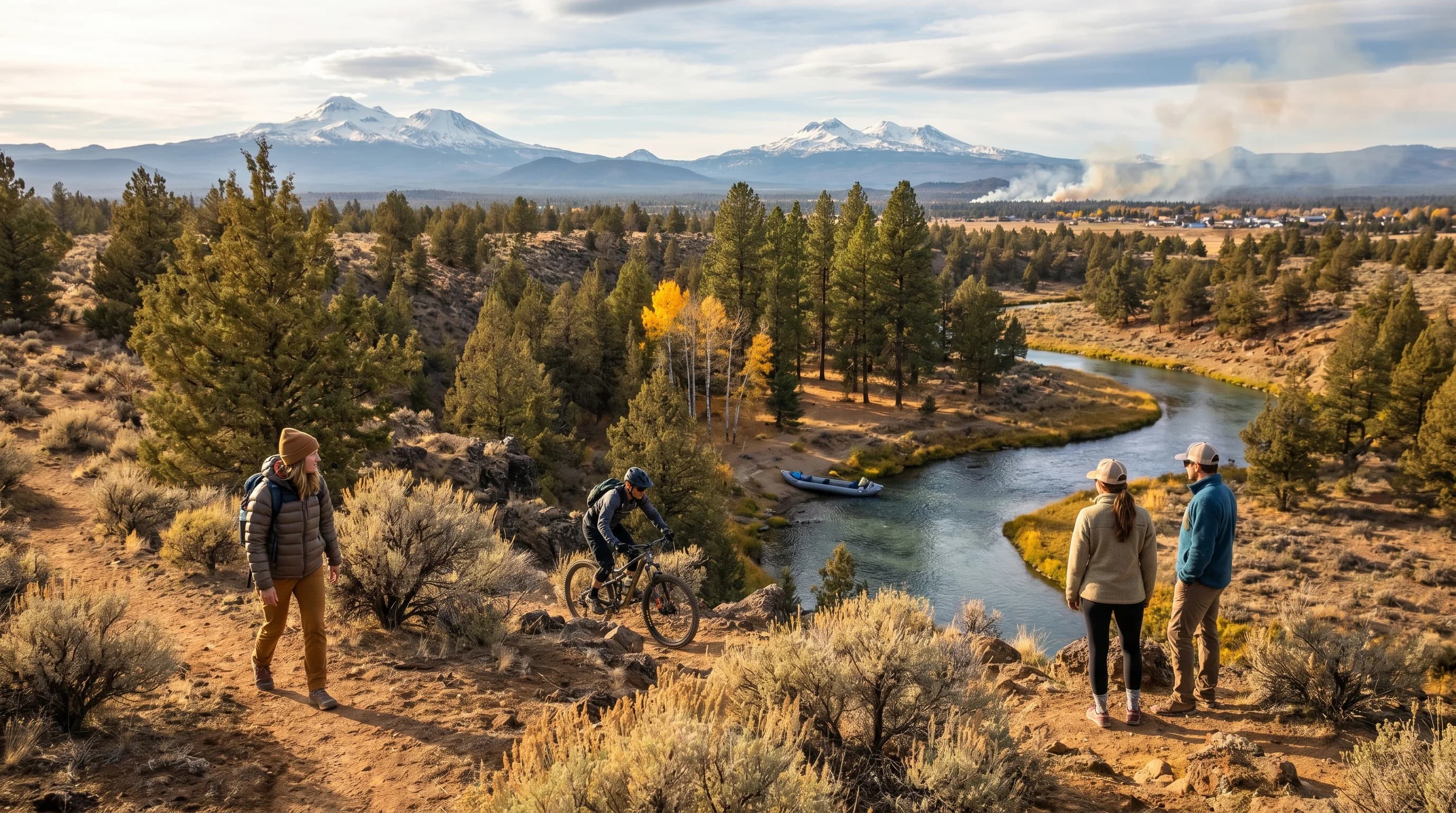
Bend, Oregon runs through four real seasons at about 3,600 feet: cold snowy winters, windy variable springs, hot dry summers with wildfire-smoke risk, and crisp sunny falls. Big day-to-night swings run all year, and roughly 300 days see some sun. This is the month-by-month picture, from January's freezing fog to August's smoke to October's first snow, with links to a deeper guide for each month. For the broader overview, start with the Bend weather guide.
What Is Bend, Oregon Weather Like Through the Year?
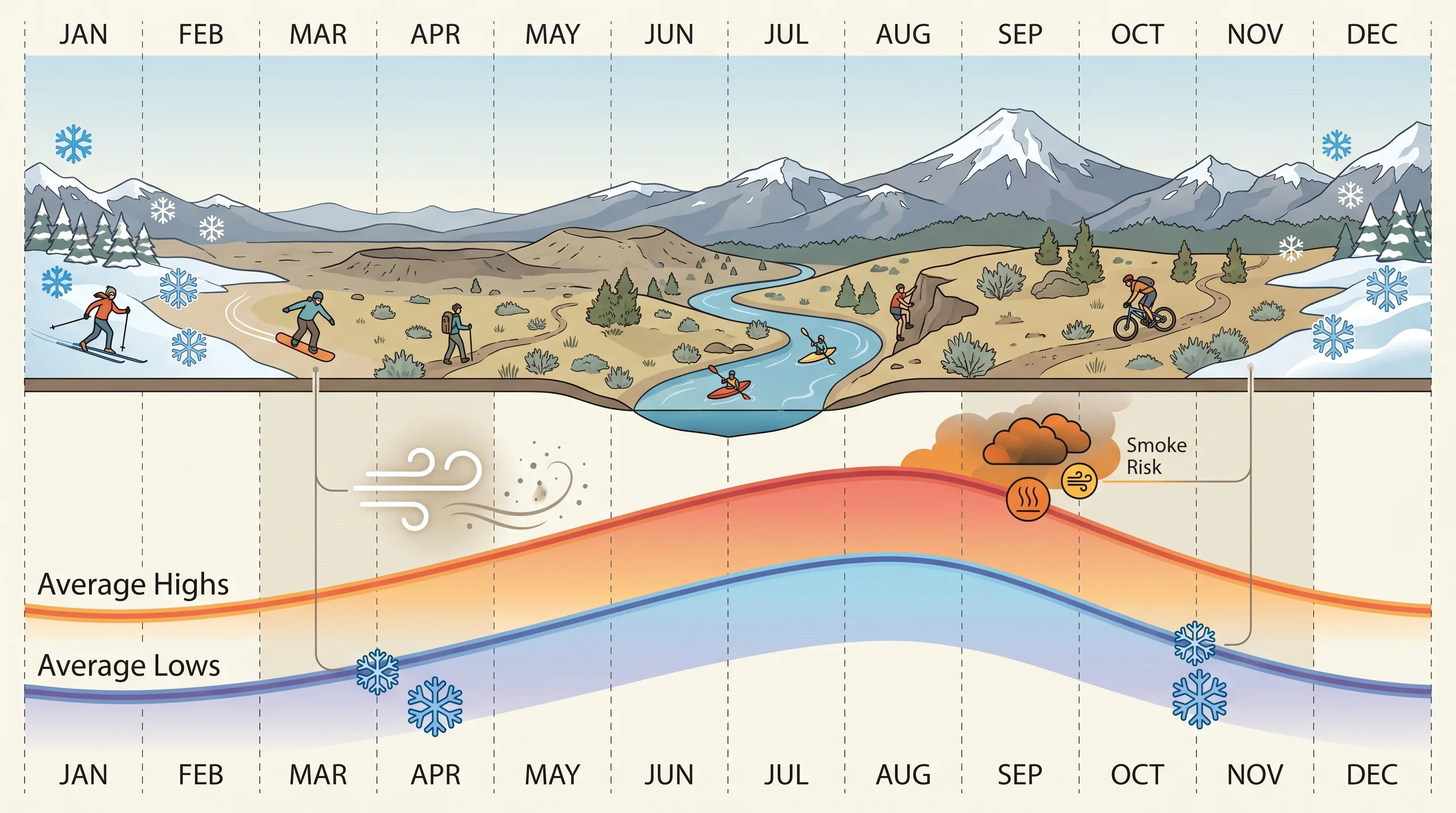
Bend's weather is consistent in one way: it is dry and sunny far more often than the rest of Oregon, with low rainfall throughout and close to 300 days of sun. Beyond that, each season has a clear character. The shoulder months of late June and September are often the most pleasant, while deep winter and late summer carry the year's main hazards of ice and smoke. The dry air keeps nights cold in every season, so layers are a year-round habit here.
The numbers tell the shape of the year. Winter highs sit in the low 40s with nights in the teens and 20s; summer highs reach the mid-80s and low 90s while nights still fall into the 40s. Snow falls mostly from November into March, the wildfire-smoke window runs July into September, and the windiest, most changeable weather comes in spring. Use this as the overview, then follow the links into each month for the detail.
Winter in Bend: January, February, December
Bend winters are cold and snowy, with highs in the low 40s and nights routinely in the teens and 20s. January is the coldest and snowiest month, December brings the holiday-travel mix of snow and ice, and February is much like January but with noticeably more sun and longer days as winter starts to loosen. Snow falls in repeated rounds rather than one big dump, and it often melts between storms because Bend sits near the snow level, so the ground can cycle between white and bare several times a month.
The defining winter hazard in town is ice, not depth. Freezing fog settles into the basin on calm cold mornings and glazes roads with no precipitation at all, and clear-night refreezing does the same to any daytime melt. Bright, cold bluebird days between storms are common and are part of why even Bend's winter feels sunnier than the valley's. For the month-by-month detail, see January, February, and December.
Spring in Bend: March, April, May
Bend springs are windy and changeable, with late snow possible into May, mud season as the snowpack melts, and steadily warming, sunnier days. Highs climb from the 50s in March to the 60s by May, but nights stay cold and frost lingers. April is notably windy, and May opens lower-elevation hiking at Smith Rock and the Badlands while the Cascades stay snowbound. See March, April, and May.
Summer in Bend: June, July, August
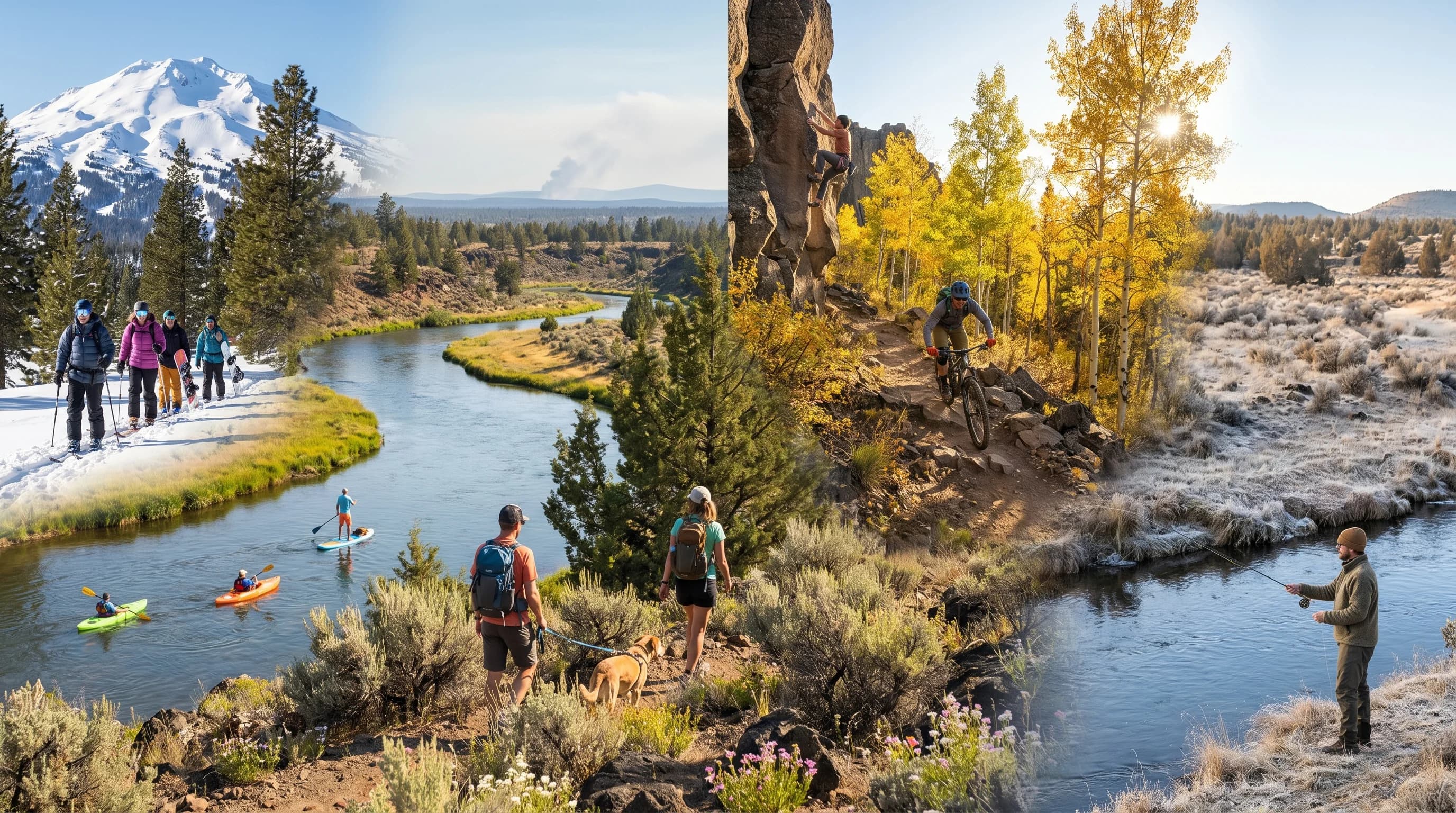
Bend summers are hot, dry, and sunny by day and cool at night. Highs climb into the mid-80s and low 90s while nights still drop into the 40s, so the lakes and the Deschutes River become the center of life and a warm layer is still worth packing for the evening. June is often the sweet spot, warm and clear with low smoke risk, before July and August bring the hottest stretches and the heart of wildfire-smoke season. Afternoon thunderstorms begin building over the mountains in June and continue through summer, which matters for anyone heading to exposed ridges or open water.
Smoke is the summer wildcard that no calendar can pin down, since it depends on fires that may be hundreds of miles away and on shifting winds. A July or August week can be brilliantly clear or hazed over, so summer planning here rewards flexibility and a habit of checking the air-quality reading. For the month-by-month detail, see June, July, and August.
Fall in Bend: September, October, November
Bend falls bring clear crisp days, cold nights, fall color, and the season's first frosts and snow, with smoke risk fading after the first rains. Highs slide from the 70s in early September to the 40s by late November as the first storms return. September is often the most reliable month of the year, settled and warm once the smoke clears, which makes early fall a local favorite. See September, October, and November.
What Is the Best and Worst Month for Bend Weather?
The single best stretch of Bend weather for most visitors lands in late June and again in September: warm, sunny days, comfortably cool nights, and lower smoke risk than the deep-summer weeks in between. These shoulder windows pair good weather with thinner crowds, which is why locals often point newcomers to them. Skiers reverse the calendar and favor December through March, when Mt. Bachelor is in full swing and often runs into May, with the deepest, most reliable snow in midwinter.
The trickier months are August, the peak of wildfire-smoke season, and the heart of January, when deep cold, ice, and the shortest days set in. Neither is a reason to stay away, but both reward flexibility: an August trip should have indoor backup plans for smoky days, and a January visit should be ready for winter driving and freezing fog. Spring, roughly April and May, is the wildcard, cheap and quiet but windy and changeable, with sun, rain, and even late snow all possible in the same week.
The real answer is that the best month depends on what you want to do, not just on the temperature. Match the month to the activity, ski and snow play in midwinter, river and lake time in summer, hiking and climbing in the shoulder seasons, and you will get the most out of Bend's weather. To go deeper on timing and packing, see the best time to visit Bend and what to pack by month. Whatever month you choose, plan for the wide daily range between a warm afternoon and a cold night that defines high-desert weather year-round.