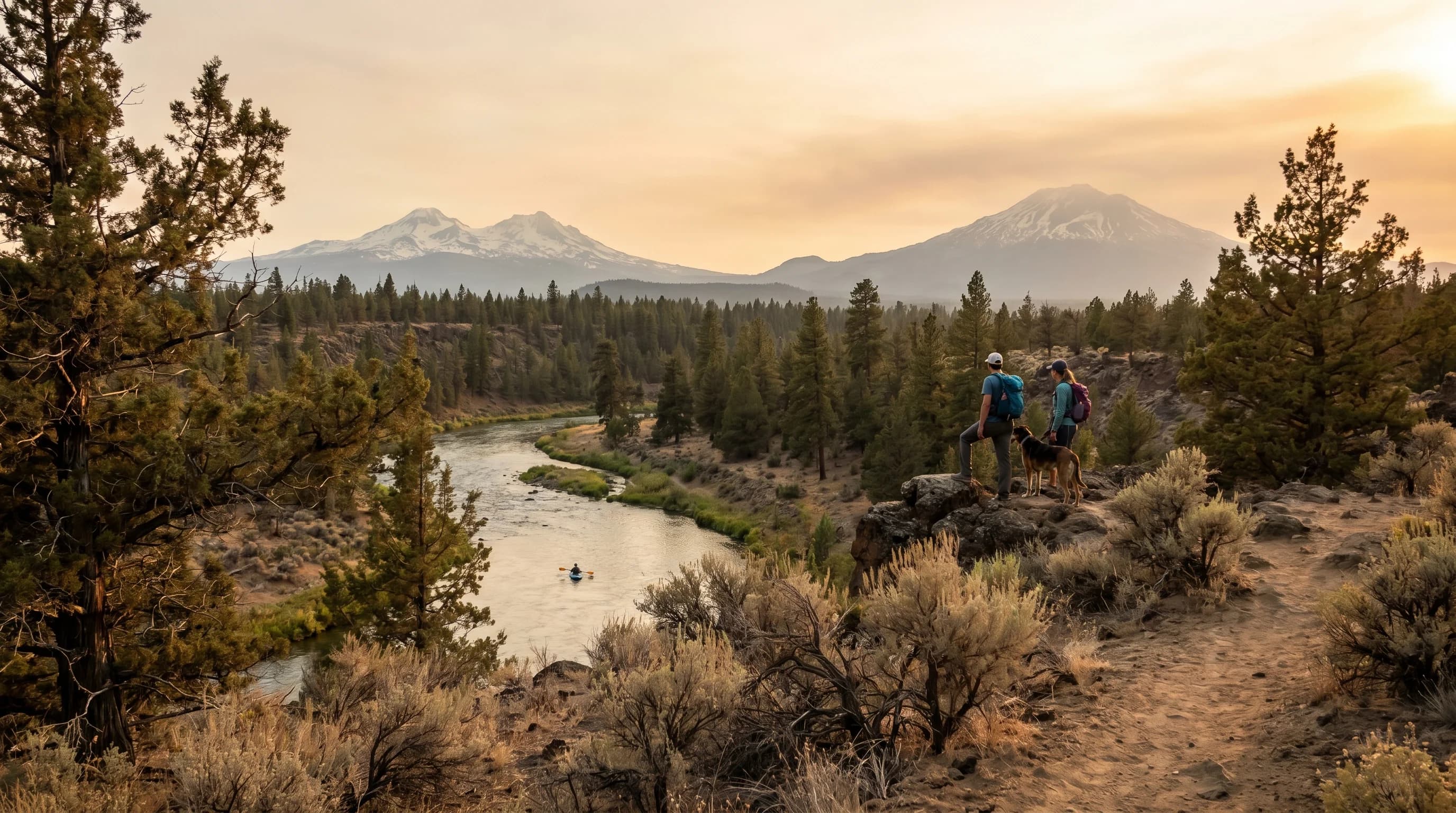
Bend, Oregon has a sunny, dry high-desert climate with four real seasons: warm dry summers, cold snowy winters, and big swings between day and night all year. The town sits around 3,600 feet on the east side of the Oregon Cascades rain shadow, which keeps it far drier and sunnier than western Oregon. Bend sees close to 300 days a year with some sun and only about 11 to 12 inches of precipitation, a fraction of what Portland gets. The Deschutes River runs right through town, and Mt. Bachelor rises 22 miles southwest, where the real snow piles up.
What Is the Weather Like in Bend, Oregon?
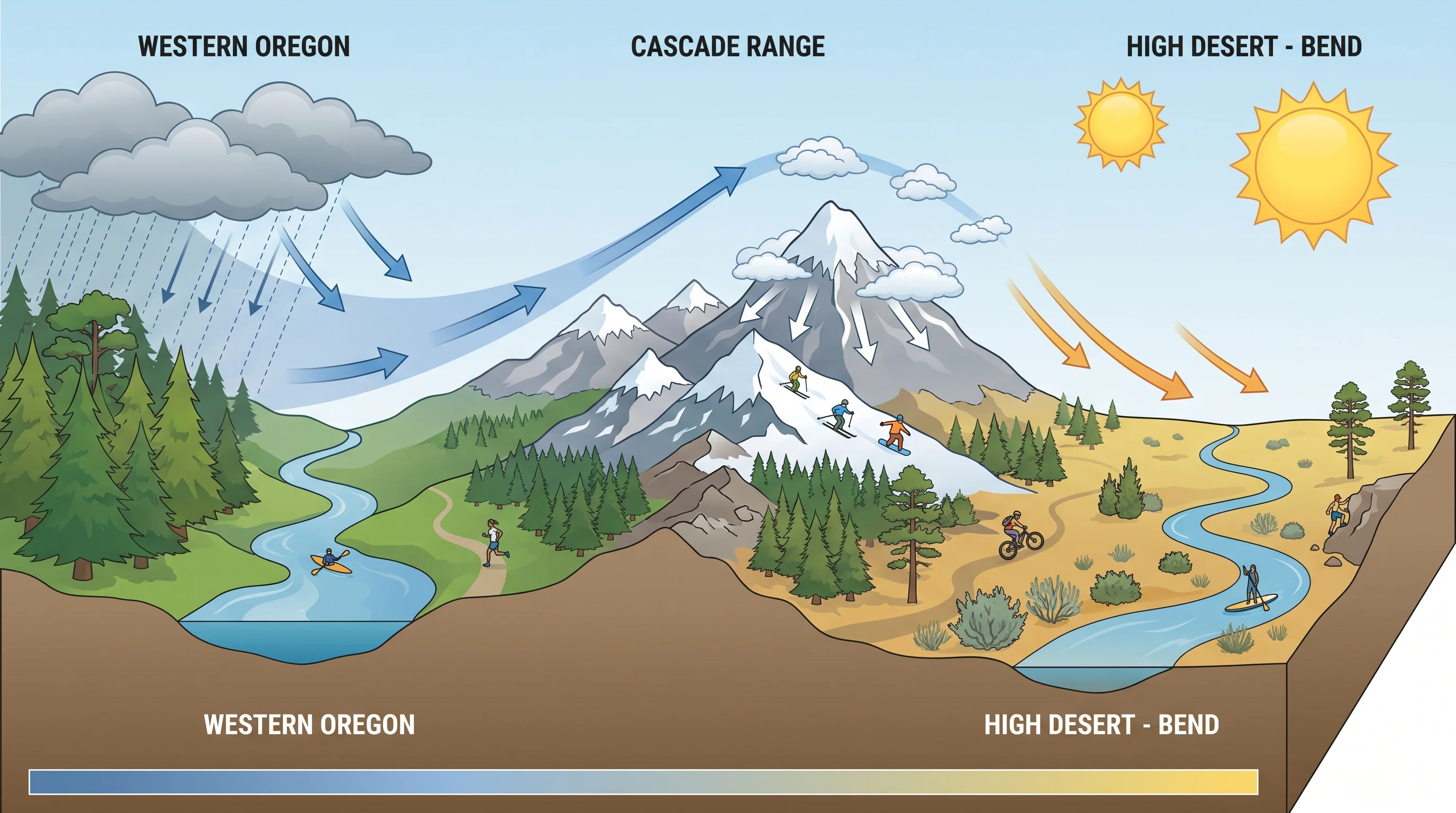
Bend's weather is defined by dry air, intense sun, and elevation. The Cascades block most Pacific rain, so storms that soak the Willamette Valley often arrive in Bend as a dusting or nothing at all. Summers are reliably clear and warm, winters bring cold and snow, and the dry air makes every season swing hard between afternoon highs and overnight lows. The gray, drizzly stretches that define western Oregon mostly stop at the Cascade crest.
Because the land rises so fast toward the mountains, a single forecast rarely fits the whole area. A mild afternoon in town can mean a snowstorm at the ski area and a hard freeze in a nearby basin the same night. The rest of this guide walks through Bend's snow, sun, heat, smoke, and the best times to visit, with links to deeper articles on each.
Does It Snow in Bend, Oregon?
Yes, it snows in Bend most winters, averaging roughly two feet of snowfall in town, with far more in the mountains nearby. The snow season typically runs from November into March, with the deepest months December through February, though early and late dustings happen. Town snow is intermittent and often melts between storms because Bend sits right around the elevation where a given storm's snow level hovers, so the same system can drop snow one day and rain the next. Mt. Bachelor, a mile higher, commonly sees more than 300 inches a season.
The bigger daily hazard in town is usually ice, not deep snow. Freezing fog and cold, clear nights glaze roads, bridges, and shaded corners even when nothing is falling, and refrozen melt does the same after a sunny winter afternoon. That makes winter driving more about reading the ice than plowing the snow. For the full picture of amounts and timing, see how much snow Bend gets.
How Many Sunny Days Does Bend, Oregon Get?
Bend gets close to 300 days a year with measurable sun, which makes it one of the sunniest places in Oregon and a major reason people move here from the gray Willamette Valley. Summer is dependably clear for weeks at a stretch, and even winter delivers bright, cold bluebird days between storms, because the dry rain-shadow air does not sustain the long overcast that blankets western Oregon.
The honest caveat is what "sunny day" means: the figure counts days with at least some measurable sun, not fully cloudless skies, so the count of truly clear days is lower, and winter inversions and summer smoke do cut into it. Even so, the gap over Portland is large and real, roughly double the clear weather. For the numbers behind the claim and how the count is defined, see Bend's sunny days.
Why Are Bend's Summers Hot and Its Nights Cold?
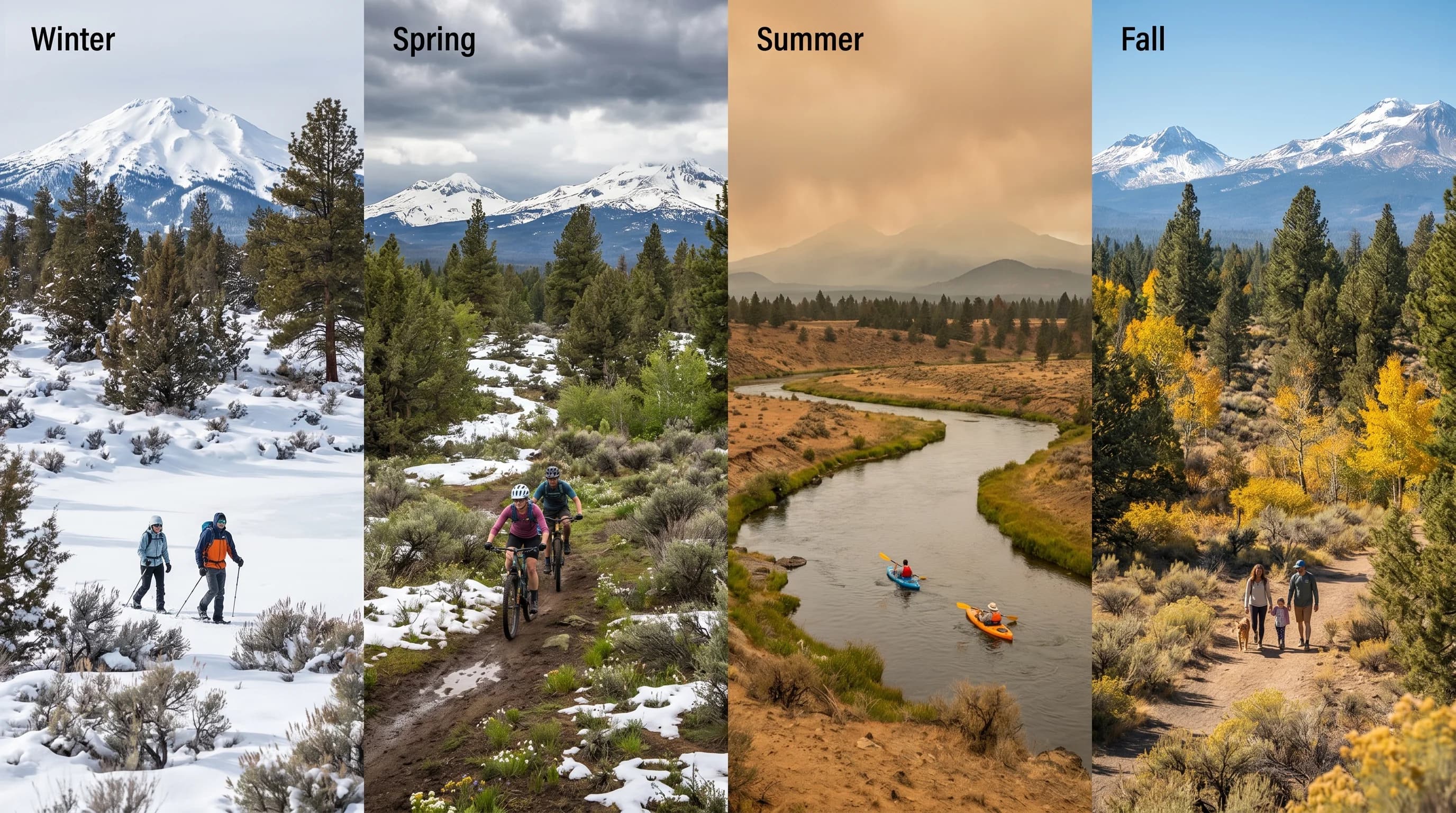
Bend's elevation and dry air create some of the largest day-to-night temperature swings in the state, often 35 to 45 degrees in summer. Dry high-desert air holds little heat, so it radiates away fast after sunset. A 90-degree July afternoon can drop into the 40s by dawn, which is why you pack layers here even in summer. The same swing shows up across Redmond, Sisters, and Sunriver, and it is covered in depth in why Central Oregon has such big temperature swings.
Summer afternoons routinely reach the upper 80s and low 90s, hot enough that the lakes and the Deschutes River become the center of life, but the dry air means shade feels cooler and evenings turn crisp fast. Winter highs hover in the 40s with nights in the teens and 20s. The practical takeaway is that Bend rewards planning by time of day as much as by season: the same date can call for sun protection at noon and a warm layer at dusk.
When Is Wildfire Smoke a Problem in Bend?
Bend's biggest summer wildcard is wildfire smoke, which can settle over town anytime from July through September. Smoke blows in from fires across Oregon, Washington, and California, not just local ones, so the air can swing from pristine to hazardous within a day depending on wind direction. August is the peak smoke month. For how it builds and clears, see Bend air quality and smoke.
Smoke is the one part of Bend's summer that is genuinely hard to plan around, because it depends on fires that may be hundreds of miles away and on winds that shift day to day. A trip can hit a brilliant clear week or a smoky one, and the only reliable move is to stay flexible and check an air-quality reading before committing to a hard day outside. The smoke risk fades quickly once the first fall rains arrive, which is part of why September can be both clear and smoky in the same month.
What Is the Best Time to Visit Bend, and How Should You Plan?
The most reliable stretch of Bend weather is late June through mid-July and again in September: warm sunny days, comfortable conditions, and lower smoke risk than peak summer. Skiers want December through March, when Mt. Bachelor is in full swing and often runs into May. Spring is windy and muddy, and late summer carries the highest smoke risk. For dates and trade-offs, see the best time to visit Bend.
Two rules cover most of Bend's weather: layer for the day-to-night swing, and watch the wind for smoke and ice. Bring sun protection year-round, since high-desert UV is intense at this elevation, and treat bridges and shaded roads as icy in winter even when nothing is falling.
It also helps to place Bend within Oregon as a whole. Most people picture Oregon as the wet, green, gray world of the coast and the Willamette Valley, and Bend is the opposite of that picture: dry, bright, and continental, with four sharply defined seasons rather than one long mild damp one. It is closer in feel to the high deserts of the interior West than to Portland, despite sitting in the same state only a few hours away. That contrast is the whole reason so many people move east over the mountains, and it is why a Bend forecast has to be read on its own terms rather than through expectations carried over from western Oregon. Once you picture Bend as a sunny high desert tucked against a snowy mountain wall, the rest of its weather starts to make sense.