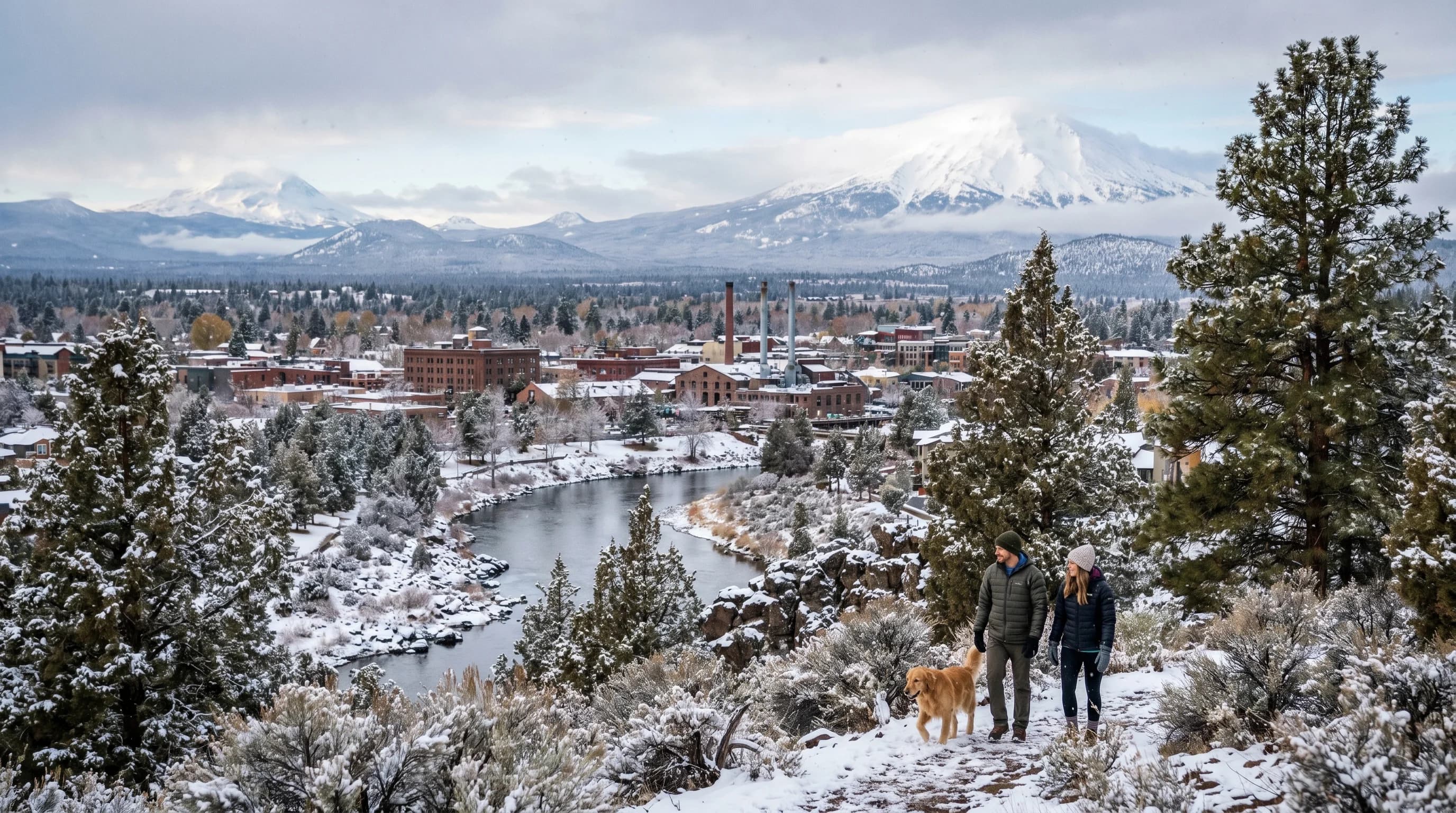
Bend, Oregon averages roughly two feet of snow a year in town, about 24 inches, which is real winter weather but far less than the 300-plus inches that fall each season at nearby Mt. Bachelor. Town snow tends to come in bursts and often melts between storms, because Bend sits right around the elevation where a given storm's snow level hovers. The deep, reliable snow is up in the Cascades, a short drive away, while the bigger day-to-day hazard in town is usually ice rather than depth.
How Much Snow Does Bend, Oregon Get?
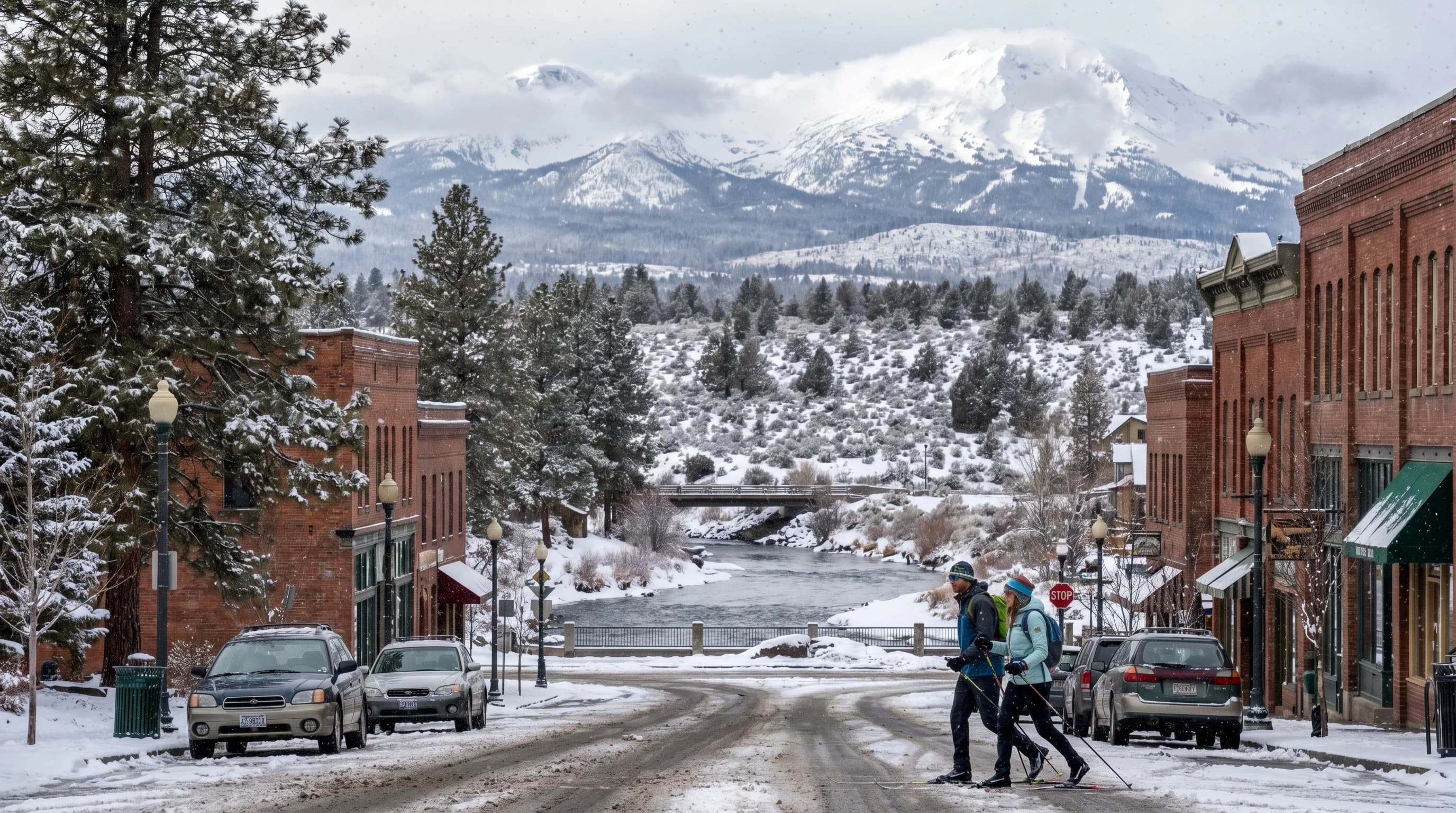
Bend's roughly two feet of snowfall a year sounds modest, and compared with the mountains it is, but it is enough to make Bend a genuine winter town where snow tires, snow removal, and winter driving are part of life. The number varies a lot from year to year depending on the storm track and how often the snow level drops to town elevation, so any single winter can run well above or below that average. Some winters bring repeated accumulating storms; others stay mostly rain and ice.
The contrast with the nearby Cascades is enormous. Mt. Bachelor, a mile higher in elevation, commonly sees more than 300 inches a season, more than ten times Bend's total, and Sunriver and the higher west-side neighborhoods get more than central Bend. That huge gap over such a short distance is the defining feature of snow in the region, and it all comes down to elevation and snow level, covered in the snow level map guide.
It also helps to separate snowfall from snow depth. Snowfall is the total that falls over a season, while snow depth is how much is on the ground at any one time, and in Bend the two diverge sharply because the town's snow melts so often between storms. A winter can deliver its full two feet of snowfall while rarely showing more than a few inches on the ground at once, since each storm's snow tends to melt or compact away before the next arrives. Up at Bachelor, by contrast, the snow accumulates into a deep, persistent base because it almost never melts mid-winter. That difference is why Bend feels like a town that gets snow rather than a town buried in it.
When Does It Snow Most in Bend?
Bend's snowiest months are December through February, with the first flakes often arriving by November and late snow possible into spring. January is typically the coldest and snowiest month, the heart of winter when the snow level most reliably drops to town elevation. Snow can fall as early as October and as late as May in the right setup, so the season is long even if the deepest snow is concentrated in midwinter.
Because Bend sits near the rain-snow line, its snow is intermittent: a storm can drop several inches one week and rain the next, and a sunny stretch can melt the cover off entirely before the next system arrives. This stop-and-start pattern is normal and is why Bend's snow totals are modest even though it clearly gets real winter. The month-by-month picture is laid out in the Bend by-month guide.
Why Does Bend Get So Much Less Snow Than the Cascades?
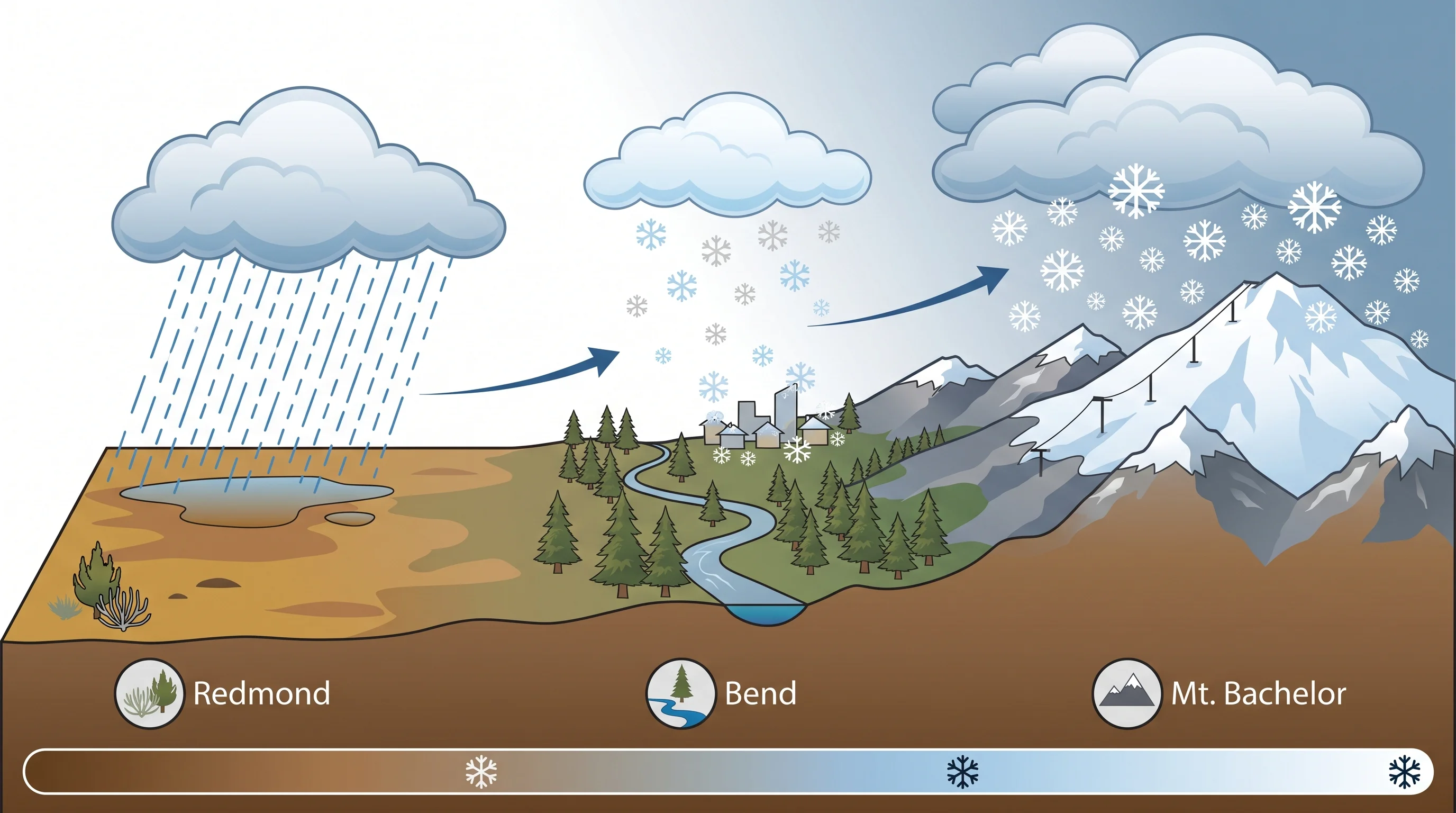
Bend gets far less snow than the Cascades because it sits lower and east of the crest, so storms drop most of their snow on the high windward slopes before reaching town. The snow level, the elevation where rain turns to snow, often sits above Bend but below the peaks, which means the same storm can bury the mountains in snow while town gets cold rain or just a dusting. Elevation, not distance, is what separates Bend's two feet from Bachelor's three hundred inches.
This is the everyday reason it can rain in Bend but snow at Mt. Bachelor on the same afternoon. It also means snow lovers in Bend simply drive uphill to find it, treating the mountains as the reliable snow and the town as a base, rather than waiting for deep snow to pile up at home.
What Is Winter Driving Like in Bend?
Winter driving in Bend means intermittent snow plus a daily risk of ice from freezing fog and overnight refreezing, so the bigger hazard is often ice, not deep snow. Bridges, shaded roads, and the Highway 97 overpasses freeze first and stay frozen longest, and clear, calm nights can glaze the pavement with no precipitation falling at all. Drivers used to thinking of winter as a snow problem can be caught out by the ice problem.
The practical approach is to carry traction, treat any wet-looking road near freezing as iced, and slow down in freezing fog and on the passes. The specific ice hazards are covered in freezing fog and black ice, and the yes-or-no basics in does it snow in Bend.
Does Bend Get More or Less Snow Than It Used To?
Bend's snowfall varies a great deal year to year with the storm track and the snow level, so any single winter can run well above or below the roughly two-foot average, and a couple of big rain-shadow storms can swing a whole season. That natural variability makes it hard to read much into any one mild or snowy winter, and it is why the safest planning assumption is simply a normal snowy high-desert winter rather than a record either way.
What stays constant is the pattern: modest, intermittent town snow, deep and reliable mountain snow, and ice as the everyday hazard. Whether a given winter is heavy or light, the smart move is the same, watch the snow level, keep traction in the car, and head up to the Cascades when you want the real snow. For the full regional snow picture, see the Central Oregon snow guide.