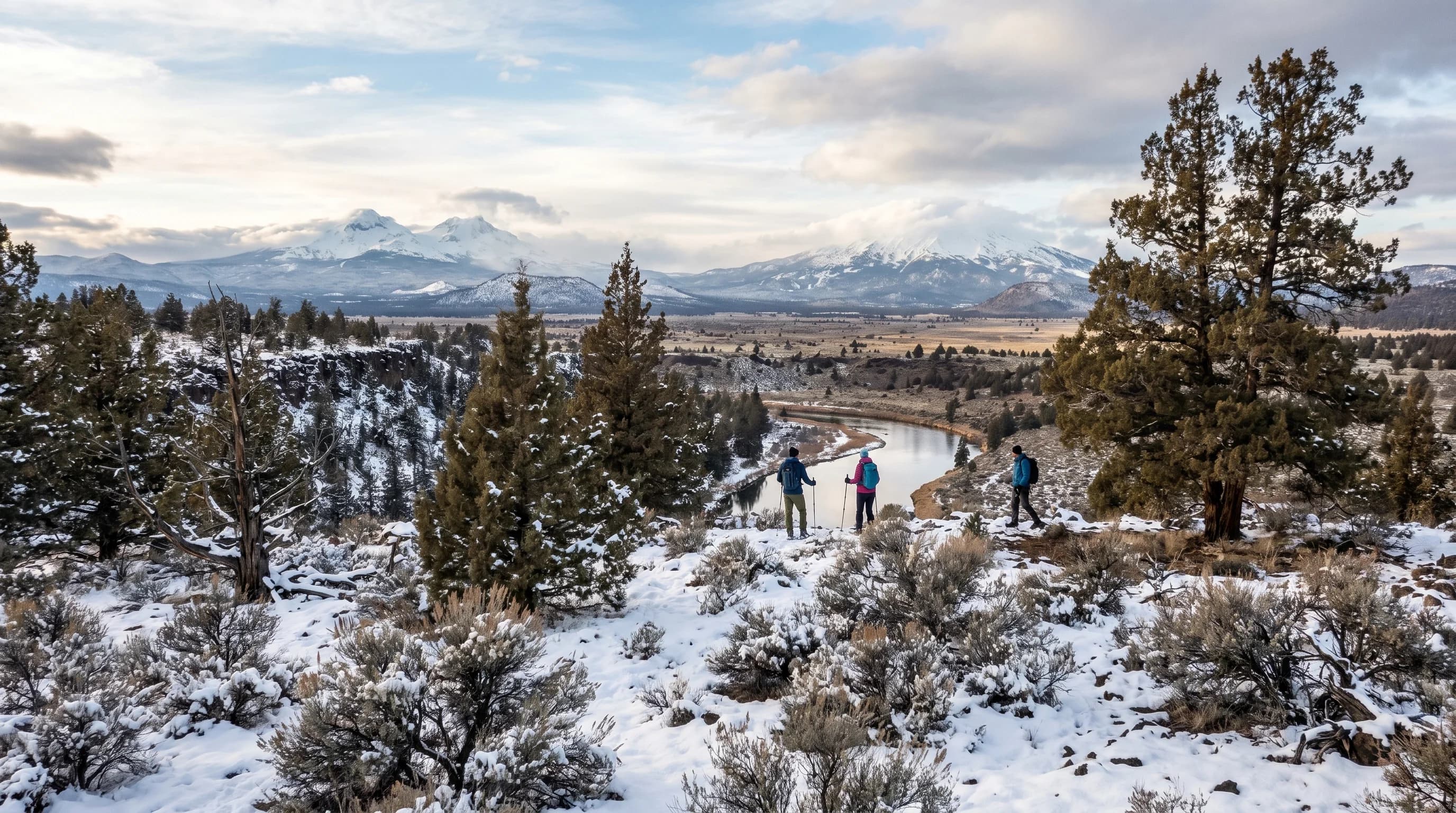
Central Oregon's snowfall ranges from a few inches in lower Redmond and a couple feet in Bend to more than 300 inches at Mt. Bachelor, all controlled by elevation and the storm snow level. Where you are decides whether you get rain, a dusting, or feet of powder. This guide covers snow across the whole region: the towns, the Cascades, and how to find reliable snow, with links to the deeper articles on amounts and snow level.
How Much Snow Does Central Oregon Get?
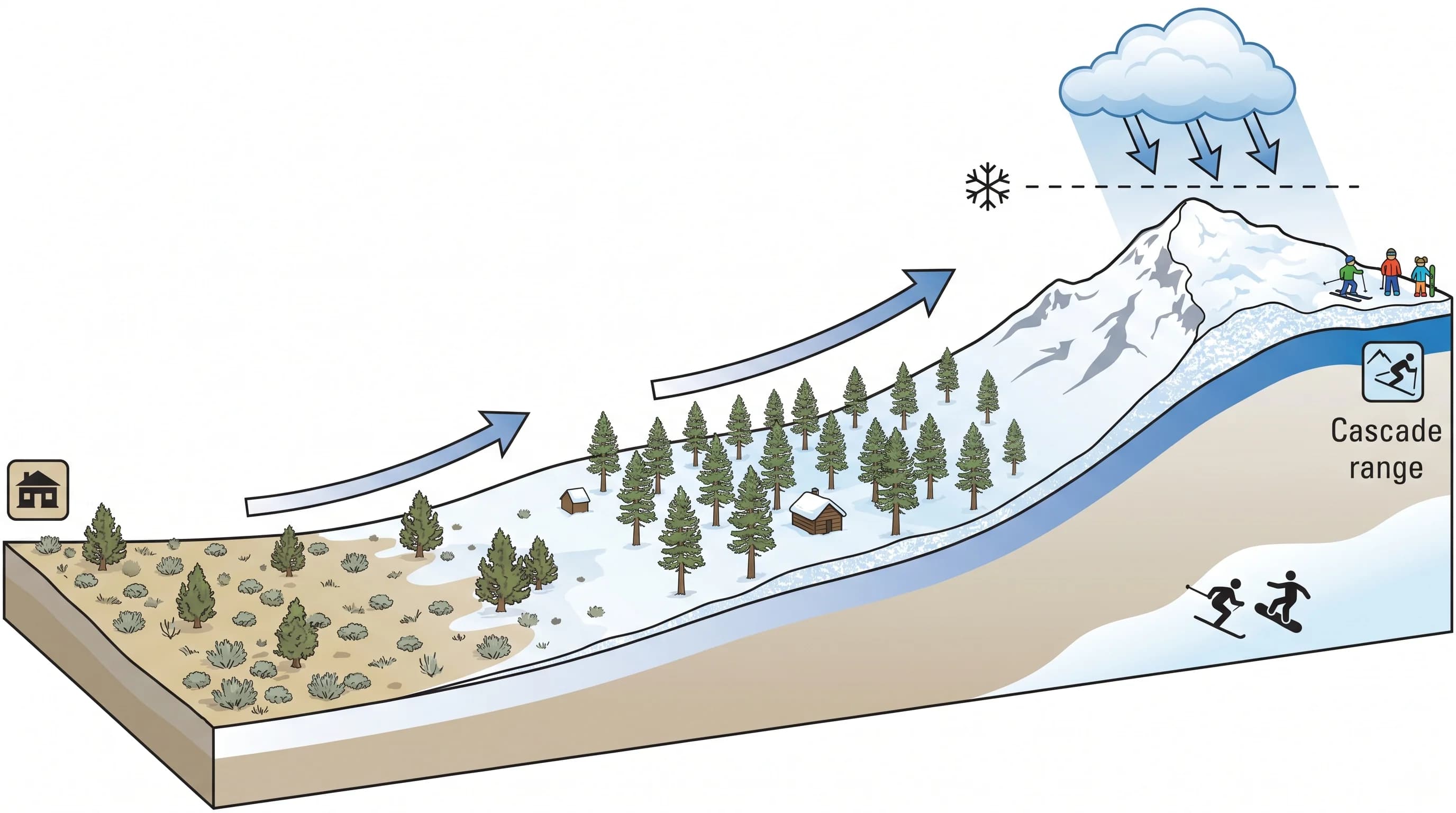
Central Oregon snowfall is all about elevation. Lower Redmond sees only a few inches a year, Bend averages roughly two feet in town, and higher Sisters and Sunriver get more. Up at Mt. Bachelor, snowfall measures in the hundreds of inches with one of the longest seasons in the Pacific Northwest. The towns get real but modest snow that often melts between storms, while the mountains build a deep, lasting snowpack. For the town numbers, see how much snow Bend gets.
Snow in the Towns: Bend, Redmond, Sisters, Sunriver
Snow in the Central Oregon towns varies by elevation, with higher Sisters and Sunriver getting more than Bend and lower Redmond getting the least. Town snow comes and goes between storms, and higher neighborhoods hold it longer. Redmond, lower and in a deeper rain shadow, can stay nearly bare while Sisters, closer to the Cascades, gets a real winter cover; Sunriver, higher and colder, holds snow the longest of the resort communities. Within Bend itself, the west side near the foothills runs snowier than the lower east side.
The bigger day-to-day winter hazard in the towns is often ice rather than deep snow. Freezing fog, refrozen melt, and cold clear nights glaze roads and sidewalks even when nothing is falling, so town winters are more about traction than shoveling. For the yes-or-no and winter-driving picture, see does it snow in Bend.
Snow in the Cascades and at Mt. Bachelor
The Cascades and Mt. Bachelor get the region's real snow, with Bachelor averaging more than 300 inches and a season that often runs from late November into May. The Cascade Lakes Highway and the passes hold deep snow, and this is where to go for guaranteed snow play. For base-versus-summit conditions and wind holds, see Mt. Bachelor weather.
That snowpack is more than a playground. The deep Cascade snow that builds through winter is the region's natural reservoir, melting slowly through spring and early summer to feed the Deschutes River and the irrigation that the high desert depends on. A big snow year and a lean one are felt all the way into the following summer, in river flows, lake levels, and fire risk, so the mountain snow matters even to people who never ski.
Why Elevation and Snow Level Control the Snow
Elevation and snow level control Central Oregon's snow because a single storm can rain in the towns while snowing heavily just upslope. Snow level, the elevation where rain turns to snow, is the key forecast number: a small change in it shifts the rain-snow line right across town. This is exactly why it can rain in Bend but snow at Mt. Bachelor, and how to read it is covered in the Oregon snow level map.
The practical effect is that the same number drives wildly different days depending on where you are. A snow level of 3,500 feet means snow in nearly every town and a true winter storm region-wide; a snow level of 5,500 feet means rain in the towns, slush at the passes, and snow only up high. Because Bend sits near the lower end of that range, it is the town most likely to flip between snow and rain within a single storm, while Sunriver and the passes more reliably stay frozen and Redmond more reliably stays wet. Watching the forecast snow level against your destination's elevation is the most reliable way to know what you will actually drive and play in. The 2026-27 Central Oregon El Niño outlook explains how a warmer seasonal signal could raise snow levels without deciding the winter's total snowfall.
Where to Find and Enjoy Snow in Central Oregon
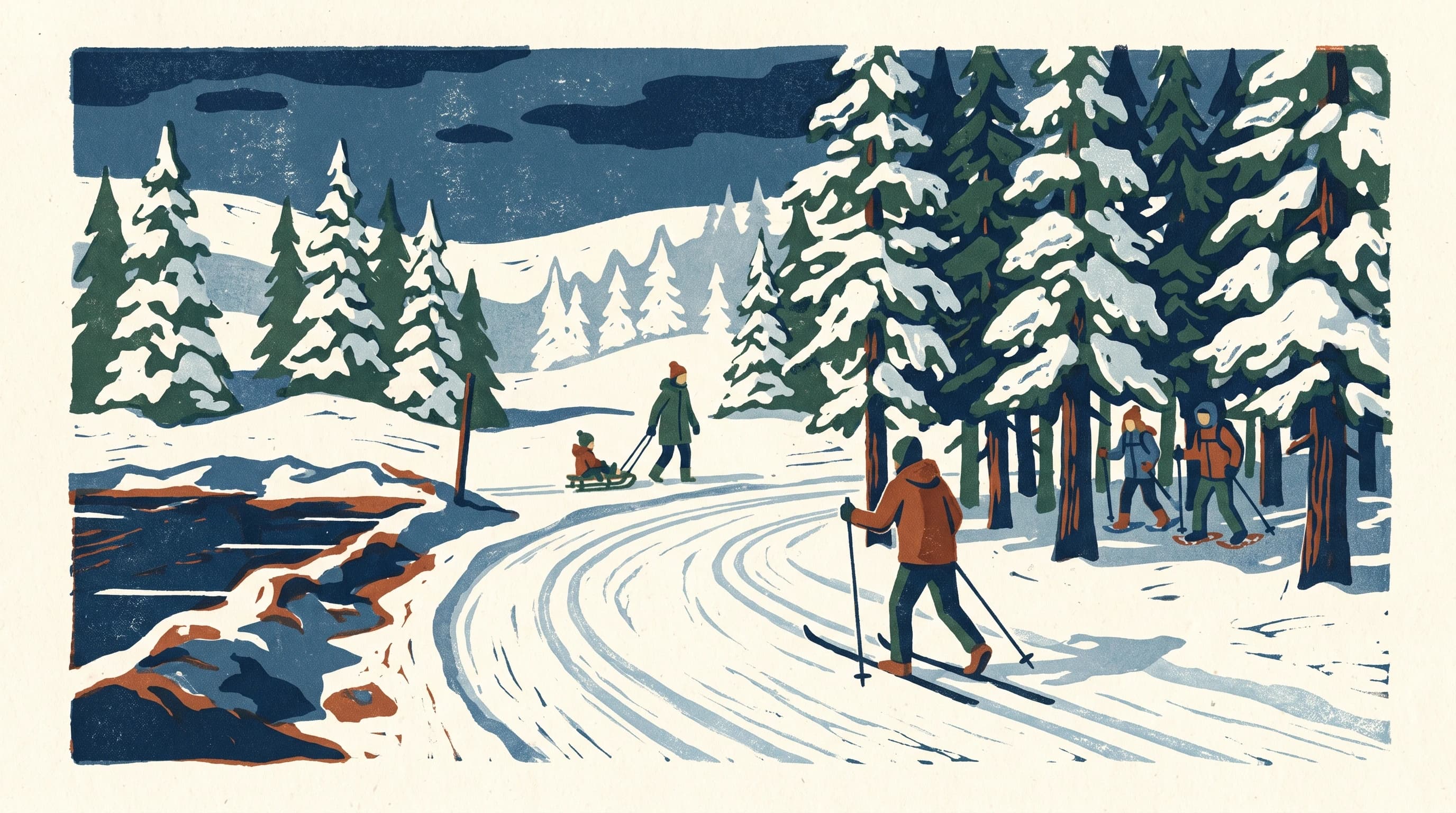
For reliable snow play, the rule is simple: gain elevation toward the Cascades. The most dependable snow clusters along the Cascade Lakes Highway southwest of Bend, where a string of Sno-Parks offer Nordic skiing, snowshoeing, and sledding on managed, signed terrain, and at Mt. Bachelor for downhill skiing and riding through one of the longest seasons in the Pacific Northwest. Santiam Pass and the Hoodoo area to the north hold snow well too. These higher zones are where the snow is deep, lasting, and set up for recreation.
The lower towns are better for everyday life than for deep snow. Bend, Redmond, and the basin floors get real but intermittent cover that melts between storms, so locals drive uphill to find reliable snow rather than waiting for it to pile up at home. That also means a snow trip here is usually a day trip into the mountains, and winter driving on the access roads and passes deserves respect: the Cascade Lakes Highway and Santiam Pass can be snowpacked and icy even on days that are merely cold and dry in town.
Timing matters as much as place. The mountain snowpack is usually deep and reliable from December into April, with midwinter the safest bet and spring offering sunnier, softer conditions. If your trip is tied to a specific month, the winter entries in the Bend by-month guide pair well with this one, and for the operational details of the region's main ski mountain, see Mt. Bachelor weather. However you plan it, the consistent truth of snow in Central Oregon is vertical: the higher you go toward the crest, the more snow you will find and the longer it will last.