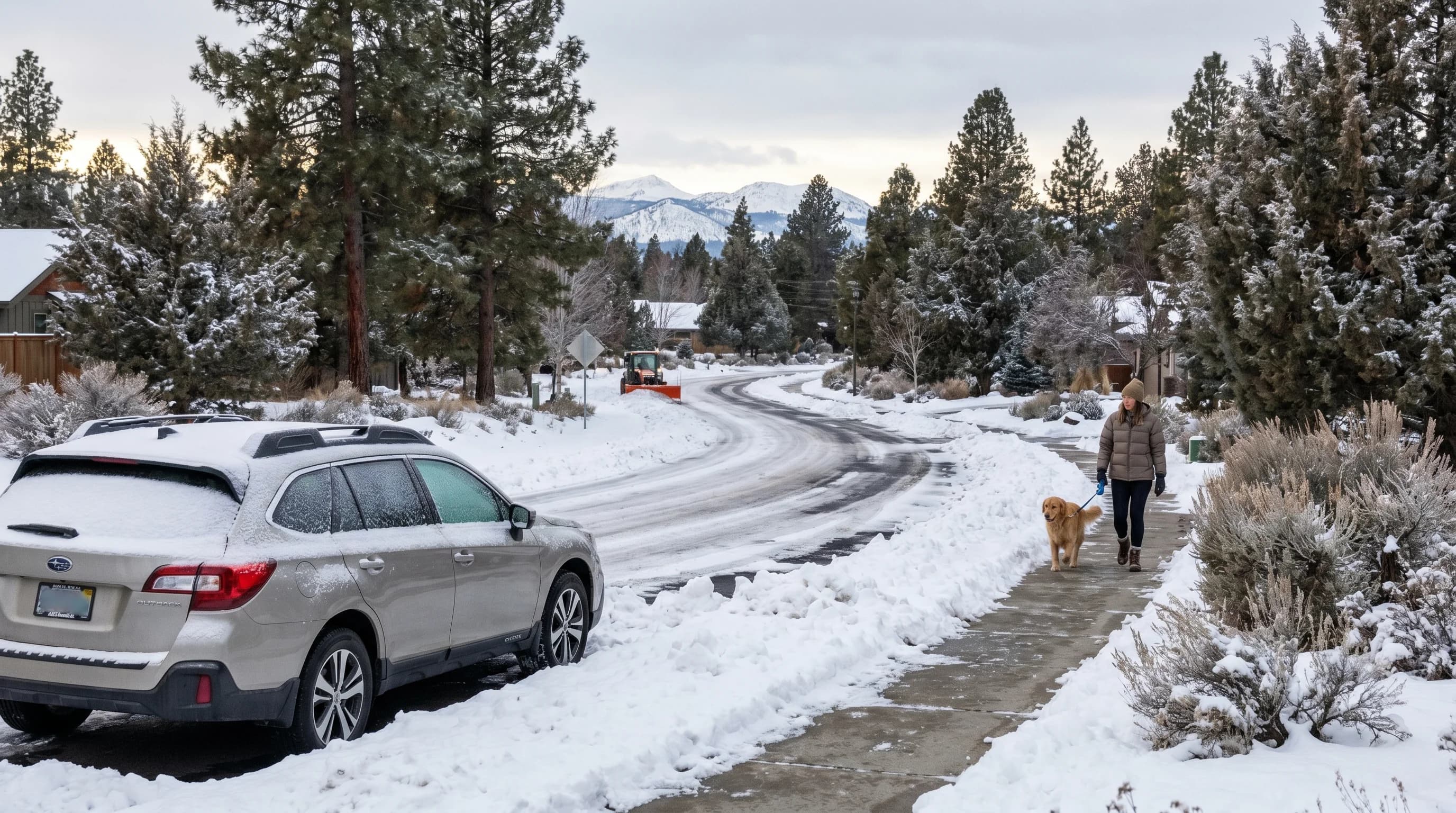
Yes, it snows in Bend, Oregon. Despite Oregon's rainy reputation, Bend sits in the high desert at about 3,600 feet and gets a real winter, averaging roughly two feet of snow a year in town with snow on the ground for stretches from November through March. Town snow comes and goes between storms, the nearby Cascades get vastly more, and the biggest daily hazard is often ice rather than deep snow. If you are moving to Bend or planning a winter trip expecting gray drizzle, the high desert's bright, cold, genuinely snowy winter is the surprise.
Does It Snow in Bend, Oregon?
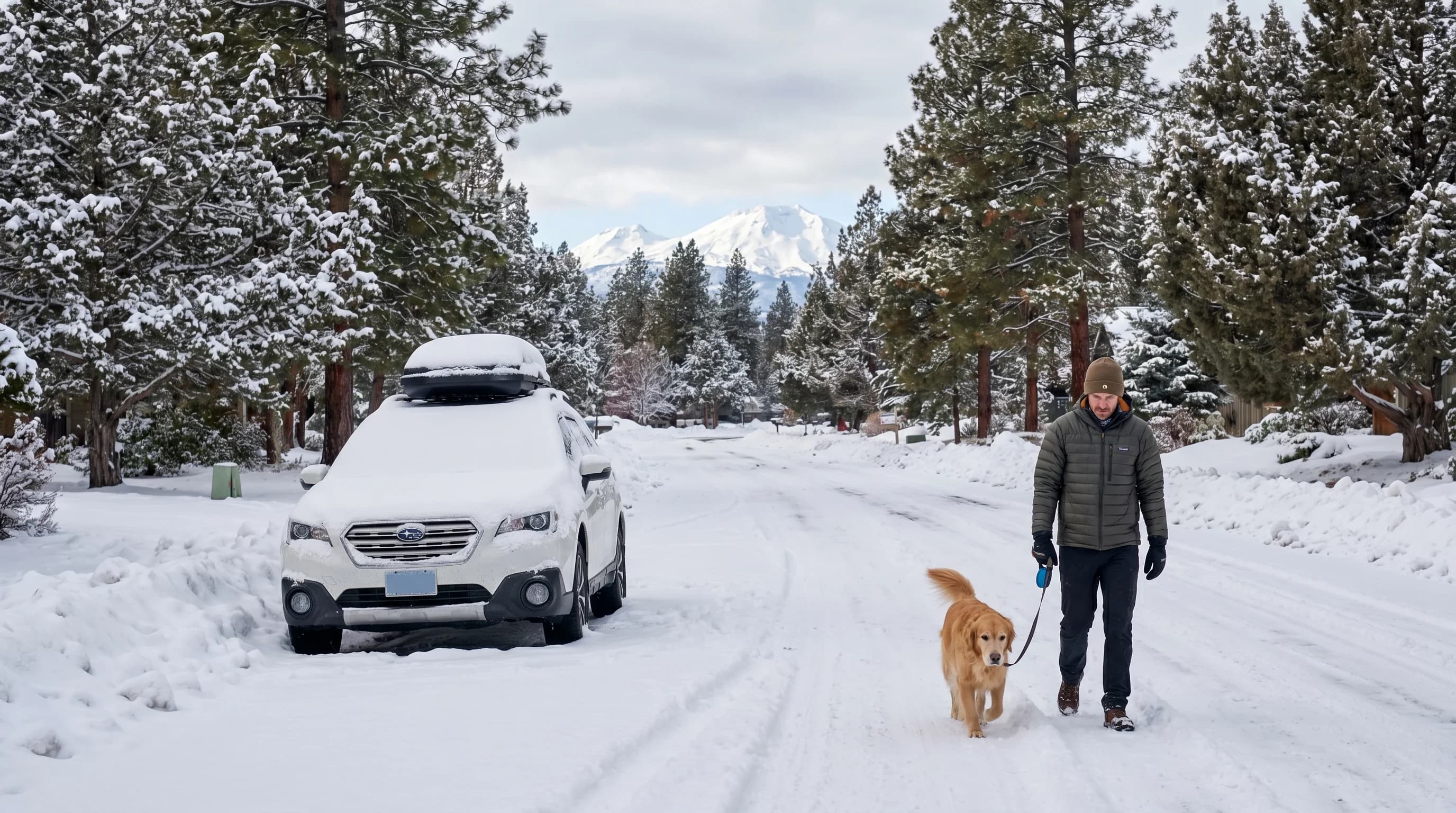
It is a common misconception that Oregon means endless rain. That picture fits the Willamette Valley and the coast, but Bend is on the other side of the Cascades in the high desert, where winter looks completely different: colder, drier, sunnier, and snowier in the sense of real snow rather than steady rain. Bend gets genuine snow most winters, enough to require winter tires and snow removal, and snow can be on the ground for days or weeks at a time in the heart of the season.
That said, Bend's snow is intermittent rather than constant. Because the town sits near the elevation where storms hover between rain and snow, the cover tends to come and go, accumulating in a storm and then melting or compacting before the next one. The deep, continuous snowpack is up in the mountains; in town, expect a real but on-and-off winter. For the totals, see how much snow Bend gets.
It is also worth knowing that snow varies within Bend itself. The west side of town, closer to the foothills and a little higher, tends to get more snow and hold it longer than the lower east side, so two neighborhoods a few miles apart can have noticeably different winters. The same elevation logic that separates Bend from the mountains operates in miniature across town, which is why a friend on the west side may be shoveling while the east side is merely wet. When people ask whether it snows in Bend, the honest answer is yes, but how much depends a lot on exactly where you are.
When Does It Snow in Bend?
Bend's snow season runs from about November through March, with the first flakes sometimes arriving in October and late snow possible into May. December through February is the core of winter, when the snow level most reliably drops to town elevation and storms are most frequent. The early and late shoulders of the season catch newcomers off guard: an October dusting or a May snow shower is unusual but far from unheard of in the high desert.
Through the season, sunny, cold high-pressure spells alternate with snowy storm systems, so a bright bluebird week can follow a snowy one. This rhythm of storm and clear, cold sun is part of what makes Bend's winter feel different from the valley's unbroken gray. The month-by-month detail is in the winter entries of the Bend by-month guide.
How Does Snow Level Decide Whether Bend Gets Snow or Rain?
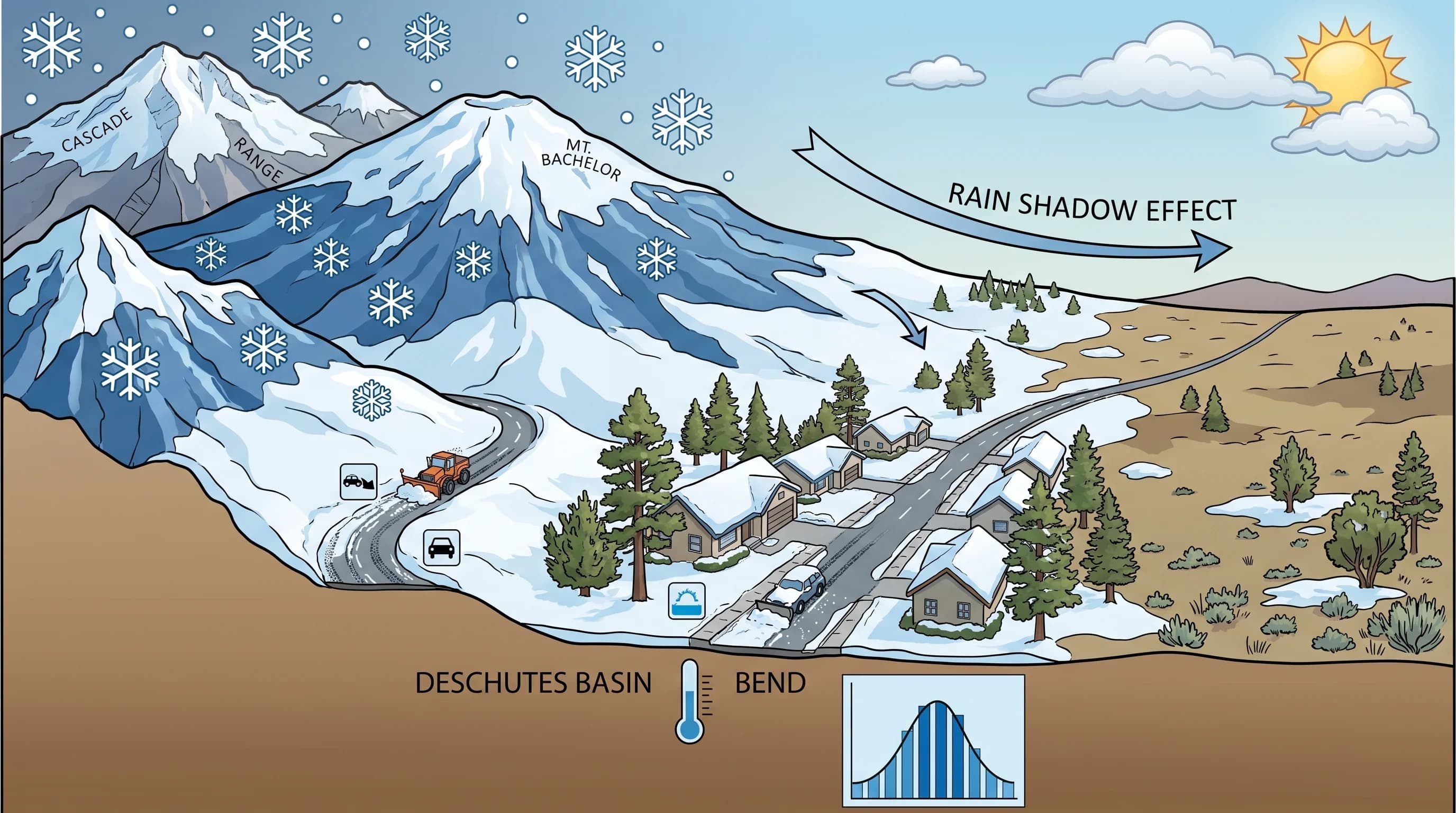
Whether Bend gets snow or rain in a given storm depends on the snow level, the elevation where falling rain turns to snow, which often hovers right around Bend's elevation of about 3,600 feet. When the snow level drops below town, Bend gets snow; when it sits above town, Bend gets cold rain; and when it lands right at town elevation, the result is a slushy mix. The same storm can rain in lower Redmond while snowing in Bend, and snow in Bend while burying Mt. Bachelor. The 2026-27 El Niño outlook for Bend explains how a warmer seasonal signal could raise snow levels without ruling out town snow.
This is why Bend's winter is so variable and why locals watch the snow level rather than just the chance of precipitation. A shift of a few hundred feet flips the outcome from snow to rain, which is the whole subject of the snow level map guide and the reason it can rain in Bend but snow at Mt. Bachelor.
What Is Winter Driving Like in Bend?
Winter driving in Bend is manageable but demands respect, because the biggest hazard is often invisible ice from freezing fog and overnight refreezing rather than deep snow. Cold, calm nights glaze the roads, bridges and shaded stretches ice first, and a sunny afternoon's melt refreezes after dark. Drivers who think of winter only as a snow problem can be caught out by the ice problem on a morning when no snow has fallen at all.
The basics are simple: run winter or studded tires, carry chains for the passes, treat bridges and shaded roads as iced, and slow down in freezing fog. The specific ice hazards are covered in freezing fog and black ice, and sudden mountain whiteouts in snow squalls. With the right tires and a cautious morning routine, Bend winters are very drivable.
Where Do You Go for Real Snow Near Bend?
For deep, reliable snow near Bend, head up to Mt. Bachelor and the Cascade Lakes Highway, where snowfall measures in feet, not inches, and the snowpack lasts all winter. The Sno-Parks along the way offer Nordic skiing, snowshoeing, and sledding on managed terrain, and the drive from town to deep snow takes well under an hour. Town is the base; the mountains are the snow.
This is the practical answer to the whole question: yes, it snows in Bend, but the town's snow is the modest, intermittent kind, while the serious snow is a short drive uphill. Whether you want a snowy winter to live in or deep powder to play in, Central Oregon delivers both, just at different elevations. For the full regional picture, see the Central Oregon snow guide.