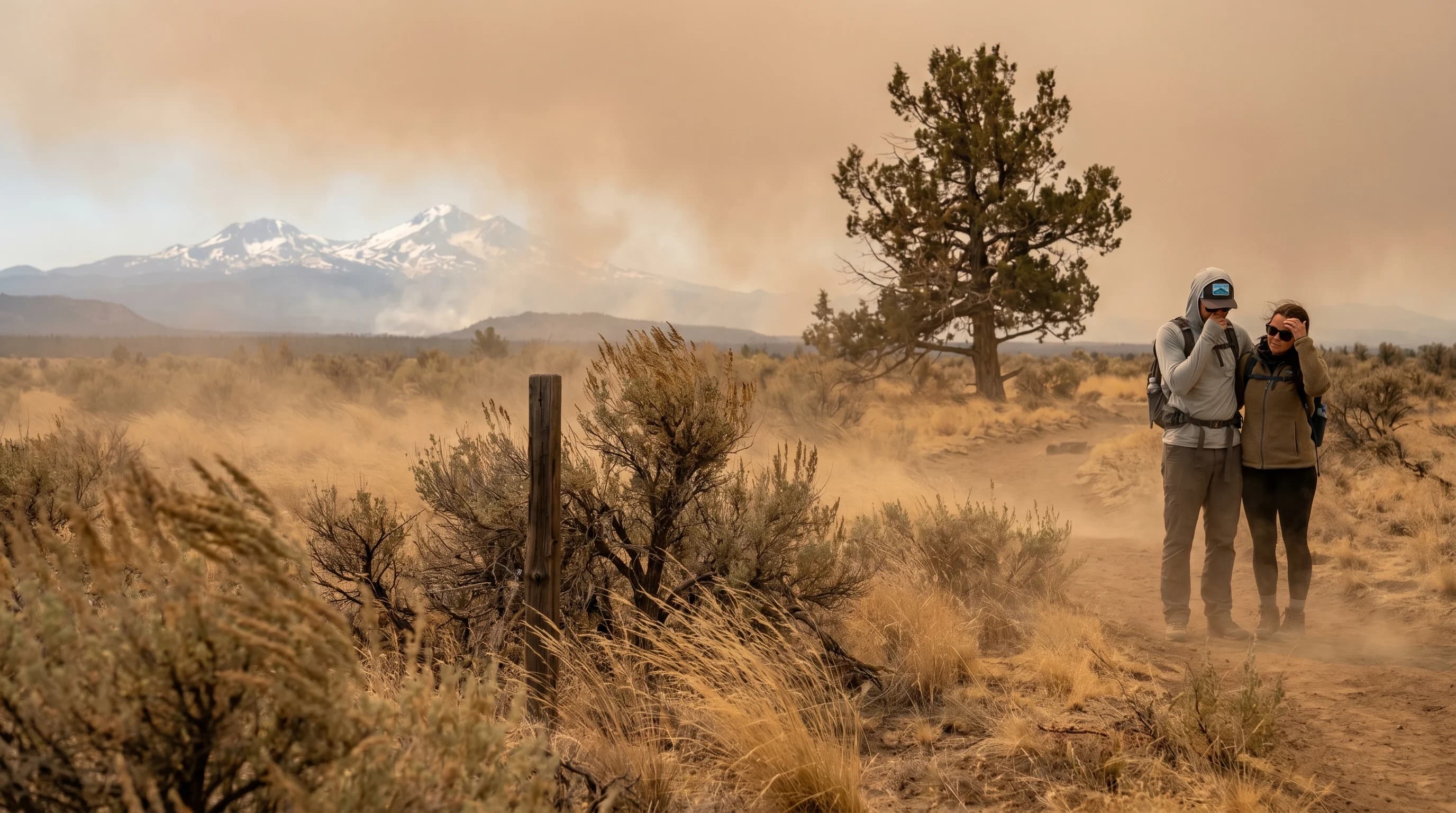
A Red Flag Warning means weather conditions that can drive dangerous, fast-spreading wildfire are happening now or are expected within about 24 hours. The usual recipe is low humidity, strong wind, and dry vegetation, sometimes with dry lightning thrown in. It is the fire-weather equivalent of a severe storm warning, a signal to avoid anything that could spark a fire and to be ready to act fast. In Central Oregon, where the dry high desert, gusty afternoons, and cured summer fuels line up regularly, Red Flag Warnings are a routine and serious part of fire season.
What Is a Red Flag Warning?
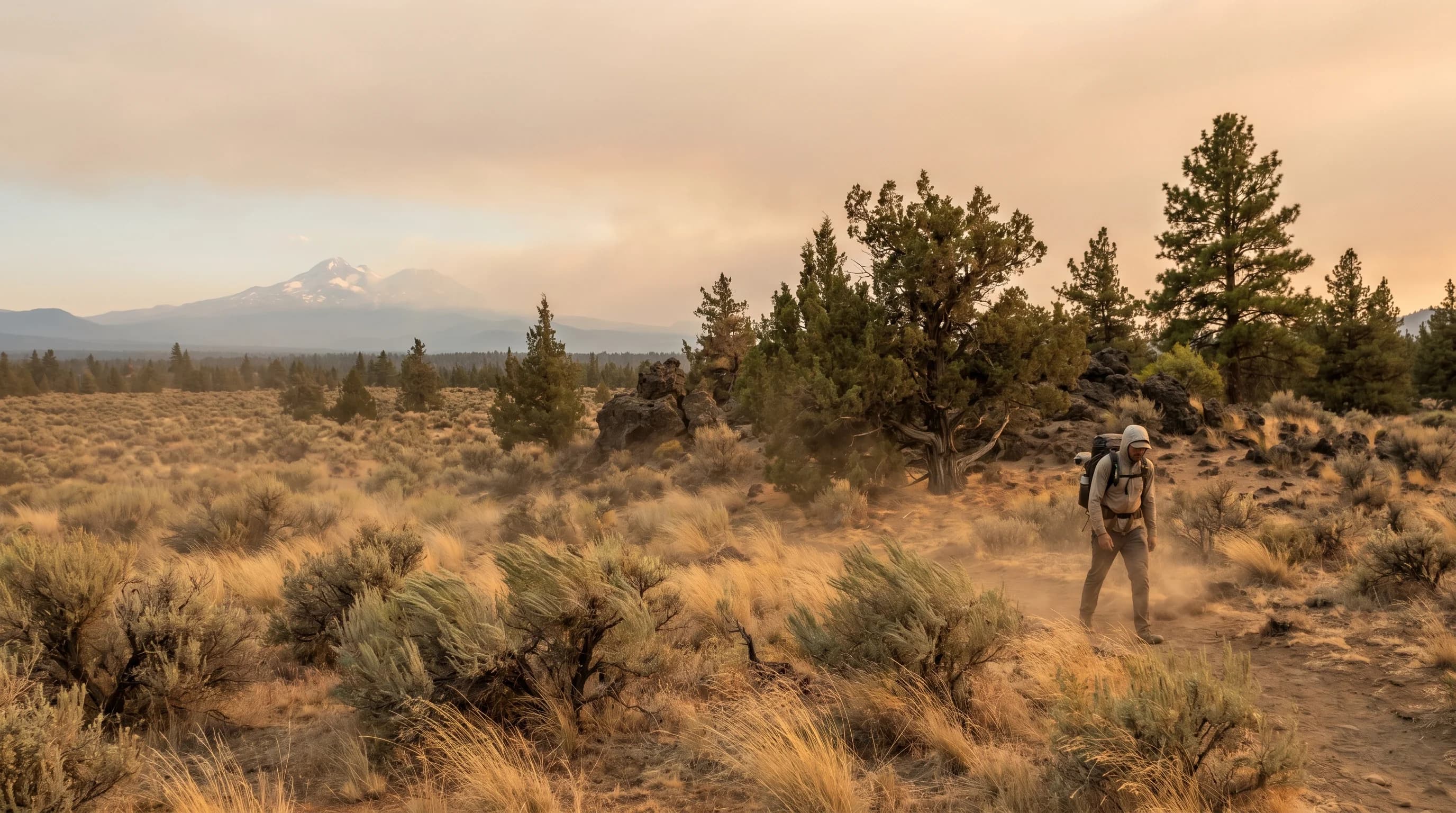
A Red Flag Warning is an alert issued by the National Weather Service when the combination of weather and dry fuels reaches a level that would let a new fire grow explosively. It does not mean a fire is burning; it means the atmosphere is primed so that if a fire does start, from a spark, a campfire, equipment, or lightning, it could spread fast and be very hard to control. The warning is meant to change behavior, both for the public and for fire agencies staging crews and equipment.
The warning is short-term and specific, typically covering the next day or so and a defined geographic area, because critical fire weather is driven by particular conditions that come and go. When you see one, the practical message is simple: this is the worst time to do anything that could ignite a fire, and it is a good time to be aware of your surroundings and your exits. Treating it with the same seriousness as a storm warning is exactly the right instinct.
What Conditions Trigger a Red Flag Warning?
A Red Flag Warning is triggered when low relative humidity, strong sustained winds, and dry fuels combine to a level that would let a new fire grow rapidly. The exact thresholds vary by region, but the core ingredients are always the same: air dry enough to let fuels ignite and burn readily, wind strong enough to push flames and carry embers, and vegetation cured enough to catch. When all three align, a single ignition can become a major fire in a matter of minutes.
Dry lightning is a special trigger, because it provides the ignition source directly. A storm that produces lightning but little rain can start fires across a wide area at once, especially when it arrives over fuels that are already dry. In Central Oregon, dry, gusty east-wind events are a classic setup, since downslope flow can drop humidity sharply and drive wind at the same time, which is the connection explored in why Central Oregon storms can be dry, windy, and dangerous.
What Is the Difference Between a Red Flag Warning and a Fire Weather Watch?
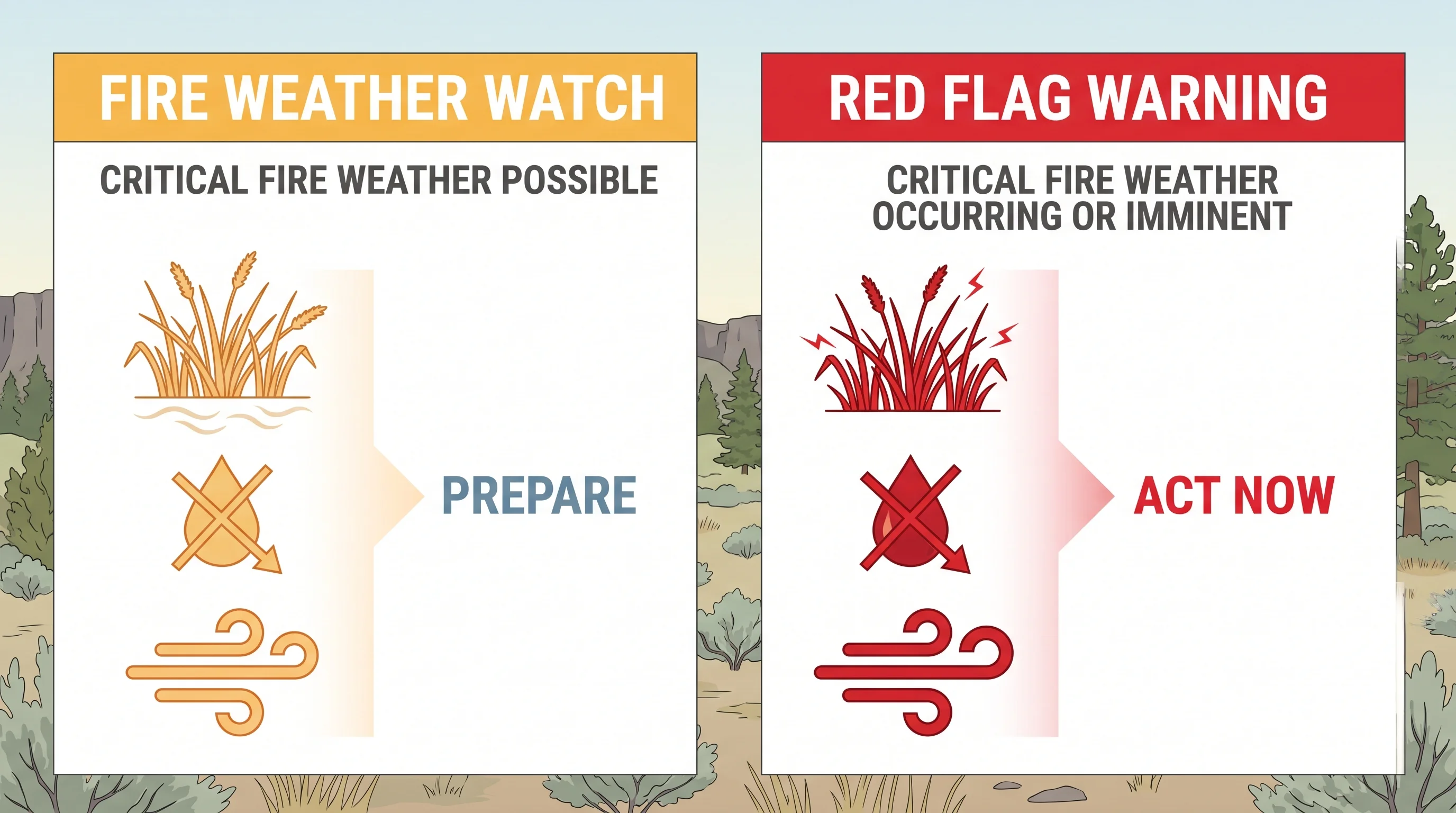
A Fire Weather Watch means critical fire conditions are possible in the next 12 to 72 hours, while a Red Flag Warning means those conditions are occurring or imminent within about 24 hours. The watch is the heads-up; the warning is the alarm. The relationship is the same as between a severe thunderstorm watch and warning: a watch says be prepared and keep an eye on the forecast, while a warning says the dangerous conditions are here, act now.
In practice, a Fire Weather Watch is often issued a day or two ahead when forecasters see the ingredients lining up, and it is upgraded to a Red Flag Warning as the timing firms up and the event approaches. Both are worth paying attention to during fire season, but the warning is the higher-urgency message and the one that should most change your plans for the day. If a watch is in effect, it is a good time to get ready; if a warning is in effect, it is time to be careful.
What Should You Do During a Red Flag Warning?
During a Red Flag Warning, the goal is to avoid any activity that could start a fire and to be ready to respond quickly if one ignites. That means no open burning, no fireworks, and no campfires, and avoiding anything that throws sparks, such as dragging trailer chains, mowing or cutting dry grass, or parking a hot vehicle over dry vegetation. Many of the worst wildfires start from exactly these ordinary, avoidable sources on a high-risk day.
It is also a good time to stay alert and prepared. Know your evacuation route, keep an eye out for new smoke, and have a plan if you live or are recreating in fire-prone terrain. Fire restrictions and public-land closures often accompany Red Flag conditions, so check before heading out. The warning is short-lived by design, so the careful behavior it calls for is only needed for a day or so at a time, but during that window it genuinely matters.
How Often Does Central Oregon Get Red Flag Warnings?
Central Oregon sees Red Flag Warnings regularly through fire season, which generally runs from midsummer into early fall. The dry high desert, the strong afternoon winds, and the cured grass, sage, and timber all come together routinely, and east-wind events over the Cascades can raise the risk sharply by drying the air and driving the wind at once. Some summers bring many warnings; the number depends on the weather pattern and how dry the season has been.
Because the region is genuinely fire-prone, the warnings are not a formality, they reflect real, recurring danger. They tie directly into the smoke that follows, since the fires they help prevent or that start anyway are the source of the haze covered in Central Oregon smoke season, and which direction that smoke travels depends on the wind. Paying attention to Red Flag Warnings is one of the simplest ways to be a responsible resident or visitor in fire country.