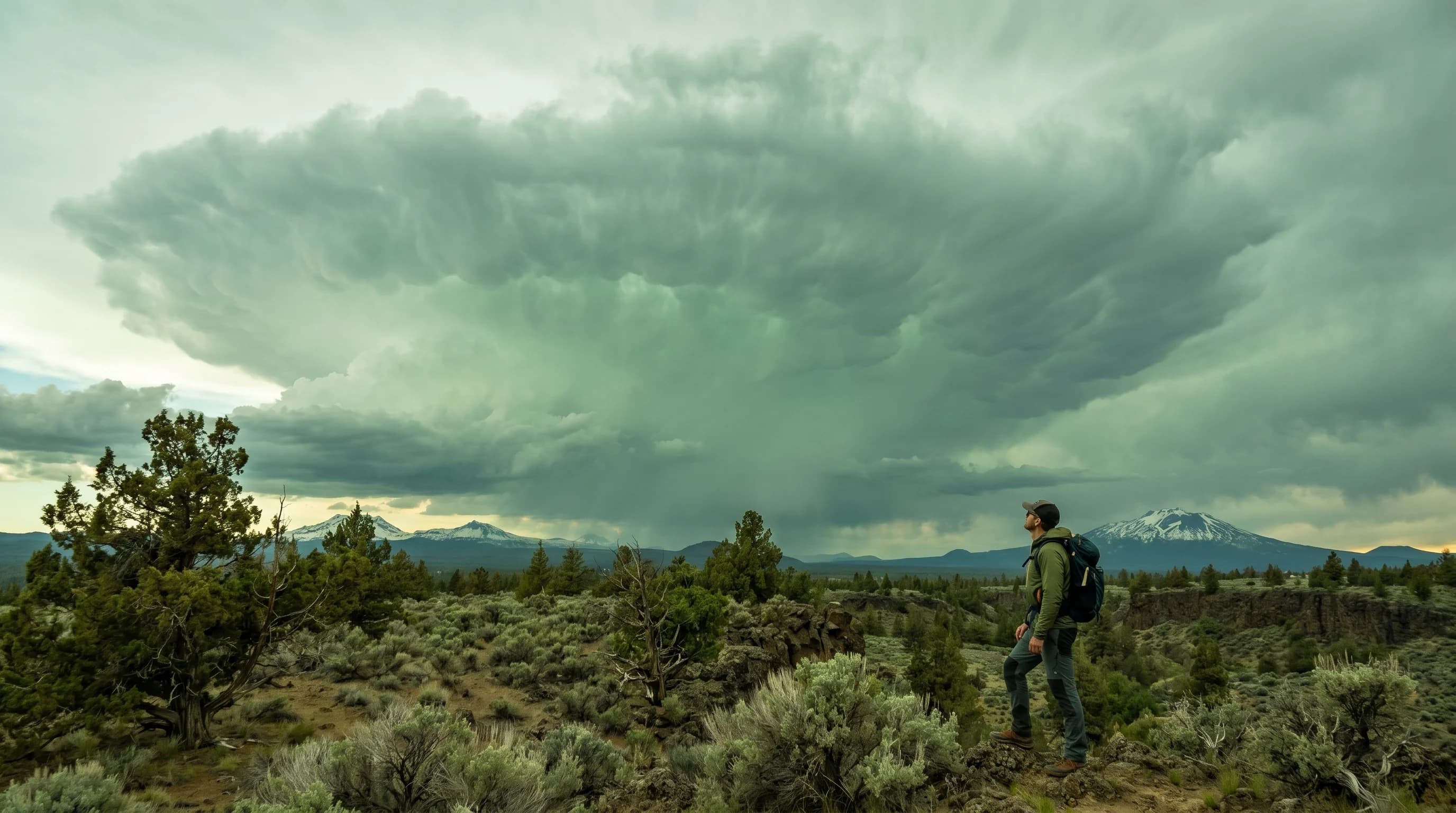
Every so often a severe thunderstorm turns the Central Oregon sky an eerie shade of green, a sight that stops people in their tracks and, in storm-prone parts of the country, is taken as a warning sign. A green sky is associated with deep, severe storms, often ones carrying a lot of water and hail, and while the exact science is still debated, it reliably signals a powerful storm overhead. In the high desert, where severe storms are less frequent than on the Plains, a green-tinged sky is a rare and dramatic event worth understanding, and worth taking seriously.
Why Does the Sky Turn Green Before a Storm?
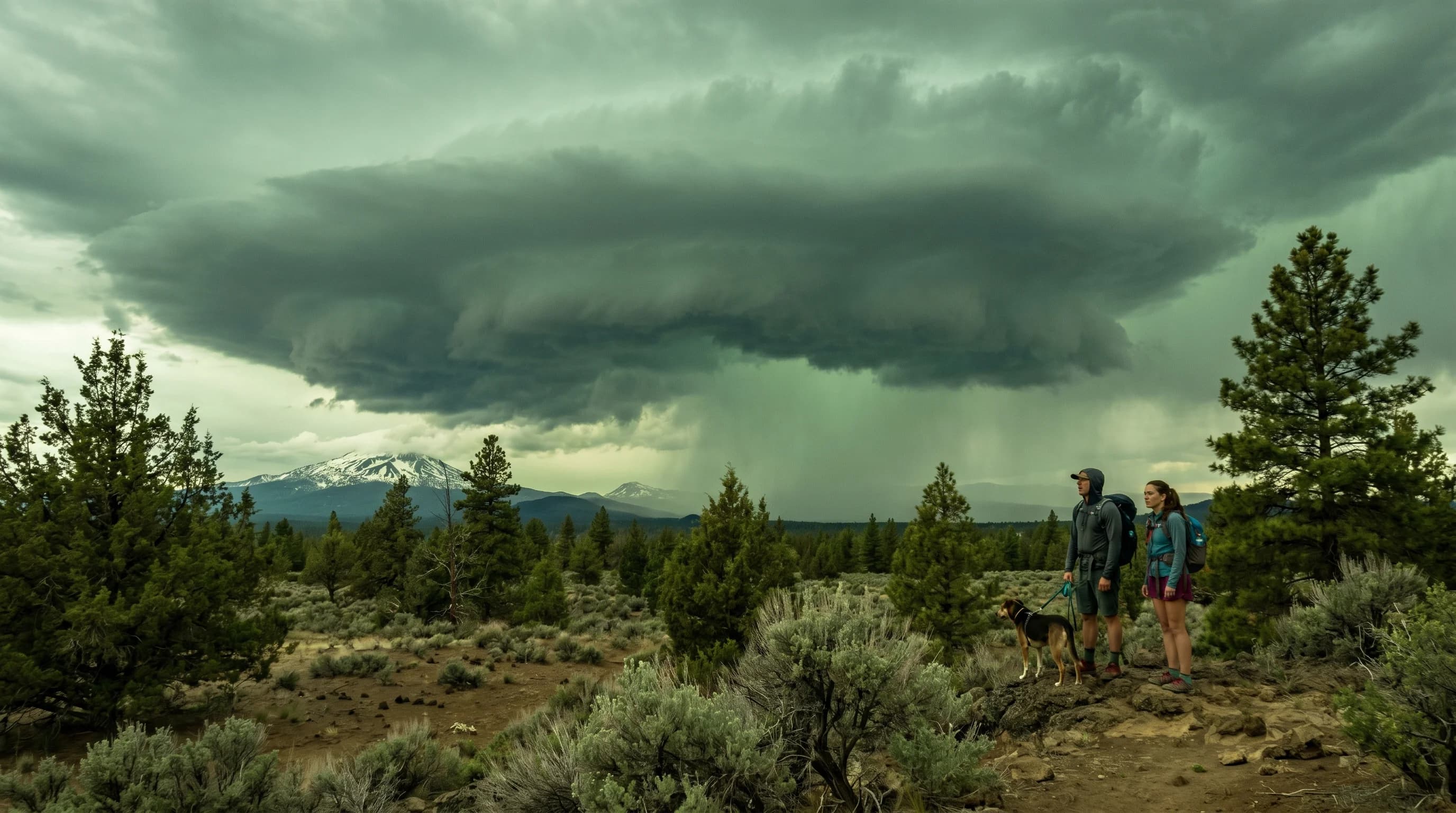
The sky turns green before a storm when sunlight is filtered through a deep, water-laden thunderstorm and emerges with a green cast. The leading explanation involves the interaction of light with the enormous volume of water and ice held in a severe storm. Thunderstorms are most common in the late afternoon and evening, when the low sun casts reddish light, and when that reddish light passes through or reflects off the blue-tinted water and ice deep in a towering storm, the combination can produce the distinctive green color.
The effect requires a very deep, dense storm to hold enough water and ice to color the light, which is why green skies are linked to the strongest storms rather than ordinary ones. The exact physics is still a subject of scientific study, and not every severe storm goes green, but the appearance of a green sky reliably means an unusually deep and powerful storm is overhead. It is less a precise predictor of any one hazard than a sign of a storm's raw intensity.
Green Skies and Hail
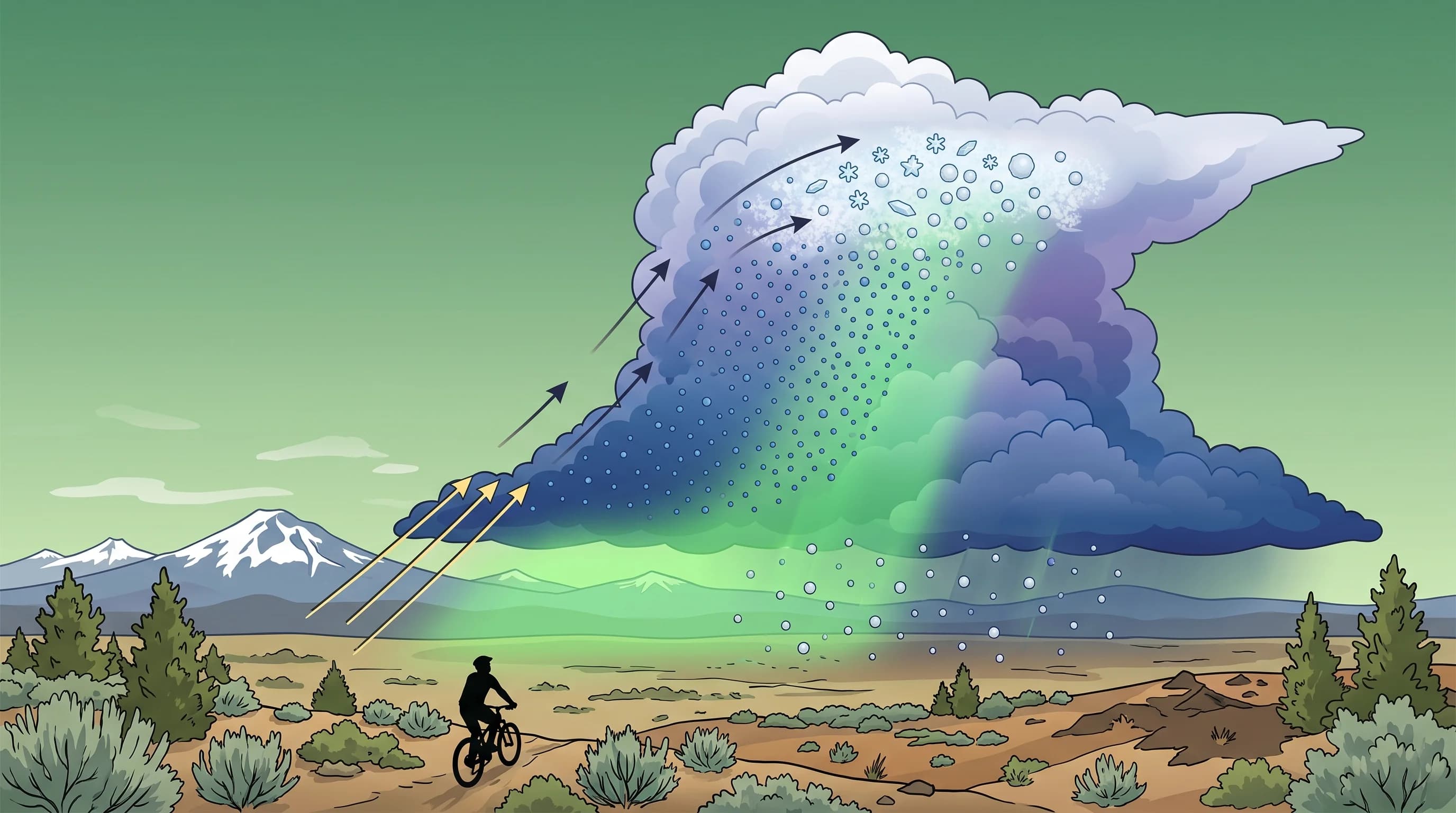
Green skies are often linked with hail because the same deep, intense storms that color the sky green are the ones with the strong updrafts needed to make large hail. Hail forms when a storm's powerful updraft carries raindrops high into the freezing upper levels of the cloud, where they freeze and grow as they are tossed up and down through layers of supercooled water, adding ice with each cycle until they are heavy enough to fall. Only a strong, deep storm has the updraft to support this, and those are exactly the storms most likely to show a green sky.
So while the green color does not directly cause hail, it points to the storm conditions that produce it: great depth, abundant water and ice, and vigorous updrafts. In Central Oregon, hail from summer thunderstorms is usually small, the soft, pellet-like graupel or small hailstones common in high-desert showers, rather than the destructive large hail of the Plains. The distinction between hail, graupel, and other frozen precipitation is one of the quieter curiosities of high-desert storms.
How Common Are Green Skies in the High Desert?
Green skies are rare in Central Oregon, because the region gets fewer of the deep, severe storms that produce them than the storm-prone central United States. The high desert's thunderstorms, while they can be dangerous for lightning and wind, are usually not as deep or as severe as the supercells of Tornado Alley, where green skies and giant hail are far more familiar. When a green sky does appear here, it marks an unusually strong storm and is genuinely noteworthy.
The region's storms are more often defined by lightning, gusty downburst winds, and the dry conditions that make them fire hazards, covered in why Central Oregon gets sudden summer thunderstorms and why Central Oregon storms can be dry, windy, and dangerous. A green sky is the high desert's occasional reminder that it can, on rare days, produce a truly powerful storm, even if it is not the region's typical mode.
What to Do When You See a Green Sky
If you see a green sky in Central Oregon, treat it as a sign of a severe storm and take shelter, because it means a powerful storm with heavy rain, hail, lightning, and strong winds is close. The green color itself is harmless, but what it signals is not: get indoors or into a sturdy vehicle, away from windows and large trees, and off any exposed terrain or open water. The same thunderstorm-safety rules that protect against lightning and microbursts apply, covered in lightning safety for hikers and lakes.
For most visitors and residents, a green sky will be a once-in-a-while spectacle rather than a regular event, but it is worth recognizing for what it is: nature's signal of an exceptionally intense storm. Appreciate the rare beauty of it from a safe place, and let it prompt you to check the forecast and seek shelter. It is one of the more striking ways the high desert's weather announces that a serious storm has arrived. For the broader storm picture, see the Central Oregon climate guide.