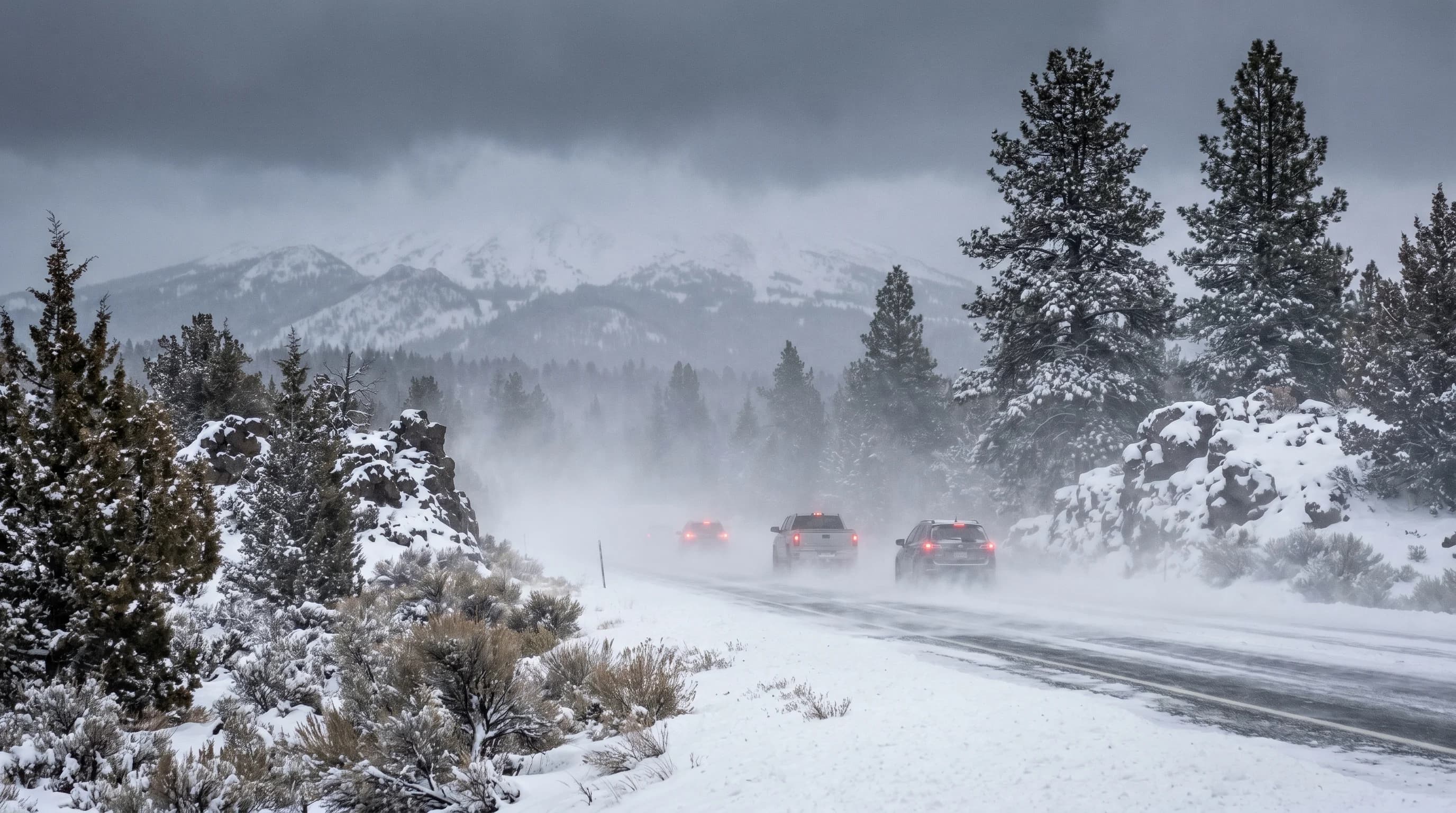
A snow squall is a brief but intense burst of heavy snow and gusty wind that can drop visibility to near zero in just a few minutes. Squalls move fast and often strike under otherwise bright skies, which is exactly what makes them so dangerous: a clear highway can become a whiteout, and the road can flash-freeze, before drivers have any time to react. They usually last only minutes to about an hour and drop little total snow, but in that short window they cause some of the worst multi-vehicle pileups of the winter, which is why the National Weather Service issues a dedicated Snow Squall Warning for them.
What Is a Snow Squall?
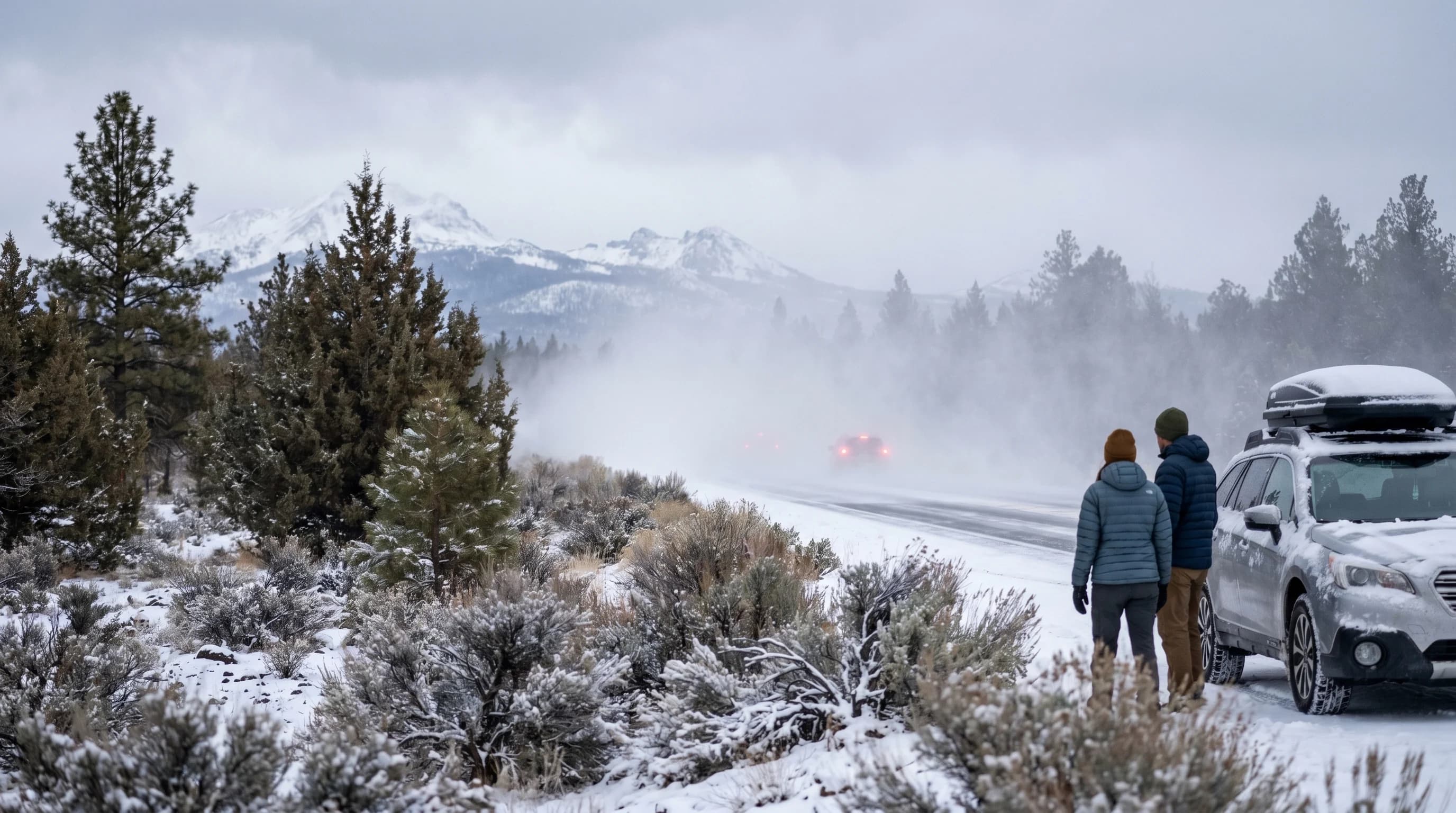
A snow squall is the winter cousin of a summer downpour: a short, sharp, fast-moving burst of intense precipitation, in this case heavy snow driven by gusty wind. The defining traits are its suddenness and its brevity. It arrives quickly, often as a visible wall of white racing across the landscape, peaks within minutes, and is gone within an hour, frequently leaving blue sky in its wake. Because the snow falls so hard and the wind blows it sideways, the squall's signature effect is a near-instant whiteout rather than big accumulation.
That combination of low total snowfall and extreme short-term danger is what sets squalls apart from ordinary snowstorms. A storm that drops a foot of snow over a day gives drivers steady, obvious conditions to adjust to. A squall can hit a clear, dry-looking highway out of nowhere, erase visibility, and glaze the pavement in the span of a single mile. It is the unpredictability and the speed, not the amount of snow, that make squalls a killer on the road.
How Does a Snow Squall Form?
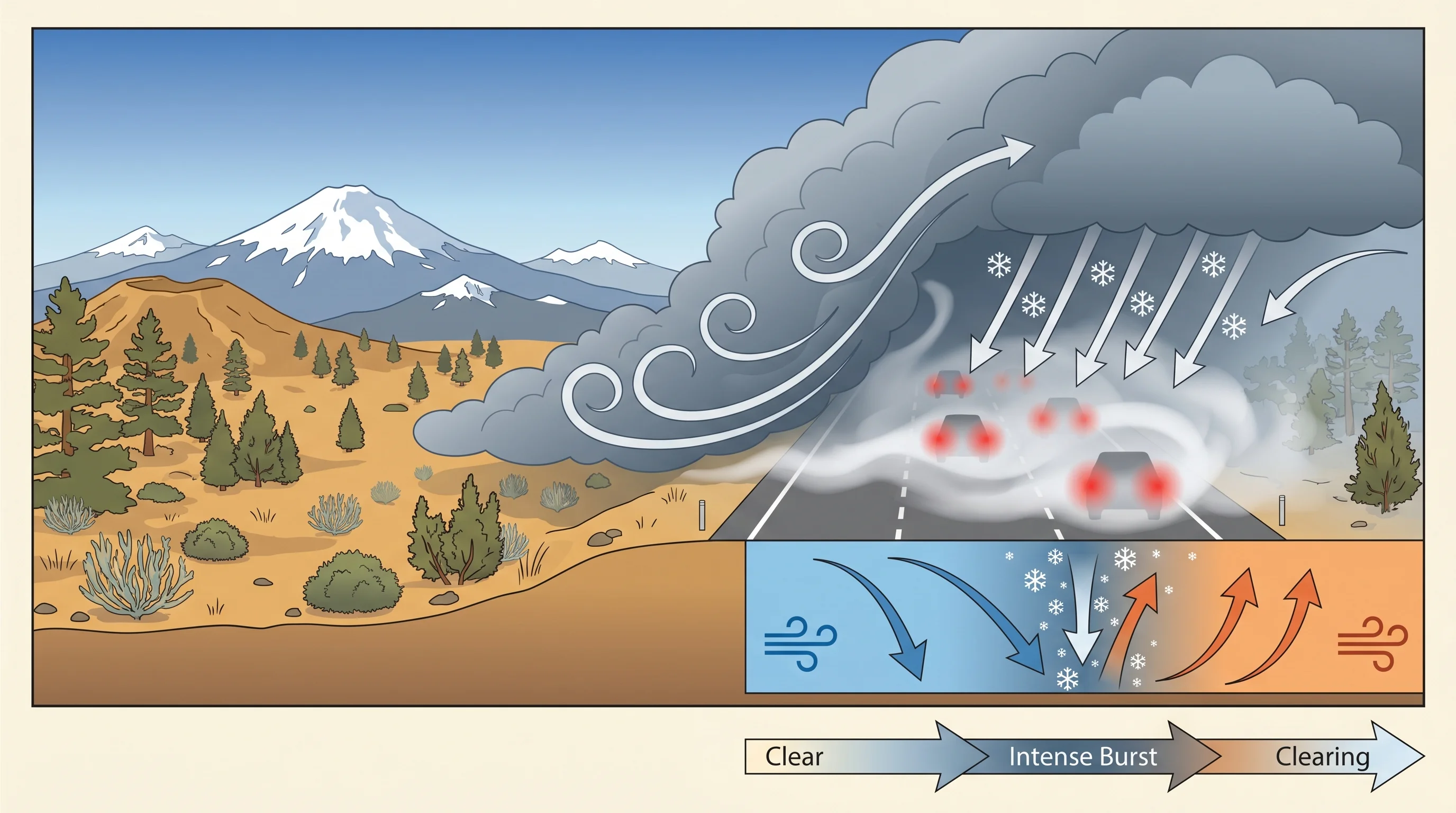
A snow squall forms when a fast-moving cold front or a surge of cold air pushes over slightly warmer ground or air, triggering a narrow band of convective snow showers. Convection is the same rising-air process that powers summer thunderstorms: pockets of air become buoyant and surge upward, building tall, energetic clouds that unleash their precipitation in concentrated bursts. In winter, that convective energy produces an intense, short-lived shaft of heavy snow instead of rain.
Because squalls ride along the leading edge of the cold air, they tend to form in a narrow line and race across the terrain at highway speed, which is why they hit so suddenly and pass so quickly. A squall is essentially the most intense, organized kind of snow shower, packing the heaviest snow and the strongest wind into the smallest, fastest-moving package. In the mountains, the terrain adds extra lift and can make squalls even more abrupt, while over the open high desert there is little to slow the wind-driven snow once a burst gets going.
What Does a Snow Squall Warning Mean?
A Snow Squall Warning means a sudden, dangerous whiteout is happening or imminent and that you should avoid travel or get off the road immediately. It is a short-duration, location-specific alert, much like a severe thunderstorm warning but for winter, and it is designed to push a phone alert to people in the squall's narrow path. The warning exists because the hazard is so concentrated in time and space that a routine forecast cannot convey it.
The warning targets the whiteout and flash-freeze danger specifically, not big accumulation, so it can be issued for a squall that drops only an inch of snow. If you receive one while driving, the safest responses are to slow down, increase your following distance, turn on your headlights, and, if you can do so safely, exit the highway and wait it out. Stopping in a travel lane is especially dangerous in a whiteout, since following traffic cannot see you, so the goal is to get off the road entirely or keep moving slowly and steadily until you are clear.
If you are already caught in a squall with no safe exit, the guidance is to reduce speed gradually, avoid slamming the brakes, turn on headlights and hazard lights so others can see you, and keep as much distance as possible from the vehicle ahead. Resist the urge to stop in a travel lane, which invites a rear-end collision in the whiteout. Because squalls are so brief, the worst conditions usually pass within minutes, so the goal is simply to get through that short window without being part of a chain-reaction crash.
Why Are Snow Squalls So Dangerous on the Road?
Snow squalls are dangerous because they attack visibility and traction at the same time, and they do it faster than drivers can adapt. The wind-driven snow can drop visibility to a few car lengths in seconds, while the sudden heavy snow and the cold flash-freeze the road surface, removing grip just as drivers instinctively brake. The result is a chain reaction: one driver slows or spins, the driver behind cannot see in time, and a pileup builds in the whiteout.
The deceptive setup makes it worse. Many squalls strike on days that are otherwise bright and clear, so drivers are moving at full highway speed with no mental preparation for winter conditions when the wall of white hits. Treating a Snow Squall Warning as seriously as a tornado warning, by delaying travel or getting off the road, is the single most effective way to stay safe, because once you are inside the whiteout your options are very limited.
Where Do Snow Squalls Hit in Central Oregon?
In Central Oregon, snow squalls strike the Cascade passes and high country first. Santiam Pass, Highway 20, the Cascade Lakes Highway, and the Mt. Bachelor access road are all prone to sudden whiteout bursts as cold fronts and convective showers sweep over the mountains, and the terrain itself can intensify them. They can also race across the open high desert around Bend and Redmond, where there is little to break the wind-driven snow.
They are most common from November through March, often arriving with or just behind a cold front. For anyone driving the passes between Central Oregon and the valley in winter, a squall is one of the most serious hazards to plan for, and it pairs with the broader ice risk covered in black ice and the winter-driving picture in the Mt. Bachelor weather guide. When a squall is in the forecast, the best plan is simple: build in extra time, watch for warnings, and be ready to pull off and wait out the burst.