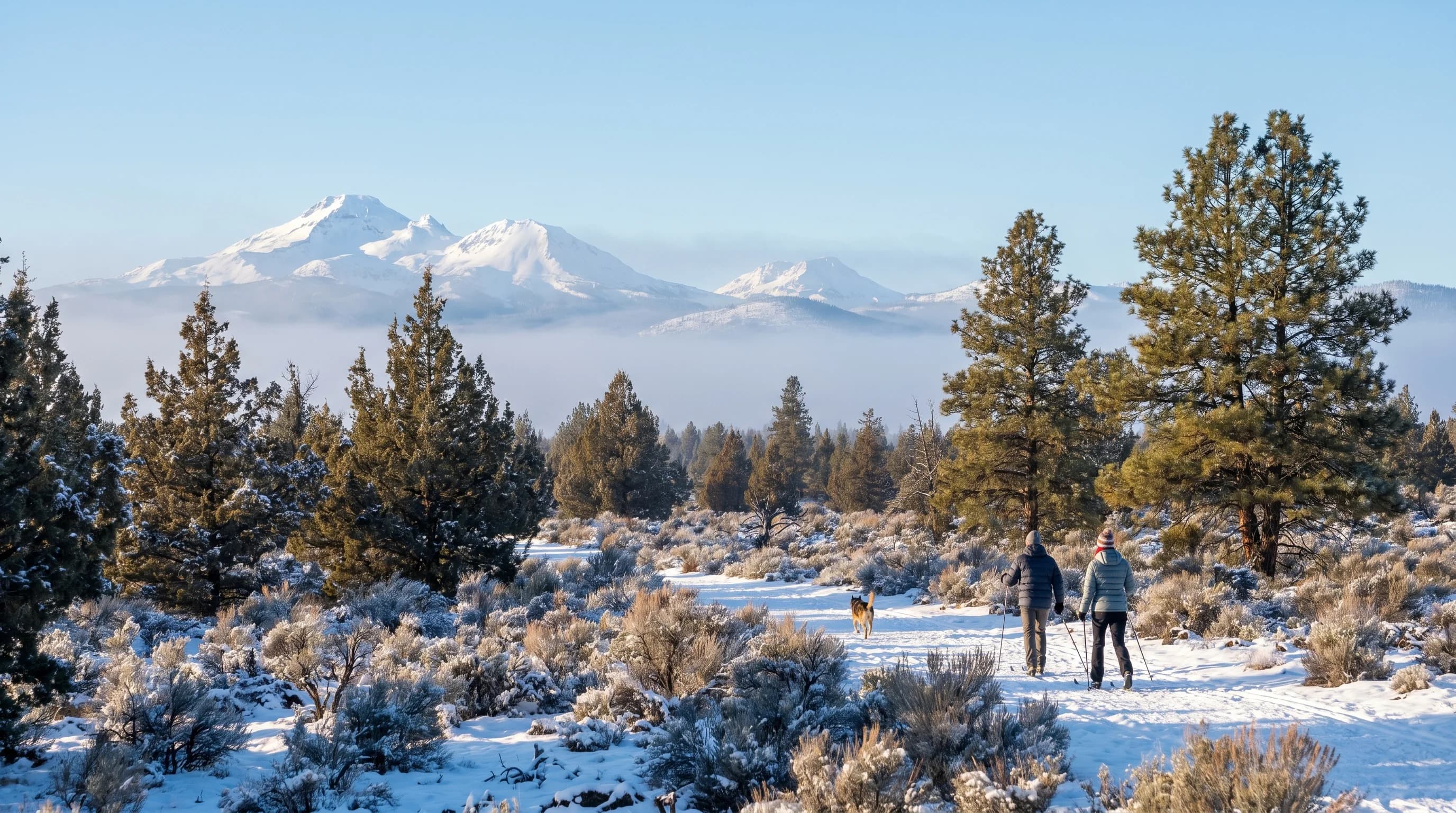
January is Bend's coldest month, with highs around 41 degrees, lows in the low 20s, regular snow, and frequent freezing fog. It is the heart of ski season, with deep snow at Mt. Bachelor and bright, cold bluebird days between storms, but also the time of year when the Deschutes Basin's freezing fog and ice make morning travel a real consideration. If you are visiting Bend in January, plan for genuine winter: short days, hard freezes, and a daily risk of ice even when no snow is falling.
What Is the Weather Like in Bend in January?
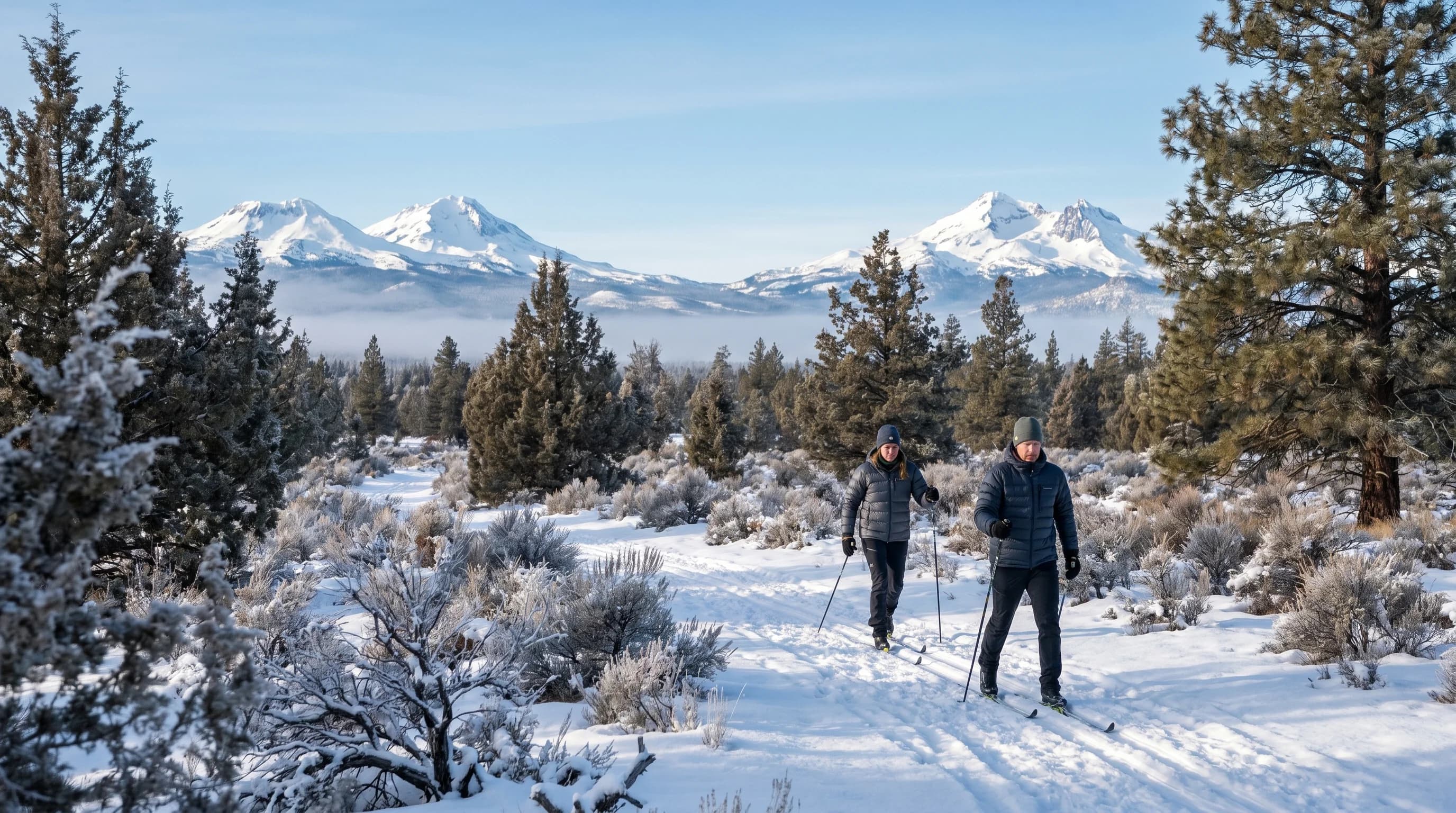
January in Bend is cold and snowy by Oregon standards, with daytime highs hovering around 41 degrees and overnight lows commonly in the low 20s, dropping into the teens during cold snaps. Snow sits on the ground for stretches, though it comes and goes as storms alternate with clear, cold high-pressure spells. Those clear spells deliver the bright, cold bluebird days that make even Bend's deepest winter feel sunnier than the gray Willamette Valley.
The defining January hazard is not deep snow but ice, especially the freezing fog that pools in the basin on calm, clear mornings and glazes roads with no precipitation at all. Cold air drains into the Deschutes Basin overnight under a strong inversion, and when that trapped air is humid and below freezing, fog forms and freezes onto every surface. Plan January travel around the morning ice, and treat bridges and shaded roads as slick.
Snow and Skiing in January
January delivers Bend's most reliable snow and prime Mt. Bachelor skiing, with deep mountain snowpack and frequent storms refreshing the slopes. The mountain is in full swing, and midwinter often brings the deepest, most consistent conditions of the season. Town snow comes and goes, but up at Bachelor and along the Cascade Lakes Highway the snow is deep and reliable, the payoff for January's cold. The guide to El Niño and Bend's 2026-27 winter explains why a warmer seasonal average can still include cold, snowy January stretches.
For skiers, January is the heart of the season, with the trade-off of cold temperatures, short daylight, and real winter driving to reach the mountain. The summit can be brutally cold and windy even when the base is pleasant, so dress for the conditions up high, covered in the Mt. Bachelor weather guide. Snow lovers come to Bend in January for exactly this.
Freezing Fog and Cold Mornings
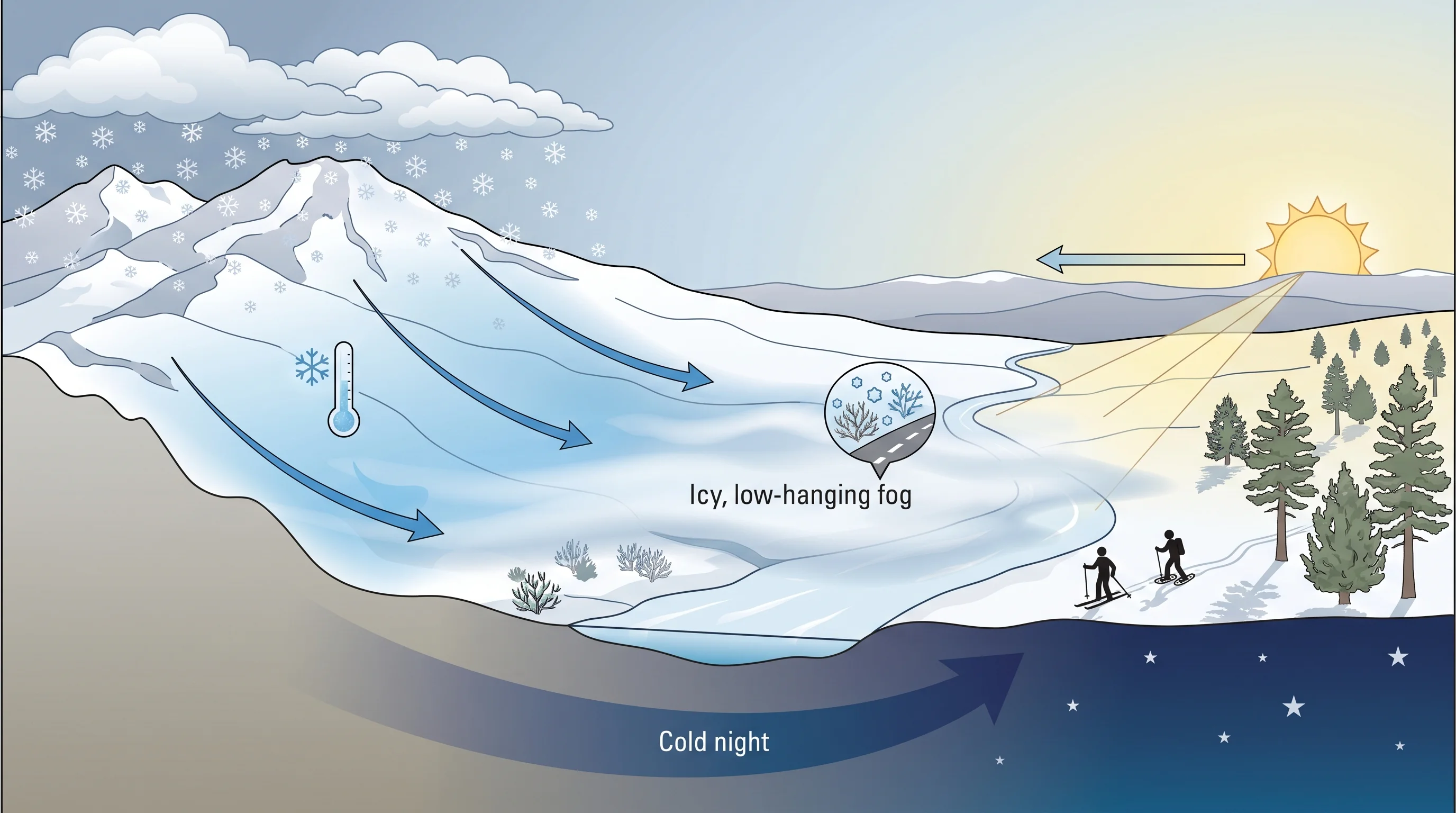
January mornings in Bend often bring freezing fog and icy roads, the season's biggest daily hazard, as cold air pools in the Deschutes Basin under a strong inversion. The fog can form overnight and linger well into the morning, sometimes all day in a deep inversion, and it glazes roads, sidewalks, and windshields with rime and clear ice. This is ice without snow, which catches out drivers who only think of winter as a snow problem.
The same inversion that traps the fog also traps cold air and any wood smoke, so January can bring stretches of gray, cold, stagnant days in the basin even as the mountains sit in sunshine. The mechanics are covered in freezing fog and Central Oregon inversions. Give yourself extra time on cold, foggy January mornings.
January Daylight, Sun, and the Cold-Night Pattern
January days are short, with roughly nine hours of daylight around the turn of the year and the sun staying low in the sky, which is part of why the cold lingers and the ice is slow to clear. The low sun angle means even bright days do little to warm the shaded corners and north-facing roads, so ice can persist all day in those spots while sunlit pavement thaws. Plan outdoor time for the warmer midday hours and expect mornings and evenings to be genuinely frigid.
Despite the cold, January still delivers Bend's signature bright, clear days between storms, a reminder that the high desert is sunny even in deep winter. The pattern is one of extremes: a snowy, gray, foggy stretch under an inversion, then a brilliant cold bluebird spell, then another storm. The huge gap between a sunny afternoon and the overnight low is the same day-to-night swing that defines the region year-round, covered in why Central Oregon has such big temperature swings.
Is January a Good Time to Visit Bend?
January is a great time to visit Bend if you want snow and skiing, but it demands winter driving readiness and a tolerance for cold and short days. Skiers and snow-players will find the region at its wintry best, with deep mountain snow and a full ski season, while visitors hoping for warm, sunny sightseeing should wait for a different month. The days are short, the nights are deeply cold, and the morning ice is a real factor.
If January is your window, pack for deep cold and ice, plan to do snow activities up at the mountain rather than expecting deep snow in town, and build your mornings around the freezing fog. With the right gear and expectations, it is a beautiful, snowy, bright-between-storms month. For packing specifics see what to pack for Bend by month, and for the rest of the year see the Bend by-month guide.