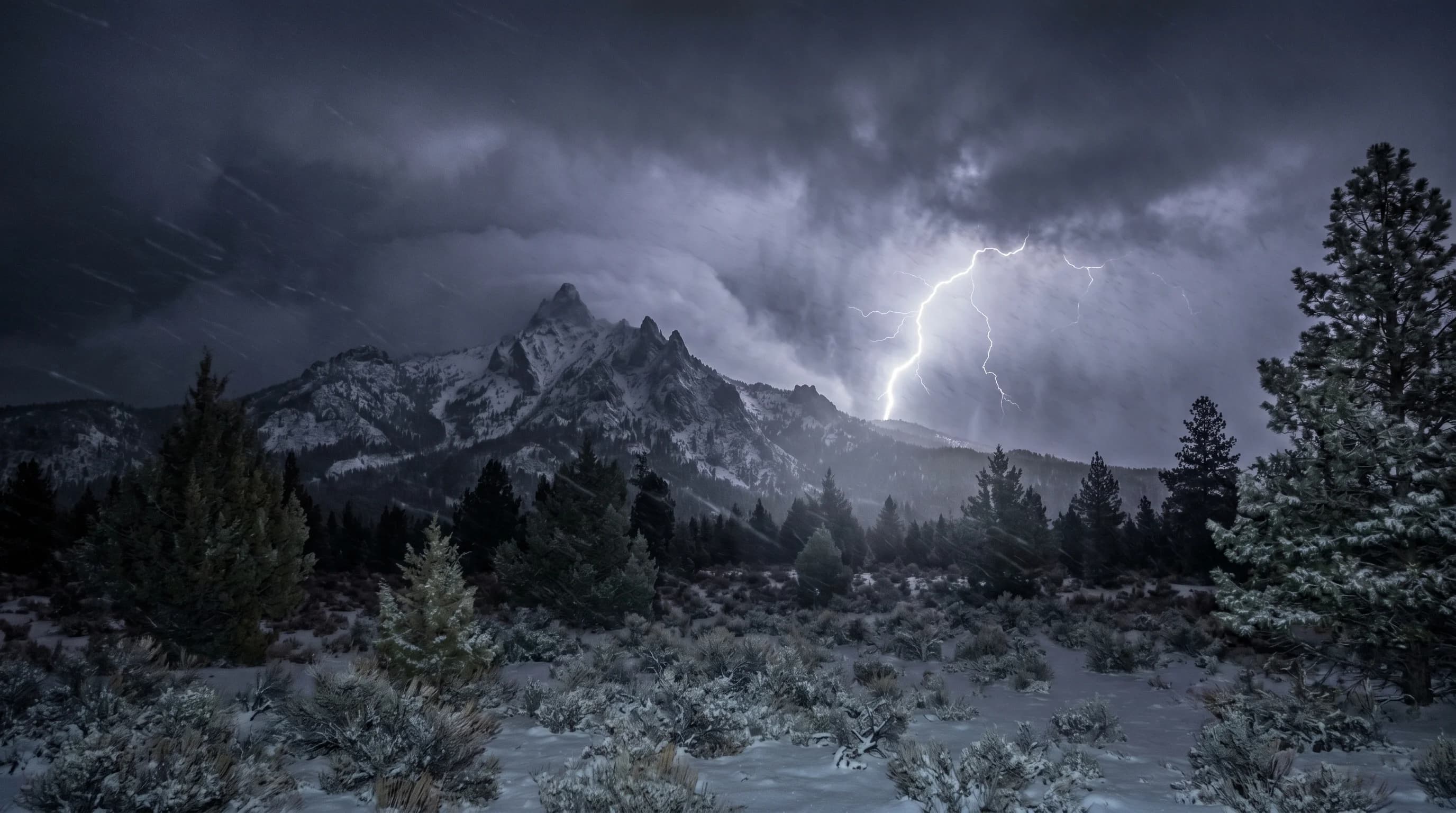
Thundersnow is a snowstorm that produces thunder and lightning, the same electrical activity as a summer thunderstorm but inside heavy falling snow. It is rare because the conditions needed for thunderstorms and for heavy snow seldom occur together, which is exactly why each event tends to make the news. It usually comes in short, intense bursts of snow, the thunder often sounds strangely muffled, and in the Oregon Cascades it can accompany the most energetic winter storms. Catching thundersnow is one of the more memorable experiences a high-country winter can offer.
What Is Thundersnow?
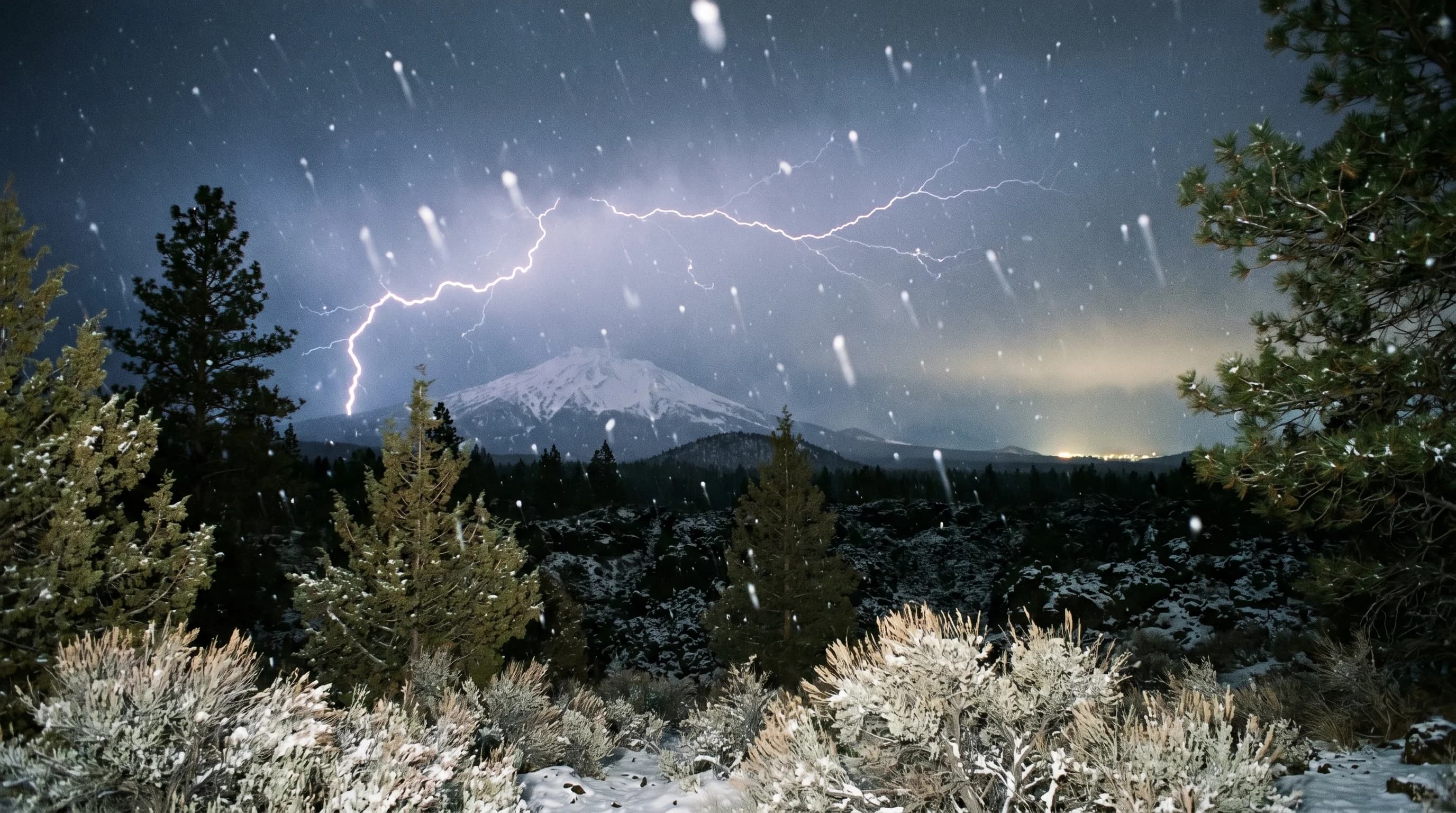
Thundersnow is simply a thunderstorm that happens to be producing snow instead of rain. All the familiar ingredients of a thunderstorm are there, towering convective clouds, the electrical charge that builds lightning, and the resulting thunder, but the temperature profile is cold enough that the precipitation falls as snow. The snow tends to come down hard in the convective bursts, so thundersnow events often deliver intense, short-lived dumps of heavy snow rather than a steady all-day fall.
Part of what makes thundersnow famous is how rarely the right conditions line up and how dramatic it is when they do. A flash of lightning lighting up a sky full of falling snow, followed by a low, muffled rumble, is genuinely uncommon, and meteorologists, most famously the on-air enthusiasm of storm chasers, have turned it into something of a celebrated event. For most people it is a once-in-a-while surprise rather than a regular part of winter.
What Causes Thundersnow?
Thundersnow forms when a winter storm has enough instability and upward motion to build convective clouds, letting electrical charge separate and lightning strike, all while it is cold enough to snow. The lightning itself works the same way as in a summer thunderstorm: vigorous up-and-down motion inside the cloud causes ice particles and graupel to collide, separating positive and negative charge until the difference discharges as a lightning bolt. The key is that the storm needs the convective energy of a thunderstorm even in the cold of winter.
That convective energy is what the same process drives in a snow squall, and indeed strong squalls and lake-effect snow bands are common settings for thundersnow. Strong fronts, upslope flow against mountains, and any setup that forces air to rise vigorously in a cold, moist environment can all spark it. In each case the storm has to overcome winter's natural tendency toward stable, layered air in order to generate the convection that lightning requires.
Why Is Thundersnow So Rare?
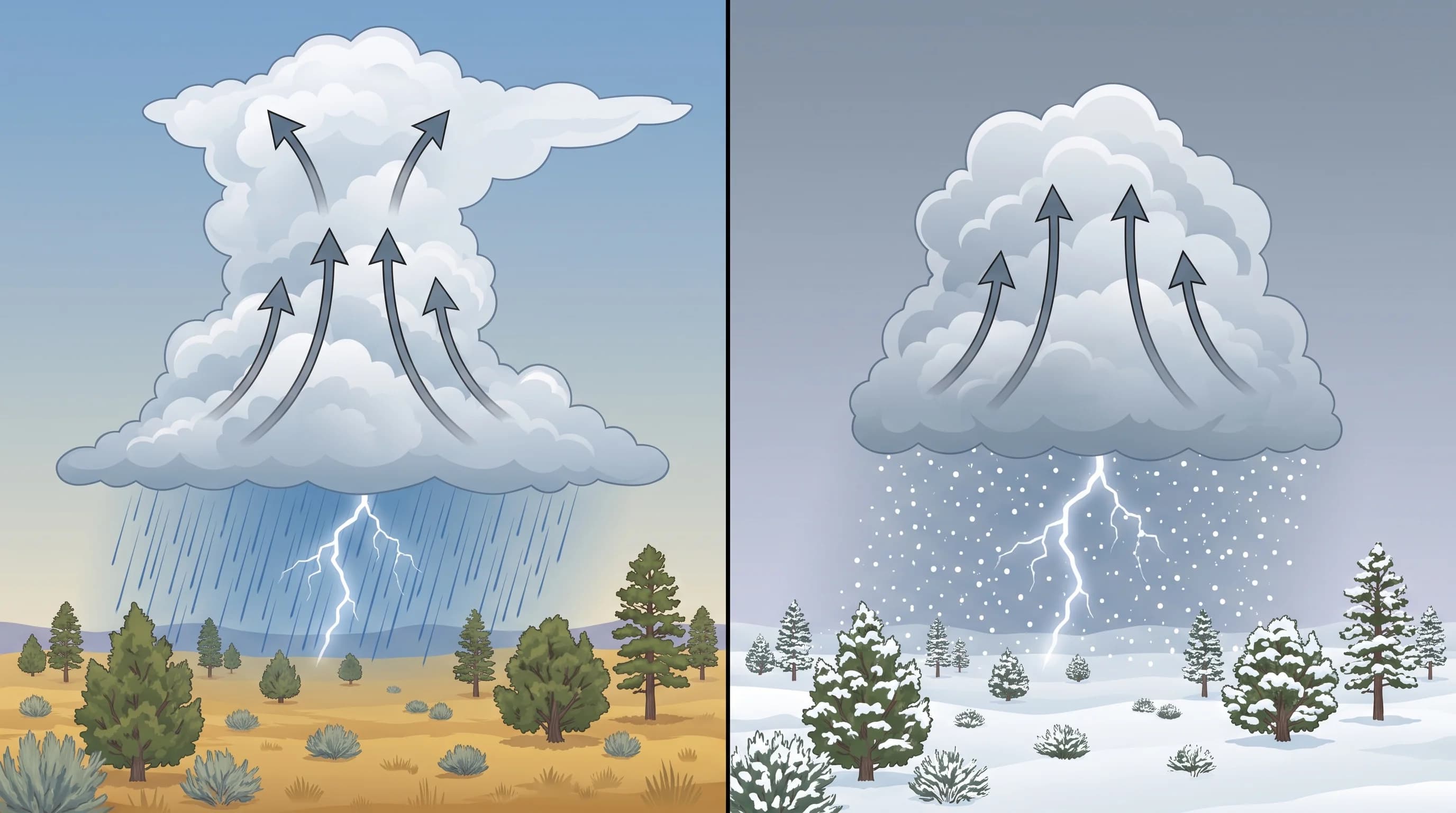
Thundersnow is rare because winter air is usually too stable to support the strong vertical motion that lightning requires. Thunderstorms need warm, buoyant air rising rapidly, and that buoyancy is hard to come by in the cold, dense air of winter, which tends to sit in stable layers rather than surging upward. Heavy snow and genuine thunderstorm conditions therefore rarely overlap, since one wants deep cold and the other wants instability.
When all the ingredients do align, the result is usually brief, a burst of convection within a larger storm rather than a long-lived event. That combination of demanding conditions and short duration is why thundersnow is uncommon enough to be noteworthy. It is not that the physics is exotic; it is that winter so rarely assembles the instability and the cold at the same place and time.
Is Thundersnow Dangerous?
Thundersnow carries the same lightning hazard as any thunderstorm, and the lightning is the real danger rather than the snow. Because thundersnow often occurs during intense, fast-accumulating snow bursts, it can also pair with whiteout visibility and quickly worsening road conditions, so it tends to arrive alongside the most hazardous travel weather of a storm. The lightning can strike exposed high points, lifts, and ridgelines just as readily in winter as in summer.
For people in the mountains, that means treating thundersnow lightning with the same respect as a summer storm: get off exposed terrain and away from the highest points if you hear thunder, even though the snow may make it feel like a gentler kind of storm. For drivers, the heavy convective snow is the more likely problem, since it can drop visibility and traction fast. Thundersnow is thrilling to witness, but it is a marker of a genuinely powerful winter storm, not a novelty to chase out into.
Why Does Thundersnow Thunder Sound Muffled?
Thundersnow thunder sounds muffled because falling snow absorbs and dampens sound, so the rumble carries only a short distance compared with summer thunder. Snow on the ground and in the air is full of tiny pockets that soak up sound waves, much the way a heavy snowfall makes the whole world feel hushed and quiet. The same snow that muffles footsteps muffles thunder.
The practical effect is that you usually only hear the thunder when the lightning is quite close, often within a couple of miles, whereas summer thunder can boom across long distances. The flash, by contrast, can look especially bright and dramatic against a sky full of snow, lighting up the whole snowfall for an instant. A close, vivid flash followed by a short, soft rumble is the classic thundersnow signature.
Does Thundersnow Happen in the Oregon Cascades?
Yes, thundersnow occurs in the Oregon Cascades during strong winter storms, when convective bursts develop inside heavy mountain snowfall. The Cascades are good at forcing air upward, and when a powerful, moist, cold storm crosses the range, the combination of strong lift and deep cold can occasionally produce the convection needed for lightning. Mt. Bachelor and the high Cascades are the most likely places in the region to experience it, often during the most intense, fast-dumping snowstorms.
For anyone in the high country, thundersnow is a sign of an especially energetic storm, and the same lightning-safety rules apply as in summer: lightning is dangerous whether it comes with rain or snow, so exposed ridges and lifts are not the place to be when it strikes. It is rare enough that most Central Oregon winters pass without it, but when it does happen it is an unforgettable reminder that a snowstorm can pack the same electrical punch as a summer thunderstorm. The broader storm context shows up in the Mt. Bachelor weather guide.