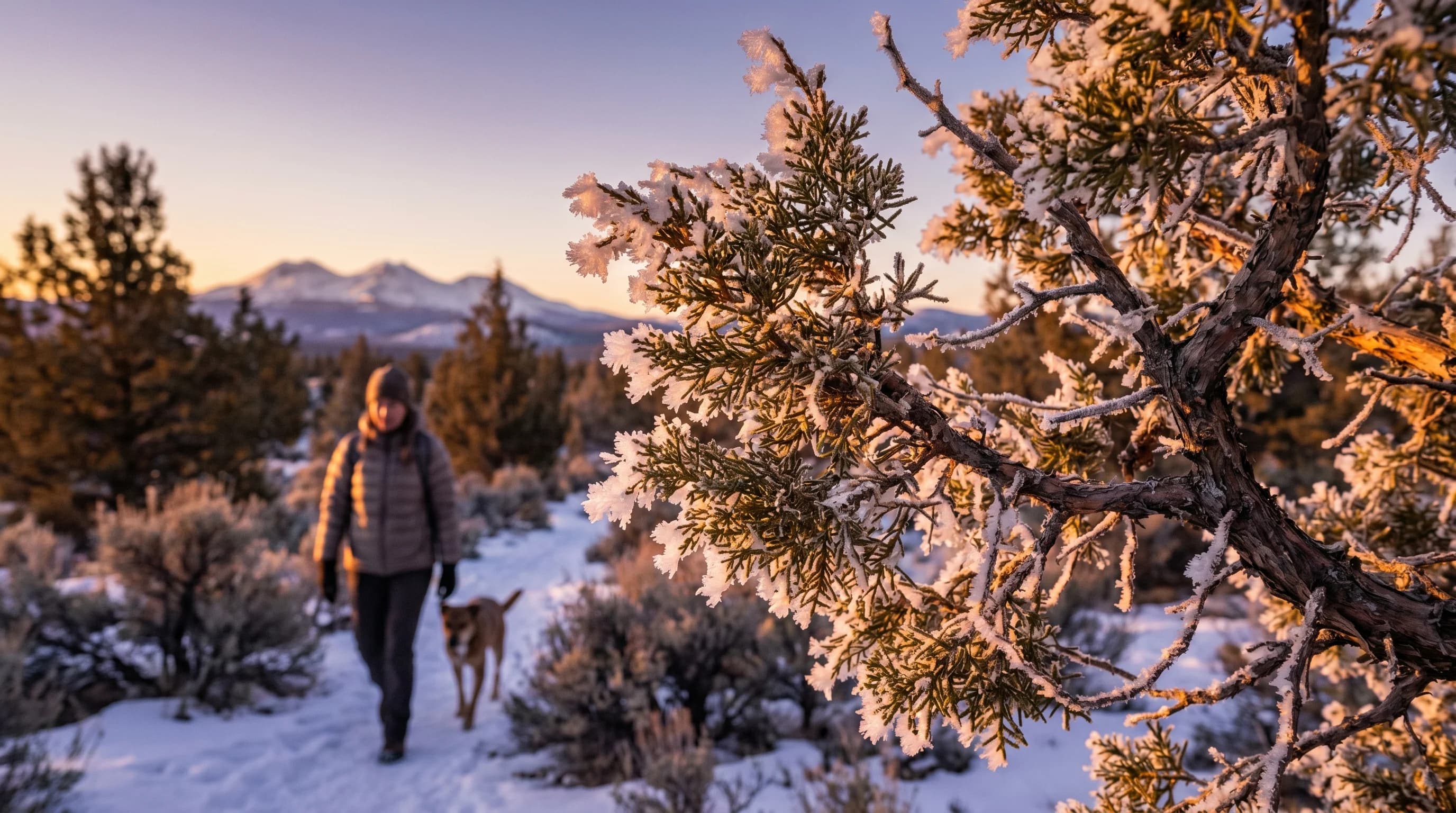
Hoar frost is the feathery white ice that forms on grass, fences, and tree branches on cold, clear mornings, building delicate spiky crystals that look like the world was dusted in tiny white feathers overnight. It forms when water vapor in the air freezes directly onto a cold surface, skipping the liquid stage entirely. That direct vapor-to-ice process, called deposition, is what gives hoar frost its intricate, crystalline shapes, and it is a common and beautiful sight across the cold, dry mornings of the Central Oregon high desert.
What Is Hoar Frost?
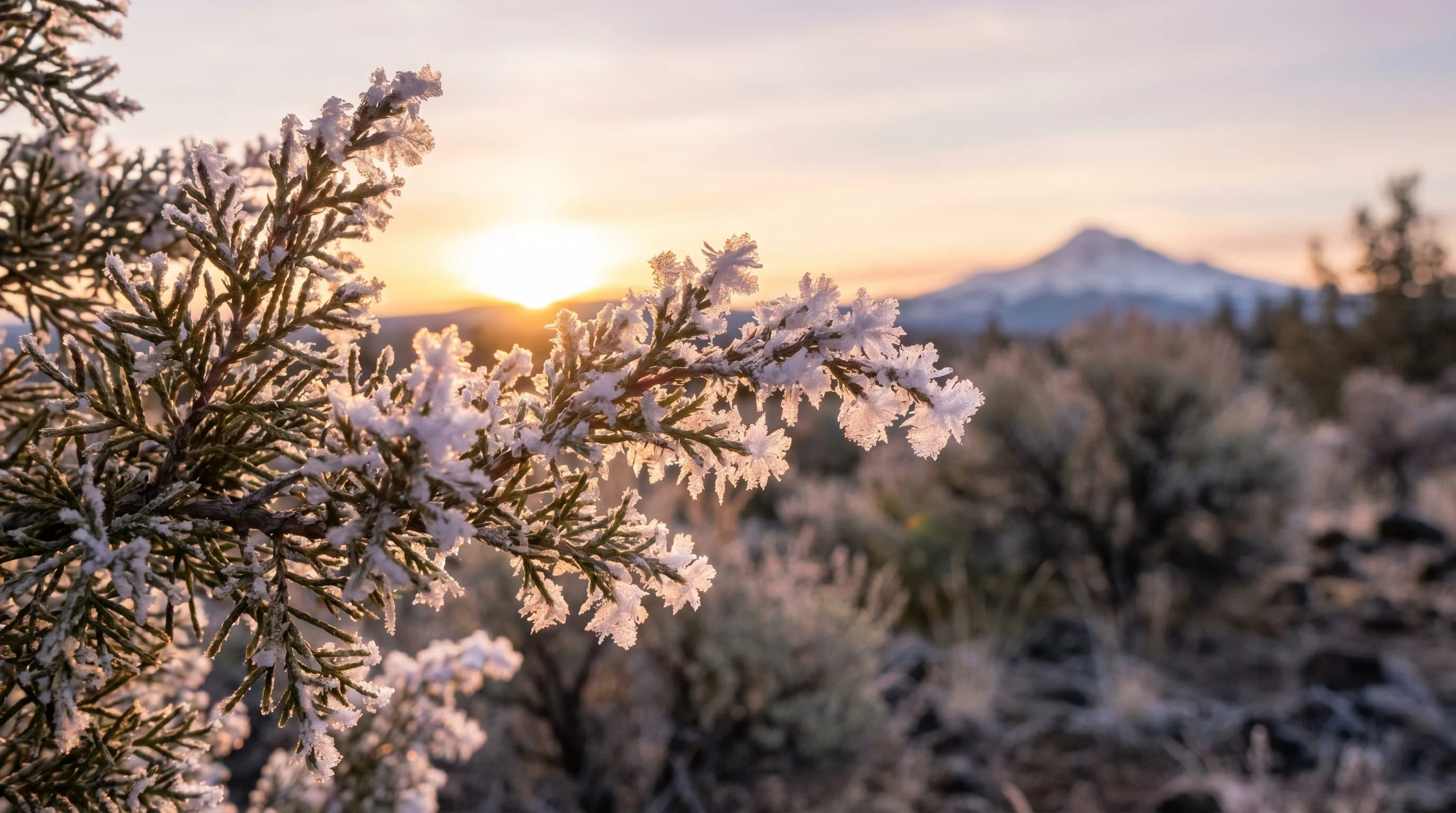
Hoar frost is a deposit of ice crystals that grow outward from a surface, often into delicate, spiky, fernlike shapes that can be a quarter inch long or more. The name comes from the old word hoary, meaning white or grey with age, as in a frost-covered beard, and it captures the way hoar frost coats everything in a soft white rime of crystals. Unlike a light, granular frost, hoar frost is structured and feathery, with visible individual crystals when you look closely.
It forms on the things that get coldest overnight: blades of grass, fence wire, twigs, car windows, and the tips of evergreen needles. These thin, exposed objects lose heat fastest to the clear night sky, so they chill below the surrounding air and become the surfaces where vapor deposits. The result, on the right morning, is an entire landscape outlined in white, glittering as the first sun hits it and usually melting away within an hour or two.
How Does Hoar Frost Form?
Hoar frost forms when a surface cools below both the freezing point and the frost point, and humid air touching that surface deposits its water vapor straight onto it as ice. The key word is deposition: the vapor changes directly into solid ice without ever becoming liquid water first. This is the reverse of sublimation, where ice turns straight to vapor, and it is why hoar frost grows as distinct crystals rather than forming from frozen droplets.
Two conditions make it happen. Clear skies let surfaces radiate their heat away to space efficiently overnight, chilling them well below the air temperature, and calm air lets the cold settle and the crystals grow undisturbed without wind knocking them off or mixing in warmer air. Some humidity is needed too, so the best hoar frost often forms near a moisture source or after a damp spell. The same clear, calm, radiative cooling that grows hoar frost is what pools cold air in basins and drives a temperature inversion, which is why the frostiest mornings and the coldest valley lows tend to come together.
The frost point is the specific temperature, below freezing, at which the air is saturated with respect to ice and vapor begins depositing. When a chilled surface drops to or below that point, crystals start to grow, and they keep growing outward as more vapor reaches them, which is why hoar frost can build surprisingly long, branching spikes over a long, still night. The crystals tend to grow toward the source of vapor, giving the larger formations a directional, fernlike structure that is worth a close look before the sun erases it.
What Is the Difference Between Hoar Frost and Rime Ice?
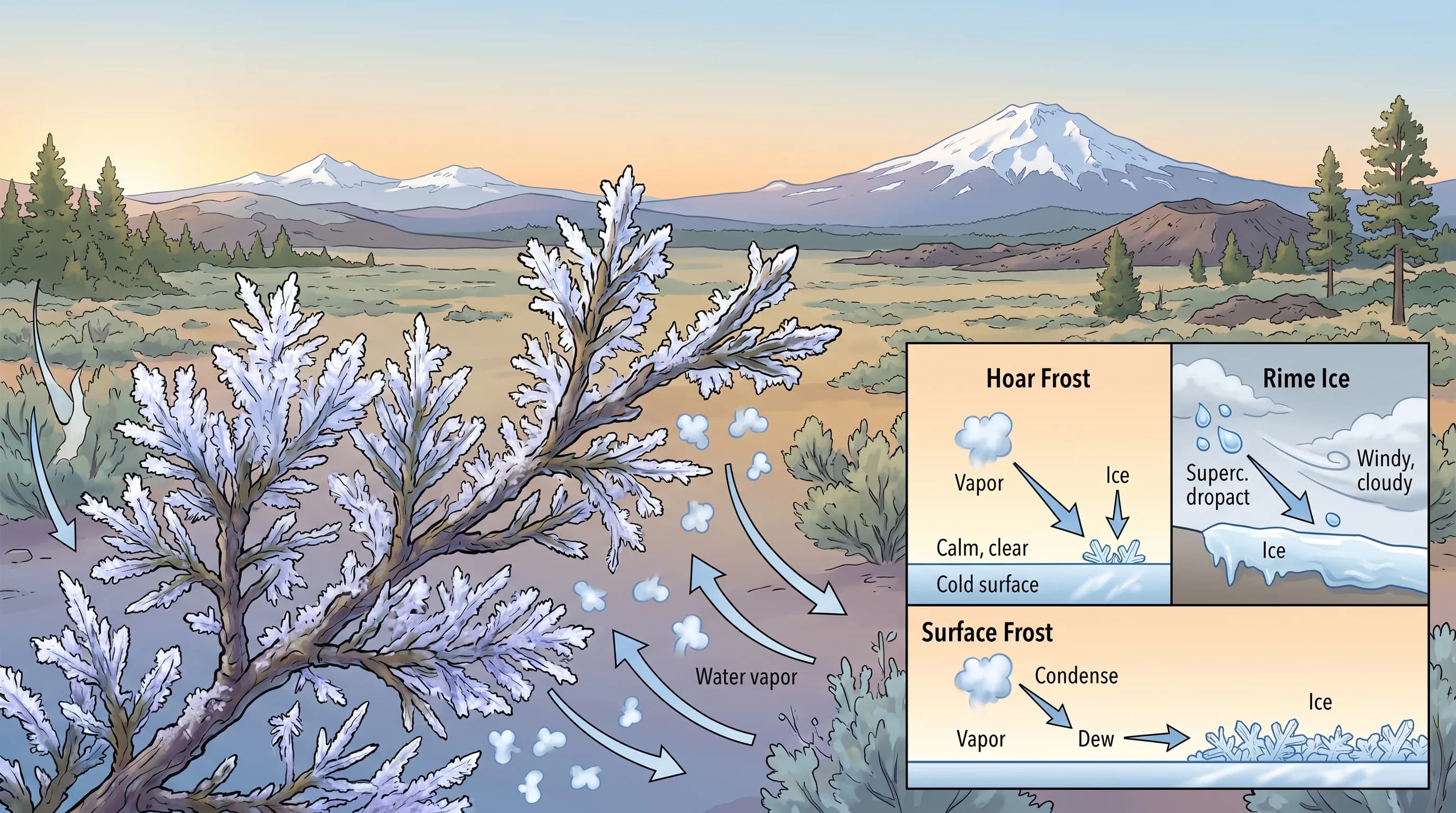
Hoar frost and rime ice look similar at a glance but form in opposite ways. Hoar frost comes from water vapor freezing directly onto surfaces on a clear, calm night, producing delicate, evenly distributed, feathery crystals. Rime ice comes from supercooled fog droplets freezing on contact with surfaces during freezing fog, producing a rougher, denser, white coating that builds up into the wind on the windward side of objects.
The simplest way to tell them apart is to remember the conditions. If the night was clear and there was no fog, the white coating is almost certainly hoar frost. If there was fog, and especially if the coating is rough and heavier on one side, it is rime ice. Both belong to the same family of cold-weather ice deposits, and both are common in Central Oregon, but they are markers of different overnight weather: clear and calm for hoar frost, foggy and freezing for rime.
Where Do You See Hoar Frost in Central Oregon?
Central Oregon's cold, clear, dry mornings make it a classic place to see hoar frost. On winter and shoulder-season nights when the sky is clear and the air is calm, the high desert around Bend, Redmond, and Sunriver radiates heat away fast, and by dawn the juniper, sagebrush, fence wire, and grass can be feathered in white crystals. It is most striking near rivers, irrigation canals, and meadows, where the extra moisture in the air feeds bigger crystal growth.
Because it forms and melts so quickly, hoar frost rewards early risers. It is usually at its best right at sunrise, glittering before the sun climbs high enough to warm the surfaces and turn the crystals back to vapor. The same conditions that produce it, clear skies and calm cold air, are exactly the ones behind the region's hard overnight freezes and big day-to-night temperature swings, so a heavy hoar-frost morning is a reliable sign that it was a genuinely cold, still night in the basin.
Does Hoar Frost Mean Anything for the Weather?
Hoar frost is less a forecast than a record of the night just past. A heavy coating tells you the night was clear, calm, and cold enough for strong radiative cooling, the same setup that produces hard freezes and, with more moisture, freezing fog. It is a sign of a strong overnight inversion rather than of any incoming storm, and it often appears during the settled, high-pressure spells that bring the coldest, stillest weather.
For gardeners, hoar frost is a clear marker that a killing frost has occurred, which matters for the high desert's short growing season. For everyone else, it is mostly a gift: a brief, intricate display that signals a cold, quiet morning and usually a sunny day to follow. Catch it early, because in the dry high-desert sun it rarely lasts past mid-morning.